
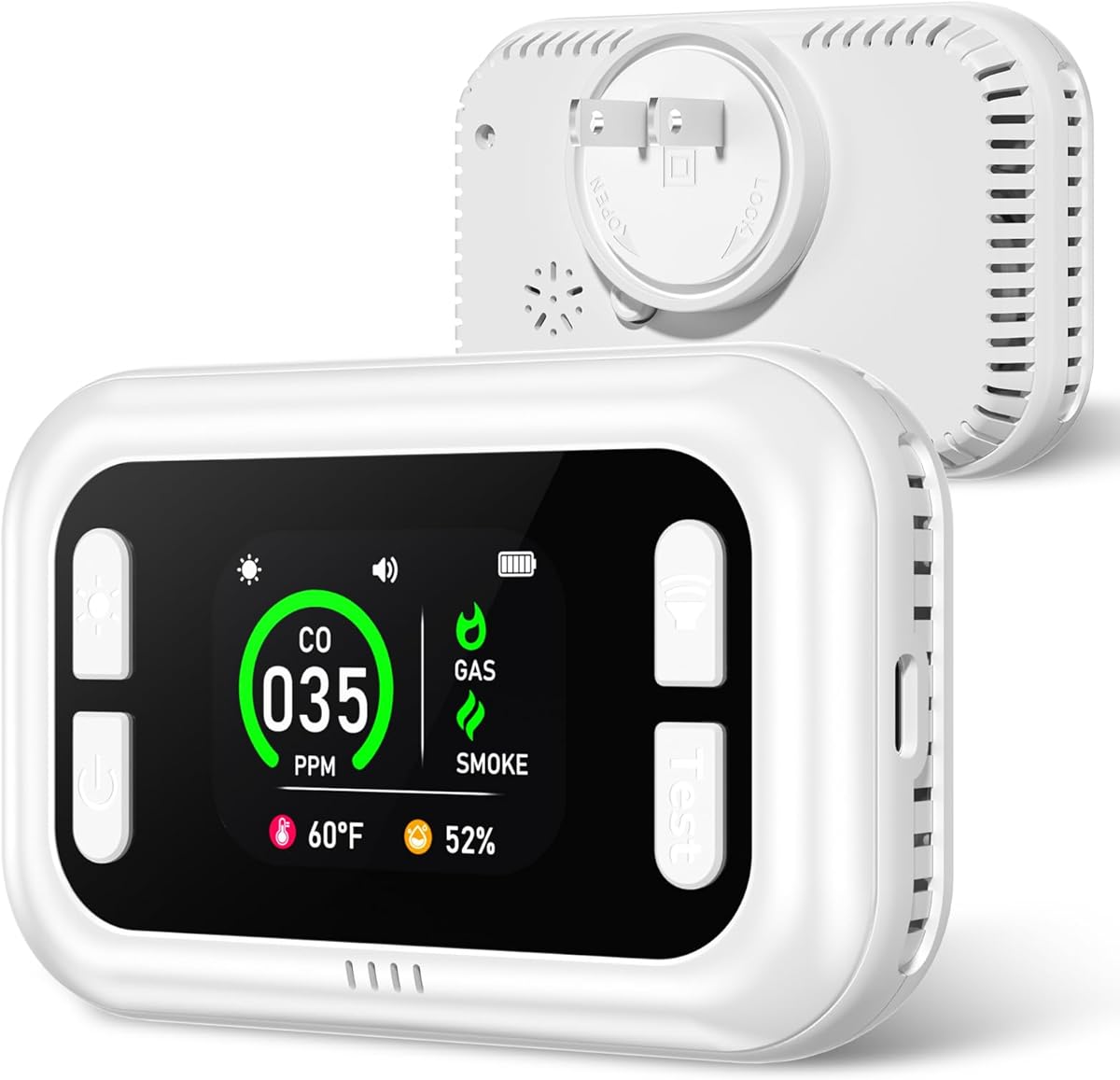
Choosing a 5-in-1 Safety Detector: What Makes This Multi-Gas Unit Unique
This specific 5-in-1 detector combines smoke, carbon monoxide (CO), natural gas, and propane sensing with temperature and humidity monitoring—a feature set uncommon in standard home units. Buyers should understand that this device's plug-in design with a built-in battery backup is tailored for both stationary home use and portable applications like RVs and camping, which dictates its sensor technology and alarm thresholds.
Key Considerations Before Buying
- Verify the sensor types: This unit uses electrochemical sensors for CO and semiconductor sensors for combustible gases (natural gas/propane), which have different lifespans and response characteristics than photoelectric smoke sensors.
- Assess the dual-power reliability: The plug-in AC with built-in battery backup is critical for RV/camping use where power sources fluctuate, but requires confirming the battery's runtime during an outage.
- Consider alarm differentiation: A unit with five detection functions must have distinct audible and visual alarms (which this claims as 'Dual Alarm') to identify whether the threat is smoke, CO, or a gas leak.
What Our Analysts Recommend
For a multi-gas detector, check for UL 1484 (propane/natural gas) and UL 2034 (CO) listings or their equivalent; this model's specific certifications should be verified. Quality is also indicated by clear sensor replacement indicators and a documented response time for each gas type, which are often omitted in generic listings.
Combination Smoke & Carbon Monoxide Detectors Market Context
Market Overview
The combination detector market is evolving beyond basic smoke/CO units to include combustible gas detection, driven by consumer demand for comprehensive safety in homes with gas appliances and in mobile environments. Products like this 5-in-1 model represent a niche segment competing against dedicated, single-function detectors that may offer more rigorous certification.
Common Issues
Common problems include cross-sensitivity (where one sensor triggers false alarms from non-target substances like humidity or cooking aerosols), inconsistent alarm volumes across threat types, and shorter-than-expected sensor life for the combustible gas elements due to their exposure to ambient air.
Quality Indicators
High-quality multi-gas detectors explicitly state sensor technology (electrochemical vs. metal oxide semiconductor), provide separate test buttons for each sensor function, and offer end-of-life alerts for each sensor independently, as they degrade at different rates.
Review Authenticity Insights
Grade B Interpretation
A 'Grade B' with an estimated 15% fake review rate suggests the majority of feedback is trustworthy, but a notable minority may be incentivized. For a safety-critical product, this underscores the need to focus on reviews that detail long-term performance (beyond 30 days) and specific incident responses.
Trust Recommendation
Prioritize verified purchase reviews that mention using the detector in its intended environments—specifically look for anecdotes about RV trips, camping, or responses to actual cooking smoke or pilot light outages. Be skeptical of reviews that only praise generic features like 'easy installation' without context.
Tips for Reading Reviews
Search reviews for mentions of 'propane leak,' 'CO alarm,' or 'gas smell' to see how the unit performed in real scenarios. Pay close attention to any comments about alarm differentiation—whether users could tell which hazard triggered the alert—as this is a key complexity for 5-in-1 devices.
Expert Perspective
The product's 4.60 adjusted rating from verified purchases is strong for a multi-function safety device, indicating general user satisfaction. Its unique value proposition lies in combining combustible gas detection with traditional smoke/CO monitoring, which is particularly relevant for homes with gas furnaces, stoves, or for RV enthusiasts. However, the integration of five sensing functions into one unit raises questions about calibration maintenance and potential compromises in individual sensor performance compared to standalone detectors.
Purchase Considerations
This detector is best suited for scenarios where space is limited (like an RV) or where centralized monitoring of multiple threats is preferred. Weigh its convenience against the potential risk of a single point of failure; for whole-home protection, experts often recommend separate, strategically placed detectors. The built-in temperature and humidity sensors add informational value but are not safety-critical features.
Comparing Alternatives
Shoppers should compare this unit's specifications, particularly its sensor types and certifications, against dedicated CO/gas detectors and simpler 2-in-1 smoke/CO models to assess the trade-off between comprehensiveness and specialized performance.


