
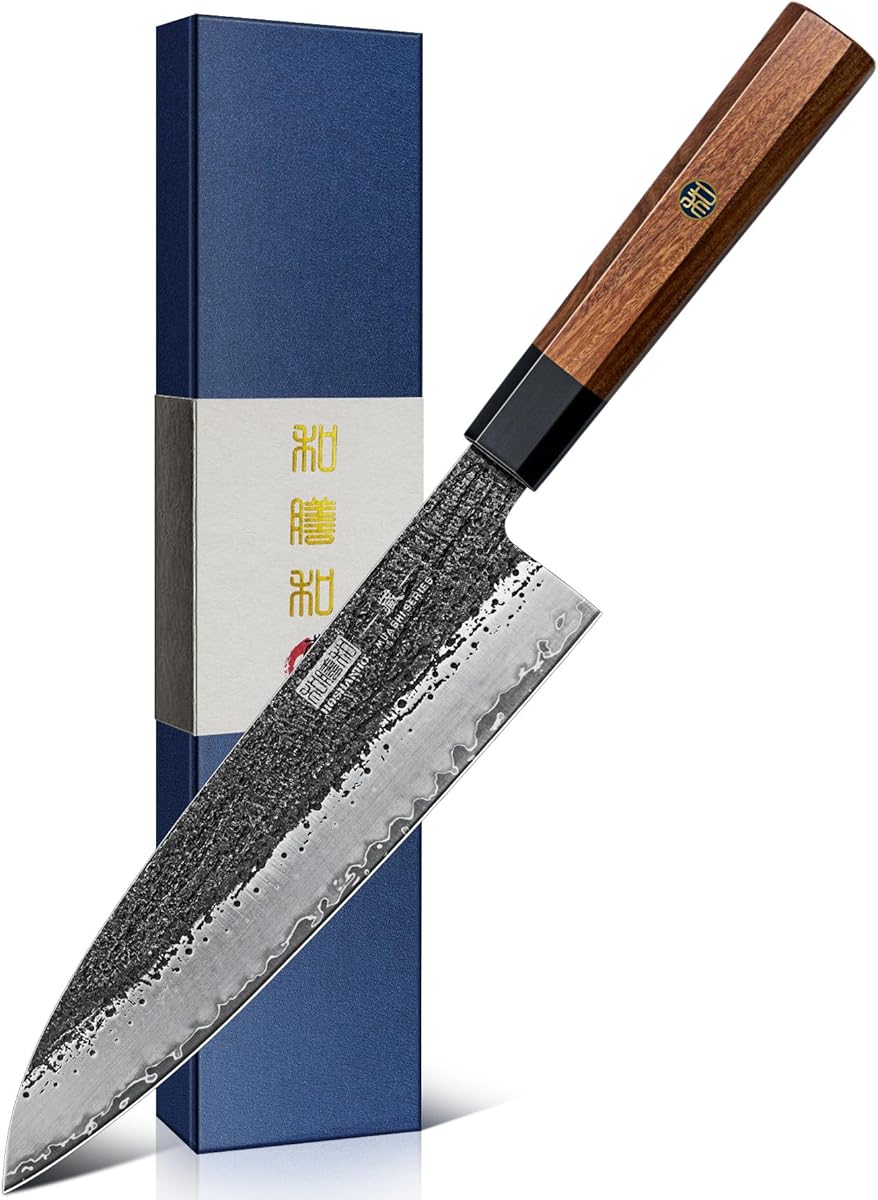
Evaluating a 9-Layer Gyuto: What Makes This HOSHANHO Chef Knife Distinct
The HOSHANHO 8-inch Gyuto presents a specific value proposition: a Japanese-style chef's knife with a 9-layer 10CR15MOV steel core and an octagonal rosewood handle. Buyers should understand this knife sits in the mid-range, offering features like Damascus cladding and a specific steel alloy that balances edge retention and corrosion resistance. Its design choices, like the octagonal handle, directly impact grip and control during precise cutting tasks.
Key Considerations Before Buying
- The 10CR15MOV steel core offers a good compromise for home cooks, providing better edge retention than many budget stainless steels while being more stain-resistant than pure high-carbon steel, which requires more maintenance.
- An octagonal rosewood handle requires evaluation for your hand size and grip style; it provides excellent rotational control for precise cuts but may feel less familiar than Western-style handles and needs occasional oiling to prevent drying.
- The 8-inch length and Gyuto profile make it a versatile all-purpose knife, but its performance on dense vegetables or proteins depends heavily on the factory edge geometry and your sharpening skill, as 10CR15MOV can be harder to hone than softer steels.
What Our Analysts Recommend
For a knife in this category, inspect the fit where the tang meets the handle (the 'heel') for gaps, which can trap moisture. The 9-layer Damascus pattern should be even and consistent along the blade, indicating careful forging. A quality indicator is a thin, even grind behind the edge, which you can assess by looking at the blade in good light to see if it tapers smoothly to the cutting edge.
Chef's Knives Market Context
Market Overview
The sub-$100 Japanese-style chef's knife market is crowded with brands offering Damascus-clad, high-carbon stainless steel blades, making specific construction details like the exact steel alloy (10CR15MOV vs. VG-10) and handle ergonomics critical differentiators. Many products, like this HOSHANHO, are manufactured in regions with established cutlery supply chains but sold under newer brand names.
Common Issues
Common concerns include inconsistent heat treatment leading to soft spots in the blade, poor handle attachment that loosens over time, and overly thick blade grinds that hinder cutting performance despite attractive surface finishes. Some brands also overstate the 'professional' nature of knives designed primarily for home enthusiast use.
Quality Indicators
Beyond aesthetics, quality is shown in a well-balanced blade (not handle-heavy), a seamless transition from blade to handle, and a sharp, durable out-of-the-box edge that reflects proper final sharpening. The rosewood should be smoothly finished without sharp edges, and the octagonal shape should feel secure in a standard pinch grip.
Review Authenticity Insights
Grade B Interpretation
A 'Grade B' with an estimated 15% fake review rate suggests the majority of feedback is credible, but a small portion of ratings may be artificially inflated. For this HOSHANHO knife, the adjusted rating of 4.50/5 (down from 4.89) is a more reliable performance indicator, reflecting genuine user satisfaction with some minor criticisms.
Trust Recommendation
Focus on the verified purchase reviews that describe specific use cases, like chopping herbs, dicing onions, or slicing meat, rather than vague praise. Be slightly skeptical of 5-star reviews that only discuss unboxing or appearance. The high number of authentic reviews discussing real kitchen performance adds significant weight to the positive consensus.
Tips for Reading Reviews
For kitchen knives, prioritize reviews that mention longevity (holding an edge over weeks), ease of maintenance (sharpening or stropping), and handling specifics like balance or grip comfort. Reviews noting issues like chipping, handle looseness, or difficulty resharpening are particularly valuable for risk assessment.
Expert Perspective
The HOSHANHO knife's specifications—9-layer Damascus cladding over a 10CR15MOV core—place it competitively within its price segment. The very high authentic rating (4.5 adjusted) from verified buyers strongly indicates it delivers on core promises: sharpness out of the box, good fit and finish, and satisfying performance for home cooks. The octagonal rosewood handle is a notable feature that divides users based on ergonomic preference, a point often highlighted in detailed reviews. The steel choice is pragmatic, offering a good blend of performance and practicality for those not wanting to baby a pure carbon blade.
Purchase Considerations
Weigh the appeal of the Japanese Gyuto profile and octagonal handle against your existing knife skills and preferences. If you primarily use a rocking chop motion, a German-style chef's knife might be more intuitive. This knife is best suited for someone who values precise push-cutting and is willing to perform basic maintenance like hand-washing and occasional honing to preserve the edge.
Comparing Alternatives
Shoppers should compare this model directly with other 8-inch Gyutos in a similar price range, specifically noting the type of core steel, handle material, and weight balance.


