
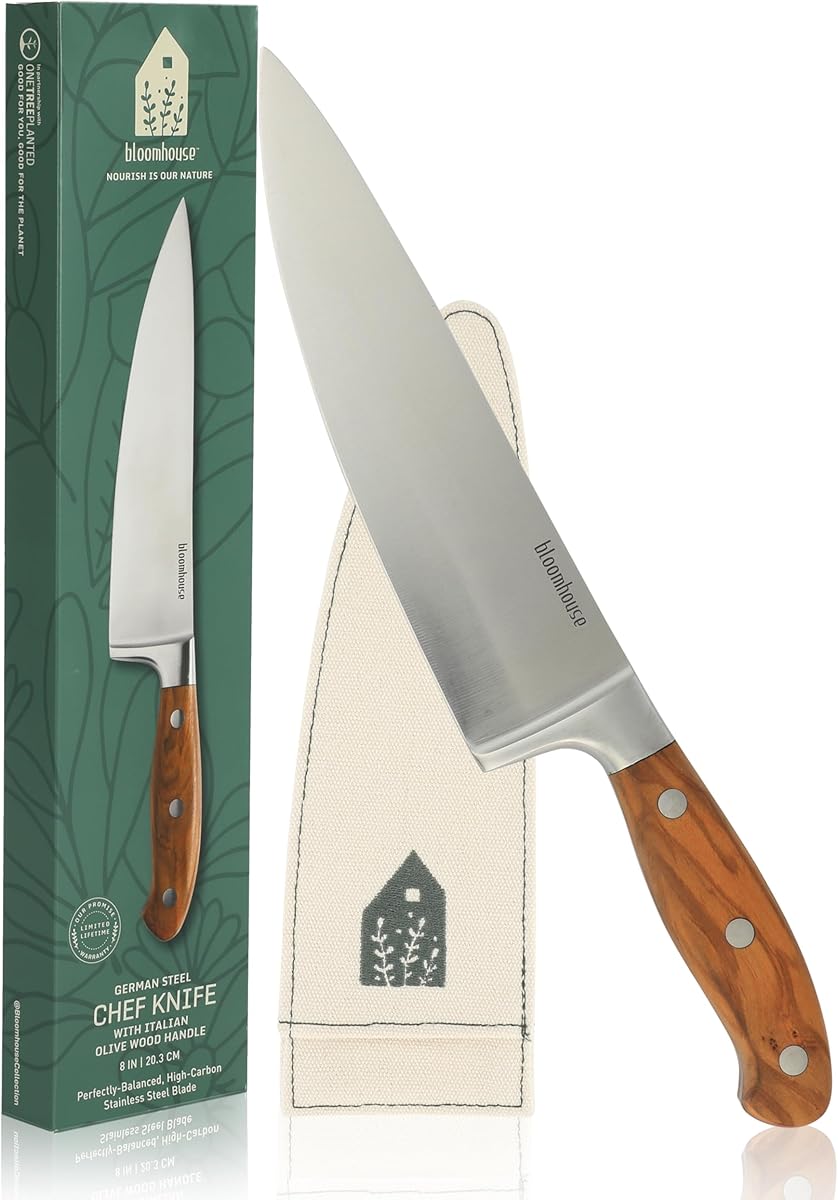
Evaluating an Oprah-Endorsed Chef's Knife with German Steel and Olive Wood
The Bloomhouse 8-inch chef's knife presents a specific combination of German stainless steel construction with an Italian olive wood handle, which creates distinct performance characteristics. Buyers should understand how this particular material pairing affects balance, maintenance, and cutting performance compared to other chef's knife configurations.
Key Considerations Before Buying
- German steel typically offers excellent edge retention and durability but may require more frequent sharpening than harder Japanese steels, making the blade's specific Rockwell hardness rating crucial information.
- Olive wood handles provide unique aesthetics and natural grip but require different care than synthetic materials, as they can be affected by moisture and temperature changes over time.
- The 'full tang' construction mentioned in the title suggests better balance and durability, but the actual weight distribution between the German steel blade and olive wood handle determines real-world handling.
What Our Analysts Recommend
For this specific knife, examine how the olive wood handle is joined to the full tang—visible pins or rivets typically indicate better construction. The blade's grind (whether it's a traditional German convex grind or something else) significantly impacts food release and cutting efficiency, though this detail isn't provided in the product information.
Chef's Knives Market Context
Market Overview
The chef's knife market is currently divided between mass-produced stamped blades and hand-forged options, with the Bloomhouse knife's 'forged' descriptor suggesting the latter approach. German steel knives dominate the durability-focused segment, competing directly with Japanese precision blades that use harder, more brittle steels.
Common Issues
Many chef's knives claiming 'German steel' use lower-grade alloys that don't hold edges well, while olive wood handles sometimes develop cracks if not properly stabilized during manufacturing. Full tang construction claims can be misleading if the tang doesn't extend fully through the handle or is poorly secured.
Quality Indicators
Genuine forged knives typically show a visible bolster where the blade meets the handle, and high-quality olive wood should have tight, consistent grain without visible fillers. The blade should have consistent thickness from bolster to tip without visible warping or uneven grinds.
Review Authenticity Insights
Grade B Interpretation
The 'Grade U' authenticity rating with 0.00% estimated fake reviews means there's insufficient review data to assess this product's real-world performance. This is particularly notable for an 'Oprah's Favorite Things' winner, which typically generates substantial consumer feedback.
Trust Recommendation
Given the complete absence of verified reviews, shoppers should prioritize hands-on evaluation if possible or seek third-party professional reviews specifically addressing this knife's German steel performance and olive wood handle durability. The Oprah endorsement suggests marketing reach but doesn't substitute for user experience data.
Tips for Reading Reviews
For chef's knives, look for reviews discussing specific tasks like dicing onions, chopping herbs, or breaking down poultry—vague praise about 'sharpness' is less helpful. Reviews mentioning long-term handle comfort and maintenance requirements for olive wood are particularly valuable for this product.
Expert Perspective
The Bloomhouse knife represents a specific niche combining traditional German steel construction with premium olive wood aesthetics, creating a knife that likely prioritizes durability and visual appeal. However, the complete lack of consumer reviews (0.00 rating) creates significant uncertainty about real-world performance, especially regarding edge retention of the unspecified German steel and long-term durability of the olive wood handle. The Oprah endorsement indicates marketing success but doesn't address functional performance questions that remain unanswered without user feedback.
Purchase Considerations
Shoppers should weigh the aesthetic appeal of Italian olive wood against the maintenance requirements it demands, and consider whether German steel's typically softer composition aligns with their sharpening skills and frequency. The complete absence of performance data means purchasing involves more risk than with established chef's knife brands that have documented track records.
Comparing Alternatives
Compare this knife's specifications against established German steel brands like Wüsthof or Zwilling, particularly regarding steel composition (often X50CrMoV15) and handle ergonomics.


