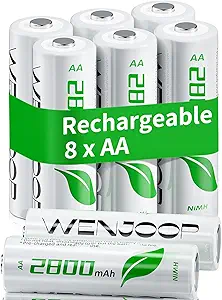
Evaluating High-Capacity NiMH AA Batteries with Recycled Content and 2000-Cycle Claims
When considering Taken's 48-pack of AA NiMH batteries, focus on the balance between their 3100mWh capacity rating and the 25% recycled material composition. These batteries promise up to 2000 recharge cycles, which is ambitious for consumer-grade NiMH cells, requiring scrutiny of real-world longevity versus environmental claims.
Key Considerations Before Buying
- The 3100mWh rating translates to approximately 2100-2200mAh capacity—verify this meets your high-drain device needs like gaming controllers or flash units.
- A 2000-cycle lifespan claim is exceptional; typical quality NiMH batteries achieve 500-1000 cycles, so assess early reviews for charge retention over time.
- The 25% recycled content is a sustainability plus, but inquire about performance consistency compared to virgin material batteries.
What Our Analysts Recommend
For NiMH batteries, consistent voltage output under load (1.2V nominal) and low self-discharge rates are critical. Check reviews mentioning performance in specific devices like LED lights or wireless mice over months. Pre-charged status should mean ready-to-use, but a proper initial charge cycle often optimizes capacity.
AA Market Context
Market Overview
The AA rechargeable market is dominated by Japanese brands (Eneloop, AmazonBasics) and Chinese manufacturers, with capacity claims often ranging from 1900mAh to 2800mAh. Taken's 3100mWh (≈2100mAh+) positions it in the mid-to-high capacity segment, competing on value-per-cell in bulk packs.
Common Issues
Buyers frequently encounter inflated capacity ratings, inconsistent cell performance within multi-packs, and reduced cycle life after 6-12 months. NiMH batteries also suffer from voltage depression if not properly maintained with periodic full discharges.
Quality Indicators
Look for batteries maintaining at least 70% of rated capacity after 50 cycles, minimal capacity variance between cells (±5%), and low self-discharge (holding 85% charge after 1 year). Quality chargers with individual cell monitoring enhance longevity.
Review Authenticity Insights
Grade B Interpretation
A Grade B with 15% estimated fake reviews indicates generally reliable feedback but suggests some incentivized or biased reviews may be present. The 4.10 adjusted rating (down from 4.44) reflects this adjustment, placing it in the 'good but verify' range.
Trust Recommendation
Prioritize reviews discussing specific use cases over 3+ months and those mentioning both pros and cons. Verified purchase status (all reviews here) adds credibility, but focus on detailed experiences with charging habits and device compatibility.
Tips for Reading Reviews
Search for reviews mentioning capacity testing with actual devices (not just 'works great'), comments on cell consistency across the 48-pack, and experiences with the 2000-cycle claim after repeated use. Be skeptical of reviews only praising price without performance details.
Expert Perspective
Taken's offering presents a compelling value proposition with its 48-count bulk pack, recycled content, and ambitious cycle life claims. The 4.10 adjusted rating suggests genuine satisfaction among most users, though the capacity rating (3100mWh) requires real-world verification against established benchmarks. For households with high battery turnover in moderate-drain devices, this pack could offer significant cost savings over single-use batteries if the longevity claims hold true.
Purchase Considerations
Consider your charging infrastructure—these batteries require a smart NiMH charger for optimal lifespan. The 48-pack size makes sense for multi-device households or small businesses, but test several cells initially for consistency. Weigh the environmental benefit of recycled content against potentially slightly lower initial capacity versus premium brands.
Comparing Alternatives
Compare with Panasonic Eneloop Pro (2550mAh) for higher performance or AmazonBasics (2400mAh) for similar value propositions, noting cycle life differences.