Choosing a Digital Test Light: Why Voltage Range and Polarity Detection Matter
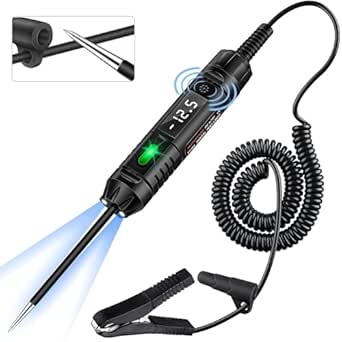
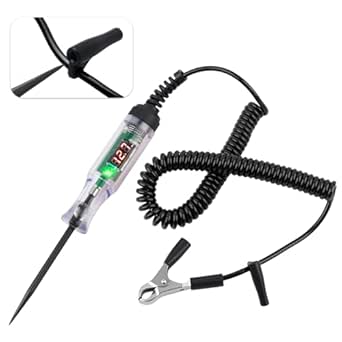
For automotive DIYers, a digital test light like this Upgrade model represents a significant evolution from basic neon bulb testers. The 3-80V range specifically covers everything from a weak battery to a running alternator's output, while the dual-color LED polarity indicator is crucial for modern vehicle electronics where reverse polarity can damage sensitive components. This tool bridges the gap between a simple continuity checker and a full multimeter.
Key Considerations Before Buying
- Voltage Range: This product's 3-80V specification is ideal for automotive use, as it can detect a low-charge battery (below 12V) and a charging system's peak voltage (typically 14-15V), unlike simpler 12V-only testers.
- Display vs. Visual Indication: The integrated digital voltmeter provides precise readings for diagnosing charging issues or voltage drops, while the LED light offers instant visual feedback for quick continuity or power checks.
- Probe Quality and Safety: The inclusion of an extra probe and the design for fuse testing suggests it's built for poking into tight fuse boxes and connectors, which demands durable, insulated probe tips to prevent shorts.
What Our Analysts Recommend
Prioritize models with clear polarity indication (like this tool's dual-color LED) to avoid damaging ECUs when probing. The probe should feel robust, not flimsy, and the wire should be a flexible, strain-relieved silicone type, not stiff PVC that cracks in cold Canadian garage temperatures. A clear, bright digital display is essential for use in poorly lit engine bays.
Circuit Testers Market Context
Market Overview
The circuit tester market is polarized between cheap, non-contact/passive test lights and feature-rich digital models. Products like this one are carving out a 'pro-sumer' niche, offering multimeter-like functionality in a simpler, dedicated tool format for specific automotive diagnostics.
Common Issues
Low-end testers often fail with pulse-width modulated (PWM) circuits common in modern cars (like fuel injectors or some lighting), giving false negatives. Others have vague or dim indicators that are useless in daylight. Poor wire insulation and probe tips that bend or break after minimal use are frequent points of failure.
Quality Indicators
Look for specific voltage range listings (not just '12V'), mention of PWM circuit compatibility, and high-quality stranded copper wire with proper insulation. A product that includes a spare probe or alligator clip accessory, like this one, often indicates thoughtful design for real-world use scenarios.
Review Authenticity Insights
Grade B Interpretation
A 'B' grade with a 10% estimated fake review rate is relatively strong for this category on Amazon. It indicates the vast majority of feedback, especially the verified purchases, is likely genuine. The slight adjustment from a perfect 5.0 to a 4.8 rating is realistic and adds credibility.
Trust Recommendation
Focus on the verified purchase reviews that discuss specific use cases, like testing a fuse box, checking for parasitic draw, or diagnosing a taillight circuit. The high rating, even after adjustment, suggests consistent satisfaction with core functionality rather than inflated hype.
Tips for Reading Reviews
For technical tools, prioritize reviews that mention testing specific car systems (e.g., 'tested my O2 sensor heater circuit') or durability over time ('used for 6 months'). Be slightly more skeptical of reviews that only praise packaging or delivery speed without mentioning performance.
Expert Perspective
This Upgrade Automotive Test Light appears to be a competent, feature-focused tool for the serious DIYer. Its combination of a digital voltage readout and a traditional test light in one package is its key differentiator. The 4.80 adjusted rating from verified buyers strongly suggests it reliably performs its primary functions: detecting voltage, indicating polarity, and aiding in fuse testing. The specific 3-80V range is a meaningful spec that shows it's designed for real automotive electrical systems, not just a generic tester.
Purchase Considerations
This tool is best suited for someone who does more than just check if a circuit is 'live.' If you need to know if a socket has 11.8V or 12.4V, or need to quickly identify positive from negative in a wiring harness, this is a logical step up from a basic test light. However, if you only need simple continuity testing, a cheaper tool may suffice.
Comparing Alternatives
Shoppers should compare the probe feel, display readability, and wire length of this model against other digital test pens from brands like Neiko or Klein Tools to find the best ergonomic fit.