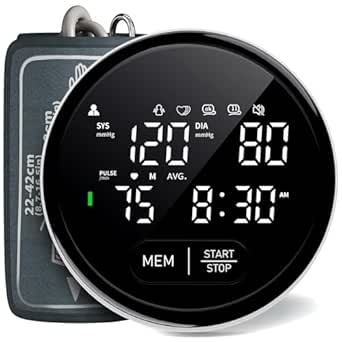
Choosing a Clinically Validated Upper Arm Monitor for Accurate Home Readings
When selecting a home blood pressure monitor like the OMRON Iron, focus on clinical validation and proper cuff fit. This specific model's 17" wide-range cuff is designed for larger arms, a critical factor for accurate oscillometric measurement. Its medical-grade designation indicates it meets standards for home use accuracy.
Key Considerations Before Buying
- Cuff size is non-negotiable: The OMRON Iron's 17" arm circumference range (9"-17") must match your measurement; an ill-fitting cuff is the leading cause of home monitoring error.
- Clinical validation matters: This monitor's validation (likely against protocols like AAMI/ESH) means its algorithm has been tested for accuracy across diverse populations, unlike unvalidated models.
- Upper arm vs. wrist: Upper arm monitors like this one generally provide more reliable readings than wrist models, as they measure pressure closer to the heart's level.
What Our Analysts Recommend
Seek specific mentions of clinical validation from recognized bodies and check for a cuff size chart. For the OMRON Iron, verify the 17" maximum fits your arm; measure the midpoint between your shoulder and elbow. Look for features like irregular heartbeat detection, which this model includes, as it adds clinical value.
Blood Pressure Market Context
Market Overview
The home blood pressure monitor market is dominated by oscillometric devices, with upper arm cuffs being the clinical gold standard for home use. Brands like OMRON compete on validation, cuff technology, and data tracking features, not just basic readings.
Common Issues
Users frequently report inaccurate readings due to incorrect cuff placement or size, and frustration with confusing interfaces or unreliable Bluetooth connectivity in smart models. Battery life and display clarity are also common pain points.
Quality Indicators
Prioritize devices that specify clinical validation (e.g., AAMI, ESH, FDA cleared). A good quality monitor will have a detailed cuff sizing guide, clear error alerts for improper use, and a memory function that stores readings with date/time stamps.
Review Authenticity Insights
Grade B Interpretation
A Grade 'B' with a 10% estimated fake review rate suggests a strong core of authentic feedback with minimal manipulation. For a high-volume product like this (5,797 reviews), this grade indicates reliable social proof. The 4.40 adjusted rating is still excellent, showing genuine satisfaction.
Trust Recommendation
Trust the high volume of verified purchase reviews. Focus on detailed reviews that discuss long-term use, cuff comfort, and comparison to doctor's office readings. Be slightly more skeptical of overly emotional 5-star reviews lacking specifics.
Tips for Reading Reviews
Filter reviews to see those mentioning 'cuff size' or 'accuracy comparison' to assess fit and performance claims. Pay close attention to 3- and 4-star reviews for balanced insights on pros and cons, which are often the most informative for medical devices.
Expert Perspective
The OMRON Iron presents as a robust choice, particularly for users requiring a larger cuff. Its high adjusted rating (4.40/5) from thousands of verified purchases signals consistent performance and user satisfaction. The 'Clinically Validated' and 'Medical Grade' claims are significant differentiators from basic drugstore models. The strong authenticity grade (B) means this positive consensus is trustworthy.
Purchase Considerations
This monitor is an ideal fit if your arm circumference is within its 9"-17" range and you prioritize clinically-backed accuracy over advanced smartphone app features. Consider if the basic memory function (likely 14-30 readings) is sufficient for your tracking needs versus models with unlimited cloud storage.
Comparing Alternatives
Shoppers should compare the Iron's cuff size and validation status against other OMRON series (like the Platinum) and brands like Withings or A&D for similar features.