
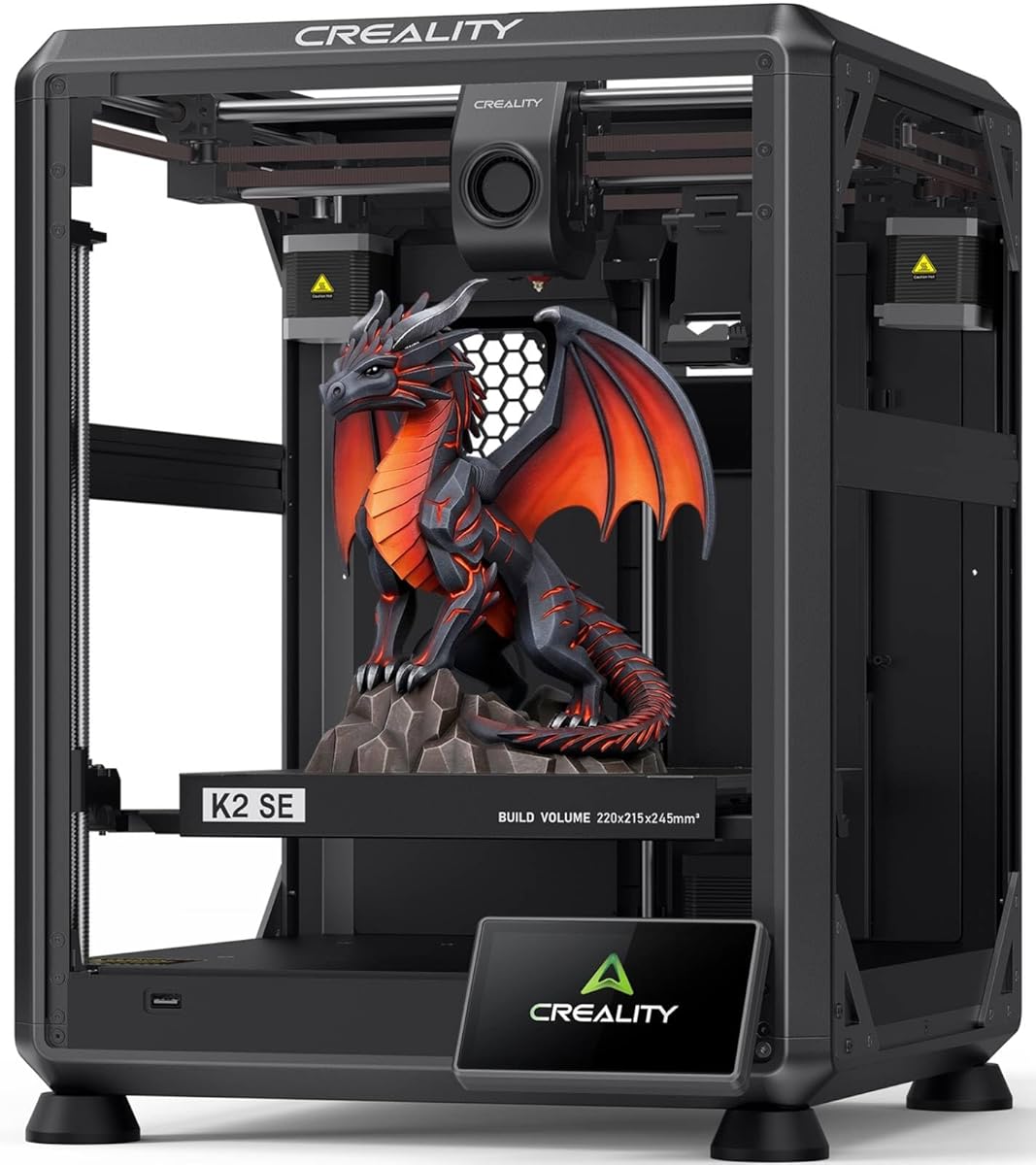
Evaluating High-Speed 3D Printers: What the Creality K2 SE Delivers
When considering a high-speed 3D printer like the Creality K2 SE, focus on how its 500mm/s capability translates to real-world performance versus marketing claims. The combination of CFS multi-color support and a solid metal build indicates a machine designed for both speed and material versatility, but these features require specific setup considerations.
Key Considerations Before Buying
- The 500mm/s speed rating depends heavily on filament type and model complexity; expect optimal speeds with PLA on simple geometries, not with all materials.
- The CFS (Creality Filament System) for multi-color printing adds convenience but requires proprietary components, locking you into Creality's ecosystem for that functionality.
- The 220×215×245mm build volume is medium-sized—sufficient for most hobbyist projects but restrictive for large prototypes or batch production.
What Our Analysts Recommend
For high-speed printers, examine the direct drive extruder's compatibility with flexible filaments and the quick-swap nozzle system's ease of maintenance. Genuine user reviews should mention specific print speeds achieved, not just the advertised maximum, and detail leveling consistency across the print bed.
3D Printers Market Context
Market Overview
The consumer 3D printer market is increasingly segmented between budget entry-level machines and feature-rich models like the K2 SE that bridge hobbyist and semi-professional use. High-speed printing has become a key battleground, with CoreXY designs like this competing against traditional i3-style printers.
Common Issues
High-speed printers often struggle with vibration artifacts (ghosting/ringing) at maximum speeds and require meticulous calibration to maintain dimensional accuracy. Multi-color systems can introduce filament waste and clogging points if not properly maintained.
Quality Indicators
Look for printers with genuine all-metal hotends (not lined), robust frame construction to dampen high-speed vibrations, and comprehensive firmware that allows detailed speed and acceleration tuning. Community support and available upgrade paths are also critical longevity factors.
Review Authenticity Insights
Grade B Interpretation
A Grade B with 15% estimated fake reviews suggests generally reliable feedback but warrants scrutiny of overly enthusiastic 5-star reviews lacking technical details. The adjusted 4.20/5 rating (down from 4.56) indicates authentic satisfaction is strong but slightly less euphoric than the raw average suggests.
Trust Recommendation
Prioritize reviews discussing specific print results at various speeds, experiences with the auto-leveling system over multiple sessions, and long-term reliability of the direct drive extruder. Be skeptical of reviews that only praise speed without mentioning print quality trade-offs.
Tips for Reading Reviews
Search for reviews mentioning 'Klipper firmware' (which this printer uses for high-speed processing), nozzle swaps, or experiences with different filament brands. Authentic users typically describe failed prints and solutions, not just successes.
Expert Perspective
The Creality K2 SE positions itself as a capable speed-focused workhorse with its CoreXY design and Klipper firmware foundation. The solid metal construction and direct drive extruder suggest good durability for intensive use. However, the 15% questionable review rate means the advertised 500mm/s speed should be verified through third-party benchmarking videos rather than relying solely on Amazon testimonials. The high authentic rating of 4.20/5 from over 1,000 reviews indicates genuine user satisfaction, particularly with its out-of-box functionality.
Purchase Considerations
This printer makes most sense for users who prioritize speed over maximum build volume and value the multi-color CFS ecosystem. Consider your filament usage—if you frequently print with abrasive materials, the quick-swap nozzle system becomes more valuable. The learning curve for optimizing high-speed settings is steeper than with standard-speed printers.
Comparing Alternatives
Compare against similarly priced CoreXY competitors like the Bambu Lab A1 or Sovol SV08, focusing on real-world speed benchmarks and ecosystem costs beyond the initial purchase.


