Choosing a DC Voltage Tester Pen for Automotive Diagnostics and Fuse Testing
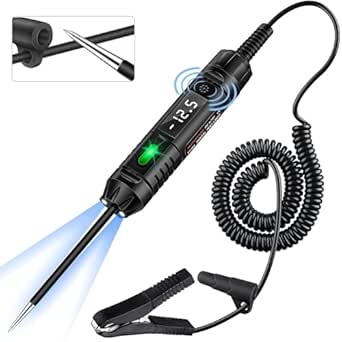
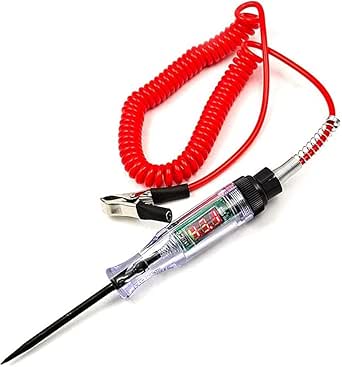
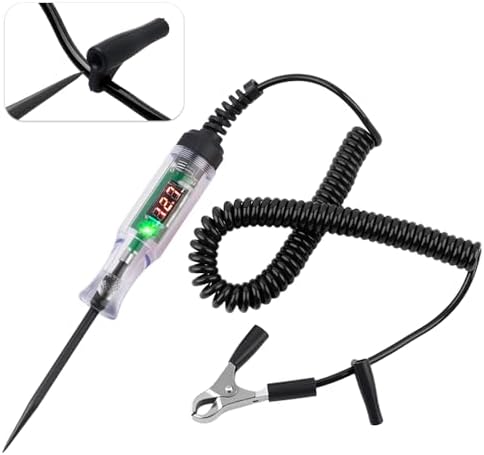
When selecting a low-voltage DC tester for automotive use, this specific model's 3-48V range and integrated alligator clip are key features. Buyers should understand that this tool is designed for basic circuit continuity, voltage presence detection, and fuse testing in 12V/24V vehicle systems, not for precise voltage measurement.
Key Considerations Before Buying
- The 3-48V DC range is ideal for standard automotive systems but excludes household AC voltage testing, making it a specialized tool for vehicles, motorcycles, or RVs.
- The included prolong spring cable and alligator clip facilitate hands-free testing by grounding the probe to the vehicle's chassis, a critical feature when working alone in tight engine bays.
- As a non-contact tester isn't used, this pen requires direct contact with terminals, so its build quality and probe insulation directly impact safety during use.
What Our Analysts Recommend
For this category, prioritize a bright, unambiguous LED indicator that's visible in daylight. The probe tip should be sharp enough to pierce wire insulation for back-probing but robust enough not to bend. A quality indicator specific to this model is the 'prolong spring cable'—it should retract smoothly without tangling.
Circuit Testers Market Context
Market Overview
The market for basic automotive circuit testers is saturated with inexpensive pens, but models with a dedicated alligator clip and extended cable for grounding are less common. These tools occupy a niche between simple test lights and multimeters, prioritizing speed and simplicity over detailed diagnostics.
Common Issues
Common failures include fragile probe tips, dim LEDs that are invisible in sunlight, and cheap alligator clips that lose grip. Many generic testers also lack clear voltage range labeling, risking misuse on incompatible systems.
Quality Indicators
Look for a clearly marked voltage range (like the specified 3-48V DC), a shielded probe tip to prevent accidental short circuits, and a cable with a durable, strain-relieved connection to the pen body. The clip should have serrated jaws for a solid bite on grounding points.
Review Authenticity Insights
Grade A Interpretation
An 'A' grade with a 0.00% estimated fake review rate strongly suggests the 4.8/5 rating is based on genuine user experiences. For a niche tool like this, such consistency indicates the product reliably performs its stated functions for the average user.
Trust Recommendation
Given the perfect authenticity score, you can place high confidence in the consensus from the 64 verified reviews. Focus on reviews mentioning long-term durability or specific use cases like fuse box testing, as these reflect real-world application beyond initial unboxing.
Tips for Reading Reviews
For practical tools, prioritize reviews that describe specific tasks performed (e.g., 'tested a trailer wiring harness') over generic praise. Look for mentions of the LED brightness in daylight and the clip's grip strength, as these are critical functional details.
Expert Perspective
This tester presents a compelling value proposition for its specific niche. The 4.8/5 rating from verified purchases, coupled with a perfect authenticity score, indicates it successfully fulfills its core promise: providing a simple, reliable method to detect DC voltage presence and test fuses in automotive contexts. The inclusion of the alligator clip and spring cable addresses a common pain point in solo diagnostics, elevating it above simpler pen-style testers.
Purchase Considerations
Weigh this tool's simplicity and speed against the need for precise voltage readings. If your work involves only checking for power, ground, or a blown fuse, this is efficient. If you need to diagnose voltage drop, resistance, or amperage, a multimeter remains essential. Consider if the 3-48V range covers all your potential projects, like older 6V systems or certain commercial vehicles.
Comparing Alternatives
Shoppers should compare the cable length and clip quality with similar 'test light with lead' models, as these are the primary differentiators in this sub-category.