Choosing a Digital Multimeter: Why Auto-Range and TRMS Matter for German DIYers
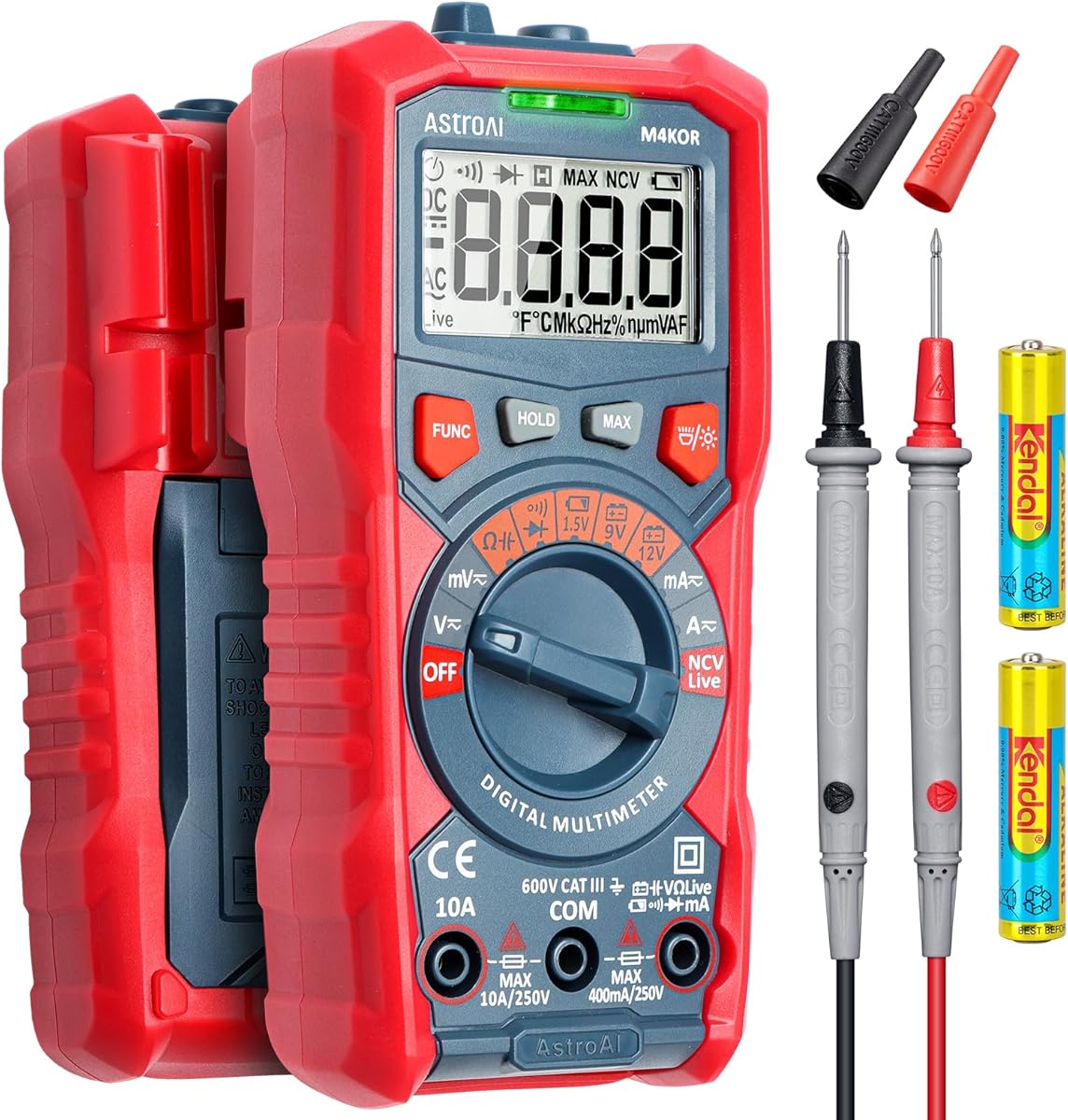
The AstroAI Digital Multimeter represents a modern entry in the auto-ranging category, offering 4000 counts resolution and True RMS measurement. For German consumers, its NCV (Non-Contact Voltage) detection and backlit LCD are practical features for varied electrical environments, from household wiring to automotive diagnostics.
Key Considerations Before Buying
- Auto-ranging functionality, as seen on this AstroAI model, simplifies measurements but verify its speed and accuracy across the advertised voltage and resistance ranges.
- True RMS (TRMS) capability is essential for accurately measuring non-sinusoidal AC waveforms common in modern electronics and variable-speed motor drives.
- The 4000-count display provides better resolution than basic 2000-count meters, allowing you to see smaller voltage drops or resistance changes critical for troubleshooting.
What Our Analysts Recommend
Beyond basic specs, examine build quality: secure battery compartment, robust probe sockets, and clear, high-contrast LCDs like the one noted here. For German markets, ensure clear CE marking and compliance with safety standards like IEC 61010 for the voltage levels you intend to measure.
Multi Testers Market Context
Market Overview
The digital multimeter market is saturated with options ranging from professional Fluke units to budget Amazon brands like AstroAI. The sub-€50 segment is highly competitive, focusing on feature-packed models for hobbyists and occasional use.
Common Issues
Budget meters often compromise on measurement accuracy at range extremes, have slow auto-ranging, or use fragile test lead connectors. Fused current inputs for overload protection are sometimes omitted or poorly implemented in this price tier.
Quality Indicators
Look for clear specification of accuracy (e.g., ±0.5%+3 digits), proper safety category ratings (CAT II or III for household/installation use), and detailed, logical user manuals. A well-implemented NCV function should have adjustable sensitivity to reduce false positives.
Review Authenticity Insights
Grade B Interpretation
A Grade B with a 15% estimated fake review rate suggests generally reliable feedback but warrants scrutiny. The high volume of verified purchases (6103 reviews) strengthens credibility, but the adjusted rating drop from 4.78 to 4.40 indicates some inflated praise.
Trust Recommendation
Prioritize reviews that discuss specific use cases relevant to yours, such as automotive 12V systems or European household AC measurements. Be skeptical of reviews that only praise packaging or generic 'works great' statements without technical detail.
Tips for Reading Reviews
Focus on German-language reviews mentioning 'Strommessgerät' or 'Multimeter' in context, and look for comments on the auto-range speed when measuring fluctuating signals or the practicality of the NCV function for quickly checking outlets.
Expert Perspective
The AstroAI multimeter's strong adjusted rating of 4.40/5 from a large verified base suggests it delivers solid value for its feature set in the German DIY market. The inclusion of TRMS and a 4000-count display at this price point is notable, though professional users might seek higher accuracy and ruggedness. The high review count with a natural distribution (mostly 5-star, some 4-star) indicates consistent user satisfaction with core functions.
Purchase Considerations
Weigh the convenience of auto-ranging and NCV against potential trade-offs in ultimate measurement precision and long-term durability compared to established tool brands. This meter is well-suited for occasional household, automotive, and hobby electronics use where its feature set provides good utility.
Comparing Alternatives
Shoppers should compare its TRMS accuracy specs and safety ratings against similarly priced models from brands like UNI-T, Kaiweets, or the base-line offerings from established players like Brymen.