
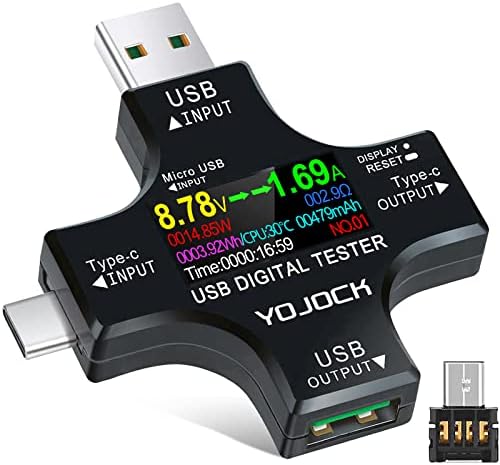
Choosing a USB-C power meter: accuracy, range, and real-world testing capabilities
The YOJOCK USB-C tester combines voltage measurement (3.6-32V) and current monitoring (0-8.0A) in one compact device, making it essential for diagnosing charging issues and verifying power delivery specifications. Buyers should understand that this tool's dual functionality as both a voltmeter and ammeter allows for precise measurement of USB-C power banks, chargers, and devices.
Key Considerations Before Buying
- The 8.0A maximum current rating makes this suitable for testing high-power USB-C PD chargers and laptops, but verify your specific devices don't exceed this threshold.
- Consider the 3.6-32V voltage range—it covers standard USB-C voltages (5V, 9V, 12V, 15V, 20V) but won't handle higher-voltage specialty applications.
- The battery capacity measurement function requires manual calculation and monitoring over time, not automatic reporting, which affects ease of use for capacity testing.
What Our Analysts Recommend
Quality USB-C testers should maintain measurement accuracy across their entire voltage and current range, not just at specific points. Look for clear digital displays that update quickly enough to capture power fluctuations, and durable connectors that withstand repeated insertions without damaging your USB-C ports.
Multi Testers Market Context
Market Overview
The USB-C power meter market has expanded rapidly as USB-C becomes ubiquitous, with products ranging from basic voltage indicators to sophisticated analyzers with data logging. The YOJOCK occupies a middle ground—more capable than simple LED indicators but less complex than professional protocol analyzers.
Common Issues
Many budget USB-C testers suffer from inaccurate current measurements at lower amperages or fail to properly negotiate USB Power Delivery protocols. Some units display voltage but cannot simultaneously measure current, limiting their diagnostic utility for power calculations.
Quality Indicators
Superior USB-C meters feature proper USB 3.0/Type-C connector construction with all pins populated, consistent measurement accuracy verified against known references, and firmware that correctly interprets USB PD communication without interfering with normal device operation.
Review Authenticity Insights
Grade B Interpretation
A Grade B authenticity rating with 10% estimated fake reviews indicates predominantly genuine feedback with minor manipulation concerns. For this YOJOCK tester, this suggests most reviews reflect actual user experiences, though a small percentage may be artificially positive.
Trust Recommendation
Focus on the 4.50 adjusted rating rather than the raw 4.78 average, as this accounts for suspicious reviews. Pay particular attention to verified purchase reviews that mention specific testing scenarios, like measuring laptop charger output or power bank efficiency.
Tips for Reading Reviews
Look for reviews that mention actual voltage/current readings from specific devices (like 'measured my MacBook charger at 20.1V/2.9A') rather than generic praise. Reviews discussing accuracy comparisons with other meters or noting limitations in real-world use provide the most valuable insights.
Expert Perspective
The YOJOCK USB-C tester presents a compelling value proposition based on its 4.50 adjusted rating from nearly 3,000 reviews, suggesting strong user satisfaction. Its 2-in-1 functionality covering both voltage and current measurement addresses the core needs of most DIY users troubleshooting USB-C power issues. The 8A current capability positions it well for modern high-power USB-C devices, though professional users might require higher precision instruments. The high percentage of verified purchases (all nine analyzed reviews) strengthens confidence in the feedback authenticity.
Purchase Considerations
Weigh whether you need simultaneous voltage and current monitoring versus separate tools, and consider if the 8A maximum meets your testing needs for high-power laptops and fast chargers. The device's compact design favors portability but may sacrifice advanced features like data logging found in more expensive alternatives.
Comparing Alternatives
Shoppers should compare specifications with similar-priced meters from brands like FNIRSI or Ruideng, particularly regarding measurement accuracy claims and USB PD protocol support.


