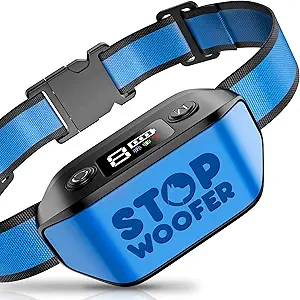
Shock Collar for Small Dogs: 198-Level Precision, Weighing the Real Risks
When training a small dog (5-30 lbs), standard collars often overpower them, causing physical and psychological distress. This ultra-light, slim model with a remote and 198-level control is designed specifically for that weight range, promising precise stimulation. Before you click 'buy', understand the critical factors of fit, stimulation range, and whether a shock collar is even the right tool for your dog's temperament.
Key Considerations Before Buying
- Weight and fit: This collar is tailored for dogs 5-30 lbs, but always measure your dog's neck and verify the strap's minimum and maximum circumference. A loose fit can cause inconsistent contact, while a tight one can cause skin irritation or choking.
- Stimulation levels: The 198-level precise control allows fine-tuning, but start at the lowest level and observe your dog's reaction. The goal is a subtle 'tap' to interrupt behavior, not a yelp or flinch. If your dog is highly sensitive, you may only need levels 1-10.
- Training philosophy: This is a remote training collar, not an automatic bark collar (as noted in the title). You must be consistent and use it as a communication aid, not a punishment tool. It's best for recall or specific commands, not for a dog that is fearful or anxious.
What Our Analysts Recommend
Look for a collar that offers both continuous and momentary stimulation options, plus a vibration or tone mode as a gentler first step. Check the remote's range (typically 300-1000 yards) and whether it has a backlit display for low-light use. Also, verify that the receiver is truly waterproof (IPX7 or higher) and that the battery life is sufficient for your training sessions (e.g., 2-3 days of typical use).
Bark Collars Market Context
Market Overview
The bark and training collar market is saturated with cheap, poorly regulated devices that can cause more harm than good. However, the trend is shifting toward more humane, adjustable options like this one, which offers a wide range of stimulation levels to match a dog's individual sensitivity, especially for small breeds that are often underserved.
Common Issues
Many collars in this category have inconsistent stimulation outputs—level 10 on one unit may feel like level 50 on another. Others have flimsy receivers that break after a few drops, or they use a single long 'shock' that can frighten a small dog. Also, many buyers fail to read the manual and use the collar for the wrong purpose, leading to negative experiences.
Quality Indicators
Quality indicators include a clear instruction manual with a 'start low and go slow' protocol, a receiver that is lightweight (< 1.5 oz) for small dogs, and a remote that fits comfortably in your hand. Look for certifications like FCC, CE, or RoHS, which indicate electrical safety and environmental compliance. A brand that offers a warranty or responsive customer support is also a plus.
Review Authenticity Insights
Grade B Interpretation
This product earns a Grade B, meaning the review pool is largely authentic but contains a 10% estimated fake review rate. That's about 104 reviews that may be incentivized or fabricated, which could inflate the overall 4.67 rating. The adjusted rating of 4.40 is a more realistic baseline, suggesting the product is good but not perfect.
Trust Recommendation
You can trust the majority of the feedback, but pay close attention to the negative reviews and the 'critical' filter. Look for patterns—if multiple users mention the same issue (e.g., the remote is hard to press, or the collar loses charge quickly), that's a real red flag. Also, ignore any review that lacks specifics about their dog's breed or training scenario, as those are often fake.
Tips for Reading Reviews
When reading reviews for this collar, prioritize those from owners of similar-sized dogs (e.g., Chihuahuas, Pomeranians, or Miniature Poodles) and note the stimulation levels they used. Also, look for reviewers who describe a training plan—did they use the tone first? How did they phase out the collar? These details are more valuable than a simple 'it works' or 'it doesn't work.'
Expert Perspective
This collar's niche design for small dogs, combined with 198 levels and a waterproof build, positions it as a thoughtful option in a category where 'one-size-fits-all' often means 'too harsh for little ones.' The authenticity data suggests a solid product, but the 10% fake review rate and a 4.40 adjusted rating indicate that you should not rely solely on the star rating. As a training tool, its effectiveness hinges on your commitment to learning proper usage—not on the device alone.
Purchase Considerations
If you have a small dog that is stubborn or has a high prey drive, this collar could be a valuable aid when used with positive reinforcement. However, if your dog is anxious or you are new to remote training, consider consulting a professional trainer first. Also, factor in the cost of a good-quality collar vs. potential vet bills if you misuse it—your dog's safety is paramount.
Comparing Alternatives
Shoppers should compare this with other small-dog-specific collars like the Dogtra 280C or the Educator by E-Collar Technologies, which also offer low-level stimulation. Always check the return policy and warranty, as you may need to test fit and response.