
Why Amazon Clothing Reviews Are Unusually Easy to Fake (and How to Read Them Anyway)
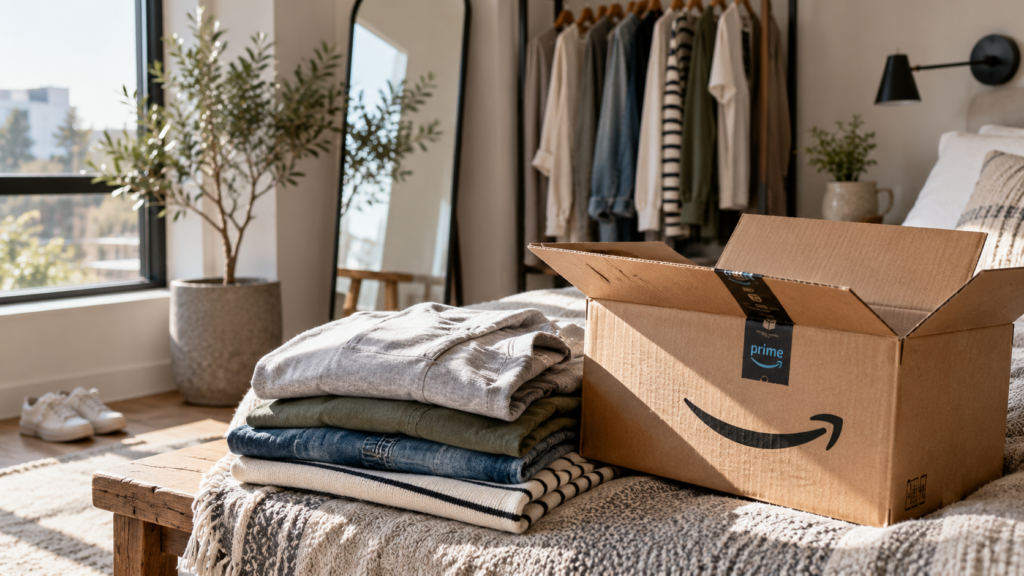
Apparel is one of Amazon’s largest categories by sheer volume of customer reviews, and that volume is exactly what makes it a playground for manipulation. Subjective feedback about fit, softness, and style gives fake reviews easy cover among honest ones. Here is how to read through the noise and protect your next purchase.
Key Takeaways
- Fake reviews are common across multiple e-commerce platforms, but Amazon clothing is particularly vulnerable because fit and style are subjective, review volumes routinely exceed 50,000 per listing, and cheap photo-review farms can flood a product page in days.
- Checking the overall rating of a product may hide significant quality or sizing problems. Independent research since 2023 routinely estimates double-digit percentages of suspicious reviews in popular fashion subcategories.
- Review patterns and behaviors are crucial to spotting fake clothing reviews on Amazon. Concrete red flags include vague sizing praise with no measurements, stock or AI model photos, “came as pictured” spam on 40-color listings, and reviewer histories full of nothing but five star ratings on fast-fashion buys.
- Distrust reviews that contain exaggerated praise without specific details about the garment. Instead, lean on mid-range three-star reviews that mention shrinking, chemical odor, dye transfer, or see-through fabric.
- Null Fake is a free, no-signup tool where you paste an Amazon clothing URL (or use the Chrome extension) to get an authenticity grade and explanation, then explore the clothing hub for deeper guidance.
Why Amazon Clothing Reviews Are So Easy to Manipulate
Clothing sits at the intersection of massive scale and maximum subjectivity. Top-selling leggings, shirts, and sneakers on Amazon.com and Amazon.co.uk each carry 50,000 to 150,000 reviews, making manual vetting impossible for customers. When every reviewer describes “fit” and “comfort” differently, bad actors blend right in.
Amazon claims to have blocked 275 million fake reviews in 2024, and Amazon uses AI to investigate suspicious reviews. Yet in Null Fake’s analysis of roughly 3,890 clothing products between January 2024 and January 2025, about 22.1 percent showed high manipulation-graded D or F. Low-cost photo-review farms and AI-generated text since 2023 let sellers quickly create hundreds of believable clothing reviews with staged mirror selfies and generic praise. The proportion of reviews carrying AI markers rose from roughly 22 percent to 42 percent during 2024 alone.
Most fake Amazon reviews in fashion are not dramatic rants. They are short, repetitive five star reviews designed to push a product up Amazon’s search results and qualify for badges. Consider a generic brand leggings listing with 80,000-plus ratings: scroll the photos and you may notice nearly identical poses, the same wall decor, and the same phone case across supposedly independent buyers.
How Fake Reviews on Amazon Clothing Typically Work
Sellers game Amazon reviews through several tactics. Here are the most common in the clothing world:
- Refund-for-review schemes: A buyer purchases leggings or sneakers at full price, posts a glowing review with photos, then receives a refund off-platform via PayPal or messaging apps. The review keeps its “Verified Purchase” badge.
- Free products in exchange for positive reviews: Sellers ship free yoga pants, sports bras, or puffer jackets through social media groups, expecting five star reviews in return. Amazon suspends sellers offering incentives for fake reviews when caught, but enforcement lags behind the practice.
- Review farms and brokers: Networks of accounts post short, high-volume, generic praise. A no-name sneaker brand might jump from 0 to 1,000 reviews in two weeks, 95 percent five-star, with nearly identical phrasing about “premium leather.”
- Listing hijacking: A seller attaches new no-name clothes to an old, highly-rated listing for a different product, inheriting thousands of irrelevant positive reviews.
The Federal Trade Commission put over 700 businesses on notice for fake reviews in 2021, and the FTC filed a lawsuit against a company for fake Amazon reviews in 2023. Despite legal action, incentivized reviews remain widespread in fashion because the business model is cheap and the category’s scale makes detection slow.
Sizing and Fit: Subtle Red Flags in Clothing Reviews
Sizing is the most visible part of real apparel feedback, and it is exactly where fake reviews for clothing often use vague and generic language. Watch for these patterns:
- Phrases like “fits perfectly,” “true to size,” or “fits like a glove” repeated dozens of times without any mention of the reviewer’s height, weight, or usual size. Reviews that fail to mention sizing or fit issues may lack authenticity entirely.
- Genuine reviews usually mention specific details about the clothing item: “I’m 5’6″, 150 lbs, usually a US size 8, ordered a Medium and it’s snug in the thighs.” Fake reviewers avoid this level of detail.
- Unrealistic claims about a clothing item’s quality or sizing-like “perfect on every body type”-are a sign of coordinated praise rather than an honest review.
- Middle-tier reviews (2-3 stars) often provide balanced feedback compared to five star reviews. A three-star comment saying “waist shrunk half a size after first wash” is far more useful than fifty identical “awesome fit!” posts.
Readers should carefully analyze 1 to 3-star reviews for recurring complaints. In Flapen’s study of work leggings, 31 percent of returns were due to overall size mismatch, followed by waist fit issues and transparency-details that rarely appear in the wall of five-star praise.
Photos, Models, and AI Imagery: Visual Clues of Fake Amazon Reviews
Photo reviews are supposed to be a strong trust signal, but photo farms and artificial intelligence now blur the line between real and staged images.
- Stock-photo reuse: Same model, same pose, same mirror, same wall-posted as if they are different buyers. Look for identical phone cases, lighting, or room decor across many reviews.
- AI-generated imagery: Since mid-2024, reviewers have been uploading photos with visual artifacts-blurry hands, impossibly smooth skin, inconsistent lighting-hallmarks of synthetic image generation.
- Overly professional customer photos may signal fake reviews. If a $15 shirt has editorial-quality lighting and composition, treat it as a red flag. Real customer photos often show clothing in everyday settings: messy bedrooms, office bathrooms, natural light.
- Mismatched variants: A photo showing a black sweater when the listing variant is blue, or a handbag with a different logo, suggests review reuse across product pages.
Text Patterns: How to Spot Fake Reviews in Clothing Listings
Fake Amazon reviews rely on repetitive language and timing bursts. In clothing, the wording trends heavily toward comfort, style, and generic positivity. Here is what to watch for:
- Repeated phrases: “Came as pictured,” “high quality material,” “super soft and comfy,” “perfect for any occasion,” “exactly as described”-especially when they appear dozens of times across 40-plus color variants. Repetitive wording and templates may suggest reviews are generated through paid reviewing services.
- Review bursts: A sudden influx of five star reviews can suggest a coordinated review campaign. Unnatural date clustering of reviews-many arriving within a few days-can indicate manipulated ratings. Fake reviews often appear within a few days of each other.
- Short five star reviews often indicate fake reviews: one-line posts like “Love it! Great quality!” written by accounts that only leave ultra-positive clothing feedback across dozens of unknown brands.
- Suspicious reviewer histories: Patterns of suspicious reviewer histories can help identify potential fake reviews. Reviewers may repeat the same phrases or buzzwords across unrelated products, indicating potential manipulation. Look for similar wording in multiple reviews as a red flag.
- Return tells in lower stars: Filtering for 2, 3, and 4-star reviews helps reveal honest assessments of clothing. Real negative reviews mention shrinking, chemical odor, color bleeding, loose threads, or seams unraveling-details that are absent from coordinated praise.
Branded vs. No-Name Apparel: Different Tells for Fake Reviews
The signals for fake reviews differ between brand-name sneakers or handbags and generic fast-fashion basics.
Branded items (sneakers, handbags, accessories): Look for counterfeit-related complaints-misspelled logos, mismatched stitching, off-smelling leather, weak zippers, or tags that don’t match store versions. Search for phrases like “I own the real version” or “I compared to the pair I bought from the official store.” A lack of an official website for a brand is suspicious and worth checking before buying.
No-name basics (leggings, tees, joggers): Fraud here is about quality misrepresentation-fabric thinner than claimed, elastic failing after a few wears, colors that fade or bleed. Review hijacking occurs when sellers reuse an old highly-rated listing for a new product, so look for reviews referencing items that no longer match the current photos. If reviews mention a completely different style or material, the listing may have been hijacked.
Amazon’s Vine Program encourages honest reviews from selected reviewers. Amazon Vine reviewers receive free products for honest reviews, and Vine reviews are labeled and often include detailed feedback. Vendors pay an enrollment fee for each product in Vine. Amazon claims Vine reviewers are among its most insightful reviewers, though Vine reviewers may exhibit unconscious positive bias due to receiving free products. On branded items, Vine reviews tend to be more thoughtful than the flood of one-line praise from unknown accounts.
How Null Fake Helps You Spot Fake Amazon Clothing Reviews
Using third-party analyzers can help assess the authenticity of product reviews, and utilizing independent evaluation platforms can provide an adjusted reliability rating for reviews. Null Fake is a free, no-account tool built to help shoppers evaluate Amazon reviews-including hard-to-read clothing listings.
Here is how it works:
- Copy the Amazon clothing product URL.
- Paste it into nullfake.com (or click the free Chrome extension).
- Receive an A–F authenticity grade, a fake-review percentage estimate, and a plain-language explanation.
Null Fake’s analysis for apparel detects coordinated campaigns even when every reviewer mentions “fit,” by identifying timing bursts, repeated language, and suspicious reviewer networks rather than relying on star ratings alone. Null Fake supports over 20 Amazon marketplaces for review checking-US, UK, DE, FR, JP, and more. Grades are probability-based judgments, not guarantees about the physical product. Products with very few reviews receive a “U” (unanalyzable) score.
Each analyzed product gets a permanent, shareable product page you can bookmark or send to friends. The clothing hub routes you to category-specific guidance on how to read reviews by apparel type.
Paste the URL of the clothing listing you are considering into Null Fake before buying, then explore the clothing hub for deeper examples.
Practical Checklist: Reading Amazon Clothing Reviews Before You Buy
- Scan the rating distribution. If 90 percent of reviews are five stars with almost no negative reviews, proceed with caution.
- Read 2- and 3-star reviews first for tangible defects: shrinking, odor, transparency, stitching failures.
- Look for specific sizing info: reviewer’s height, weight, body shape, exact size ordered.
- Check photo reviews for repeated poses, rooms, or overly polished lighting.
- Sorting reviews by the most recent can highlight recent product changes or a suspicious surge of perfect scores. Recent reviews should contain detailed and varied descriptions for better reliability.
- Checking reviewer profiles can reveal suspicious patterns in review behavior-serial five-star accounts reviewing dozens of brands in a single week.
- A high concentration of unverified reviews suggests potential manipulation.
- Run the listing through Null Fake as a “second opinion,” especially for high-ticket clothing like premium sneakers, winter coats, or branded handbags.
FAQ
Are Amazon clothing reviews less trustworthy than reviews for electronics or tools?
Apparel reviews are not inherently less honest, but the category’s subjectivity plus massive review volume make it easier for fake reviews to blend in. A 2023 UK report found 11 to 15 percent of electronics reviews were fake. Fashion subcategories often hit similar or slightly higher rates. Shoppers should treat clothing reviews as usable but noisy data-lean on structured checks like Null Fake plus manual spot checks of mid-range reviews instead of trusting the average star score alone. Fake reviews are common across multiple e-commerce platforms, not just Amazon; retailers like Walmart face similar challenges across categories including gadgets and accessories.
Does the “Verified Purchase” badge mean a clothing review is definitely real?
The “Verified Purchase” badge indicates a user bought the item through Amazon, but it doesn’t guarantee an honest review. Refund-for-review schemes create “Verified” but compromised reviews-buyers are reimbursed off-platform in exchange for a five-star rating and photos. Null Fake’s research found that listings with 95-plus percent verified purchase rates were sometimes more likely to be manipulated. Treat the badge as one positive signal, but still check wording patterns, timing, and reviewer history.
How can I tell if a branded item like sneakers or a handbag on Amazon is counterfeit from the reviews?
Search reviews for specific complaints: off-smell, poor stitching, wrong logo placement, mismatched serial numbers, or packaging that differs from the official brand. Prioritize longer reviews where buyers compare the Amazon item with pairs bought directly from the brand or authorized store. Null Fake evaluates review authenticity, not physical counterfeit detection, so combine it with brand knowledge and Amazon’s return policies for big-ticket fashion.
What happened to Fakespot? Can I still use it?
Fakespot analyzed reviews using artificial intelligence and could check reviews for products on Amazon and TripAdvisor. However, Fakespot was shut down by Mozilla in July 2025 and is no longer available. Null Fake serves as a free, unlimited alternative with documented methodology and coverage across 20-plus international Amazon marketplaces. The world of online review-checking tools continues to evolve, so verify which services are still active before relying on them.
Is it safer to trust Amazon clothing sold and shipped by Amazon itself?
“Sold by Amazon” can reduce some seller-level risks but does not eliminate fake or incentivized reviews on the listing. Reviews are tied to the product page, not the seller, so hijacked listings or past manipulation still influence what you see. Use the same review-reading practices and run the product through Null Fake regardless of who fulfills the order-especially in categories with a history of heavy manipulation.
About the Author
Null Fake Research Team
Consumer Protection Researchers
The Null Fake Research Team consists of data scientists, consumer advocates, and e-commerce specialists dedicated to protecting online shoppers from fraudulent reviews. Our team has collectively analyzed over 40,000 Amazon products and published findings on review manipulation tactics, AI-generated content detection, and consumer protection strategies.
- 40,000+ products analyzed
- Specialized in AI content detection
- Consumer advocacy focus
- Documented methodology