
Choosing the Right Rechargeable AA Batteries for Solar Lighting Systems
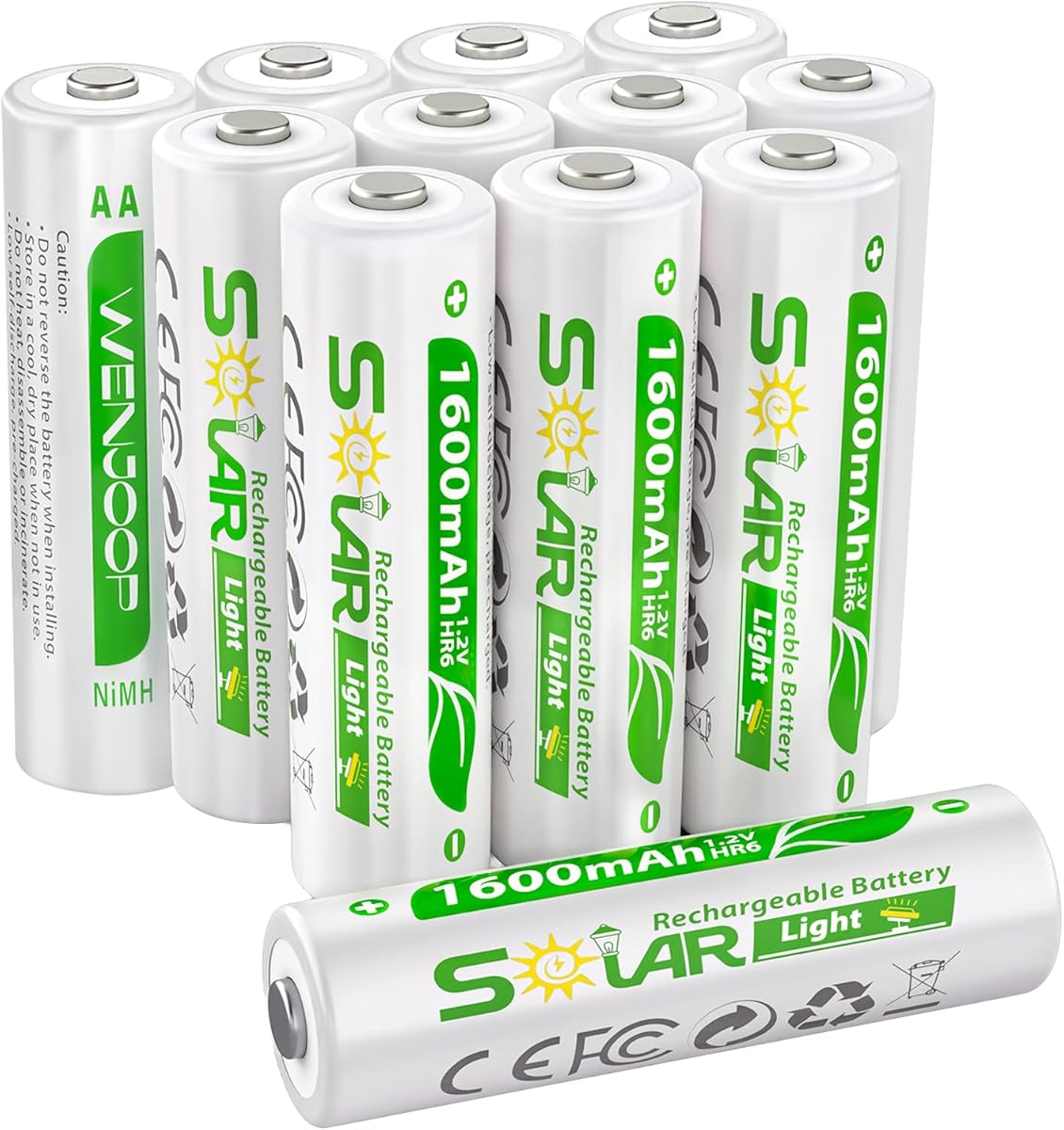
When selecting rechargeable batteries specifically for solar-powered outdoor lights, the 1.2V NiMH chemistry with low self-discharge is essential. This 12-pack of 1600mAh batteries is designed to withstand the unique charge-discharge cycles of solar applications, where batteries charge slowly during daylight and discharge throughout the night.
Key Considerations Before Buying
- For solar lights, prioritize NiMH batteries over standard alkaline or lithium-ion—NiMH handles partial charging better and won't leak corrosive materials that damage light housings.
- The 1600mAh capacity represents a balance between runtime and charge time; higher capacities might not fully recharge in limited daylight hours, especially in winter months.
- Precharged low self-discharge (LSD) batteries maintain 70-85% charge after one year of storage, crucial for seasonal solar applications where lights might be stored during winter.
What Our Analysts Recommend
Quality indicators include nickel-metal hydride (NiMH) chemistry specifically labeled for solar applications, with LSD technology and a minimum 1000-cycle lifespan. Check that the nominal voltage matches your solar light's requirements—most solar lights require 1.2V per cell, not the 1.5V of alkaline batteries.
AA Market Context
Market Overview
The AA rechargeable battery market has shifted toward specialized applications, with solar lighting representing one of the fastest-growing segments. Manufacturers now differentiate between general-purpose rechargeables and those engineered for specific devices like solar lights, where charging patterns differ significantly from wall-charged applications.
Common Issues
Solar light users frequently encounter batteries that won't hold charge through the night, fail to recharge fully on cloudy days, or develop 'memory effect' from partial charging cycles. Standard rechargeables often degrade quickly in the temperature extremes of outdoor environments.
Quality Indicators
Look for batteries with cycle life ratings (typically 500-1500 cycles), LSD technology, and temperature tolerance specifications. Quality solar-specific batteries will explicitly mention compatibility with solar charging systems and may include charging efficiency data.
Review Authenticity Insights
Grade B Interpretation
The Grade B authenticity rating with 11% estimated fake reviews suggests mostly genuine feedback but warrants careful review reading. For this product category, authentic reviews typically mention specific solar light brands, seasonal performance changes, and charging behavior observations.
Trust Recommendation
Focus on reviews that discuss actual solar light performance across seasons, particularly those mentioning how the batteries perform after multiple charge cycles. Verified purchase reviews that mention specific solar light models (like Malibu, Hampton Bay, or generic pathway lights) provide more reliable insights than generic praise.
Tips for Reading Reviews
Look for reviews that mention runtime in specific seasons, charging performance on cloudy days, and compatibility with particular solar light models. Be skeptical of reviews that only praise packaging or delivery speed without discussing actual battery performance in solar applications.
Expert Perspective
This product's 4.50 adjusted rating (from 4.78) after authenticity filtering still indicates strong user satisfaction, particularly notable in the solar lighting niche where battery performance is critical. The 1600mAh capacity is well-suited for most solar path lights but may be insufficient for larger solar floodlights. The 12-pack quantity aligns with typical solar lighting installations where multiple fixtures need simultaneous battery replacement.
Purchase Considerations
Consider your solar light's specific requirements—some higher-output solar lights may require 2000mAh+ batteries for optimal performance. Also factor in your climate; in northern regions with shorter winter days, lower capacity batteries might actually perform better as they'll charge more completely during limited daylight.
Comparing Alternatives
Compare these against Eneloop Pro or AmazonBasics rechargeables specifically marketed for solar applications, noting differences in capacity, cycle life, and temperature ratings.


