
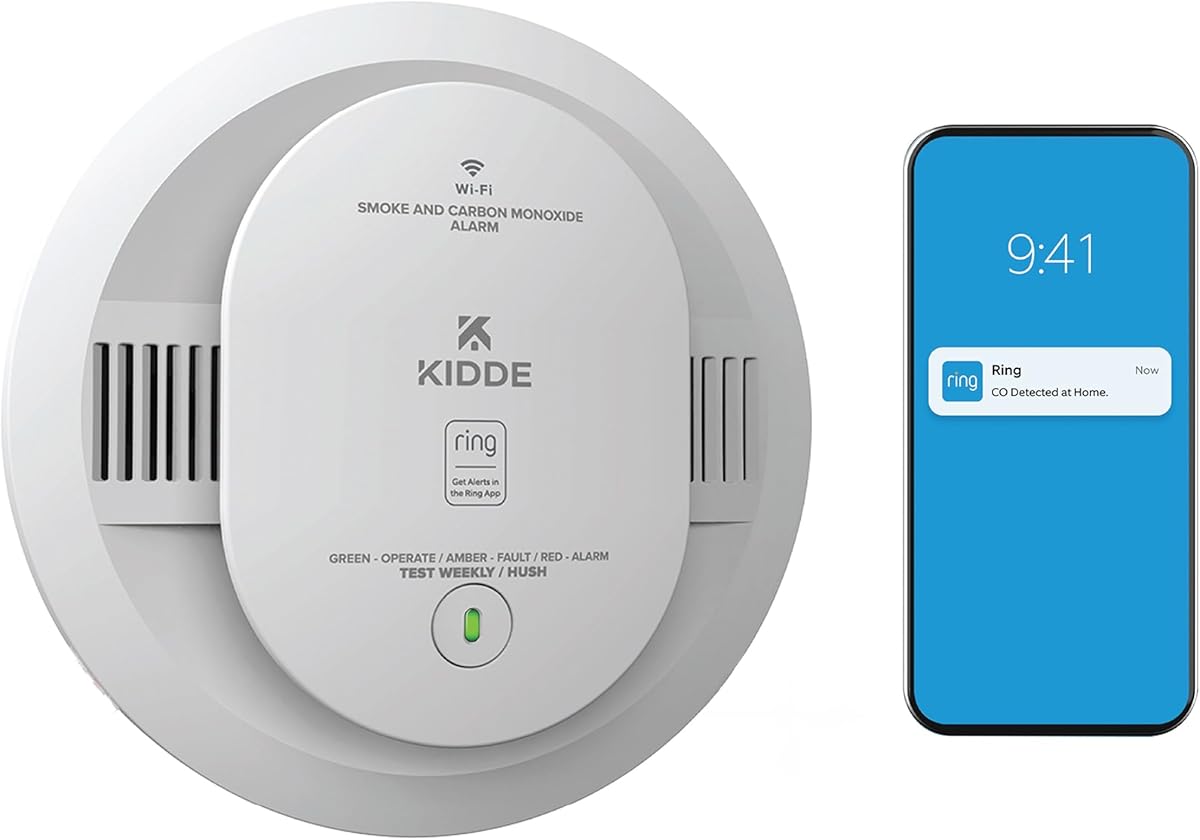
Smart Smoke and CO Detectors: Balancing Wireless Convenience with Reliable Protection
The Kidde Smart Smoke and Carbon Monoxide Detector represents a hybrid approach to home safety, combining traditional battery-powered operation with modern smart home integration. Buyers should understand this device bridges two worlds: the proven reliability of Kidde's detection technology with Ring's ecosystem connectivity, offering wire-free interconnectivity that eliminates complex hardwiring while maintaining critical safety functions.
Key Considerations Before Buying
- The AA battery power source provides installation flexibility but requires disciplined battery replacement schedules, unlike hardwired models with battery backup.
- Ring App integration delivers real-time notifications but creates ecosystem dependency—this device only works within Ring's smart home environment.
- Wire-free interconnectivity uses radio frequency signals instead of physical wiring, allowing detectors to communicate up to 150 feet apart without renovation work.
What Our Analysts Recommend
Quality indicators in this category include UL certification for both smoke and CO detection, clear voice alerts that specify threat type, and reliable interconnectivity that maintains communication during emergencies. For smart detectors specifically, examine notification reliability during internet outages and battery life optimization for the wireless communication module.
Market Context
Market Overview
The smoke and CO detector market is experiencing rapid smart home integration, with traditional safety brands like Kidde partnering with tech ecosystems like Ring. This convergence creates products that must meet both stringent safety certifications and consumer expectations for connectivity and convenience. The current trend favors dual-sensor devices that combine photoelectric smoke detection with electrochemical CO sensors.
Common Issues
Smart detectors frequently face connectivity dropouts, false alarms from cooking smoke, and battery drain from wireless communication features. Integration issues arise when ecosystems update independently of hardware, potentially creating compatibility gaps. Consumers also report confusion about whether smart notifications replace or supplement local audible alarms.
Quality Indicators
Look for dual-sensor technology with separate smoke and CO sensors rather than combined units, clear end-of-life indicators (typically 7-10 years), and reliable interconnectivity that functions during power outages. Premium smart detectors maintain local alarm functionality independent of internet connectivity and offer battery monitoring through their apps.
Review Authenticity Insights
Grade B Interpretation
The Grade B authenticity rating with 10% estimated fake reviews indicates predominantly genuine feedback with minor concerns. For this specific product, this suggests most reviews reflect actual user experiences with Ring integration and battery performance, though shoppers should be slightly cautious of overly technical reviews that might be incentivized.
Trust Recommendation
Focus on reviews discussing long-term performance (6+ months) and specific integration scenarios with Ring devices. Given the 4.30 adjusted rating from authentic reviews, this product performs slightly below its 4.50 overall rating but maintains strong genuine satisfaction. Pay particular attention to reviews mentioning battery replacement experiences and interconnectivity range.
Tips for Reading Reviews
Prioritize reviews that mention specific installation scenarios (like vaulted ceilings or open floor plans) and detailed Ring integration experiences. Look for patterns in complaints about notification delays or connectivity issues, as these are common pain points in smart detectors. Reviews discussing both the safety and smart features provide the most balanced perspective.
Expert Perspective
The Kidde Smart Smoke and CO Detector presents a compelling option for Ring ecosystem users seeking to upgrade traditional detectors without rewiring. The 4.30 adjusted rating from authentic reviews suggests genuine satisfaction with its core safety functions and smart integration. However, the AA battery requirement creates ongoing maintenance that hardwired alternatives avoid, and the Ring dependency means this device loses smart functionality if you switch ecosystems. The wire-free interconnectivity is particularly valuable in rental properties or homes where running new wiring is impractical.
Purchase Considerations
Weigh whether the convenience of wireless installation justifies the ongoing battery maintenance and ecosystem lock-in. Consider your home's layout—the 150-foot interconnectivity range works well in open floor plans but may struggle in larger homes with multiple floors or masonry walls. The real-time notifications provide peace of mind for frequent travelers but require reliable home internet.
Comparing Alternatives
Shoppers should compare this device with Nest Protect for Google Home users and First Alert Onelink for Apple HomeKit integration, as ecosystem compatibility is the primary differentiator among premium smart detectors.


