
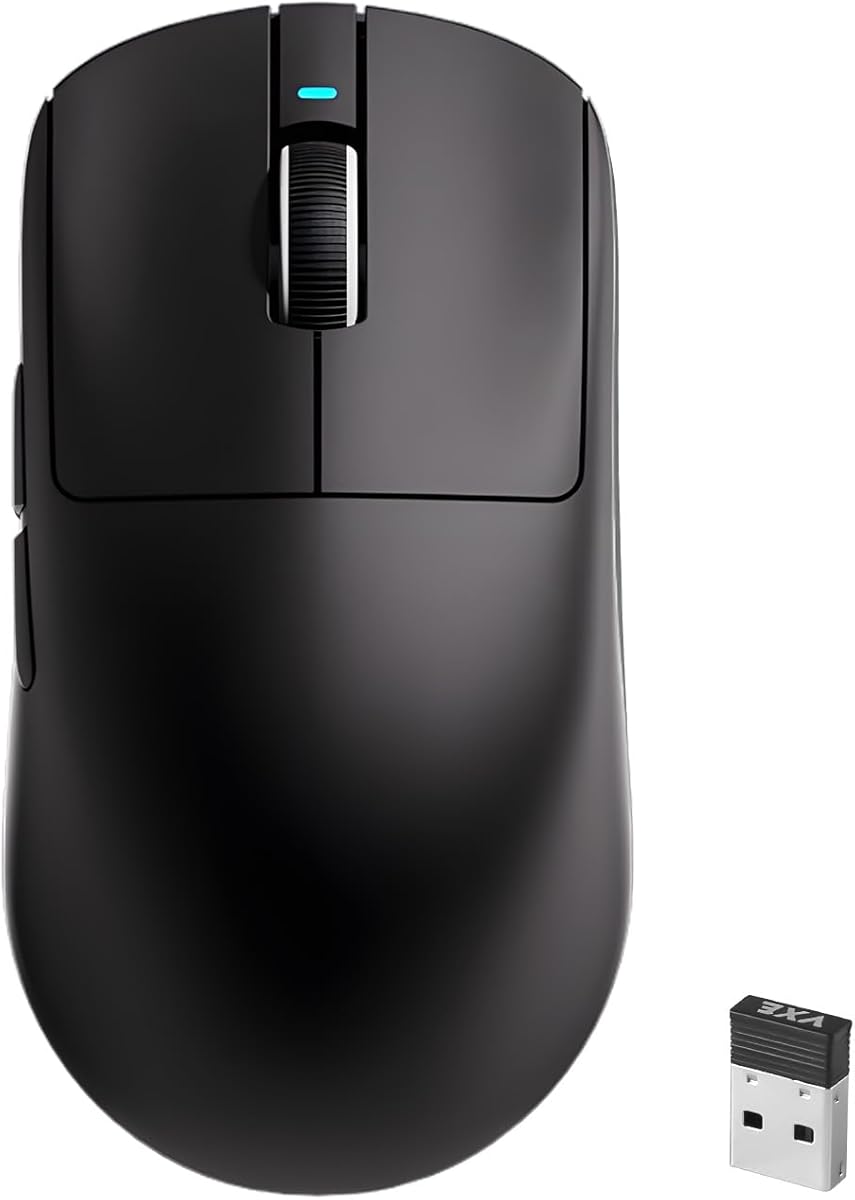
Choosing a lightweight wireless gaming mouse: balancing sensor performance with ergonomics
The R1 SE+ represents a specific category of ultra-lightweight wireless gaming mice where the 55g weight and PAW3395 SE sensor are primary selling points. Buyers should understand how these technical specifications translate to actual gaming performance versus general productivity use, particularly with its tri-mode connectivity options.
Key Considerations Before Buying
- The 55g ultra-lightweight design reduces arm fatigue during extended gaming sessions but may feel insubstantial for users accustomed to heavier mice; consider your preference for weight versus stability.
- The PAW3395 SE sensor's 18000 DPI is overkill for most users, but its true value lies in flawless tracking at lower DPI settings with zero acceleration or smoothing, crucial for competitive FPS gaming.
- Tri-mode connectivity (2.4GHz, Bluetooth 5.0, USB-C wired) offers flexibility but requires evaluating battery life trade-offs; 2.4GHz delivers the lowest latency for gaming, while Bluetooth extends battery life for general use.
What Our Analysts Recommend
For this category, examine build quality around the main clicks and side buttons to ensure they withstand rapid, repeated actuations. Genuine PAW3395 sensor implementations should offer customizable lift-off distance and motion sync settings in the software. Check that the lightweight construction doesn't compromise structural integrity, particularly in the honeycomb shell design common to mice in this weight class.
Gaming Mice Market Context
Market Overview
The lightweight wireless gaming mouse market has become intensely competitive, with brands racing to achieve sub-60g weights while maintaining premium sensor performance and reliable wireless connectivity. The R1 SE+ enters this space with a focus on the PAW3395 SE sensor, which is becoming the new standard for mid-to-high-tier offerings, replacing the older PAW3370.
Common Issues
Common problems in this category include wireless interference with 2.4GHz dongles, inconsistent battery life claims versus reality, and lightweight shells developing creaks or flex over time. Some ultra-light mice sacrifice button feel or scroll wheel quality to achieve weight targets, resulting in mushy secondary buttons or imprecise scrolling.
Quality Indicators
Quality indicators include consistent sensor performance across different surfaces, minimal click latency (ideally under 1ms), and robust software that allows detailed customization without being bloated. The implementation of the USB-C port for charging (as seen on the R1 SE+) rather than micro-USB is now a mark of modern design, as is the inclusion of a dedicated storage compartment for the wireless dongle.
Review Authenticity Insights
Grade B Interpretation
A Grade B authenticity rating with an 11% estimated fake review rate suggests the majority of reviews are genuine, but shoppers should remain slightly cautious of overly enthusiastic language. The adjusted rating of 4.60/5 (down from 4.89/5) after filtering suspicious reviews represents a more reliable performance indicator.
Trust Recommendation
Focus on verified purchase reviews that mention specific use cases, like FPS gaming performance or battery life during work sessions. Given the 11% fake rate, be particularly skeptical of reviews that don't mention any drawbacks or that use identical phrasing to other reviews.
Tips for Reading Reviews
For technical products like gaming mice, prioritize reviews that discuss sensor performance on different mousepads, software stability, and real-world battery life. Look for mentions of the 55g weight's impact on gameplay over weeks, not just initial impressions, to assess long-term comfort and durability.
Expert Perspective
The R1 SE+ presents a compelling package on paper, combining the respected PAW3395 SE sensor with an ultra-lightweight 55g design and tri-mode connectivity. The high adjusted rating of 4.60/5 from authentic reviews suggests it delivers on core performance promises for most users. Its value proposition hinges on executing these features without the common compromises of budget lightweight mice, particularly in wireless stability and build quality. The inclusion of Bluetooth 5.0 alongside 2.4GHz makes it unusually versatile for a gaming-focused peripheral.
Purchase Considerations
Consider whether you truly need 18000 DPI or if you'll primarily use 800-3200 DPI ranges where sensor consistency matters more. Evaluate if the honeycomb shell design (common for 55g mice) is acceptable for your environment, as it can accumulate dust. The tri-mode connectivity is valuable if you switch between gaming and productivity frequently, but ensure the software supports robust profile switching for these different use cases.
Comparing Alternatives
Shoppers should compare the R1 SE+'s implementation of the PAW3395 SE sensor and weight against similar offerings from brands like Glorious, Razer (Viper series), and Pulsar in the same price segment.


