
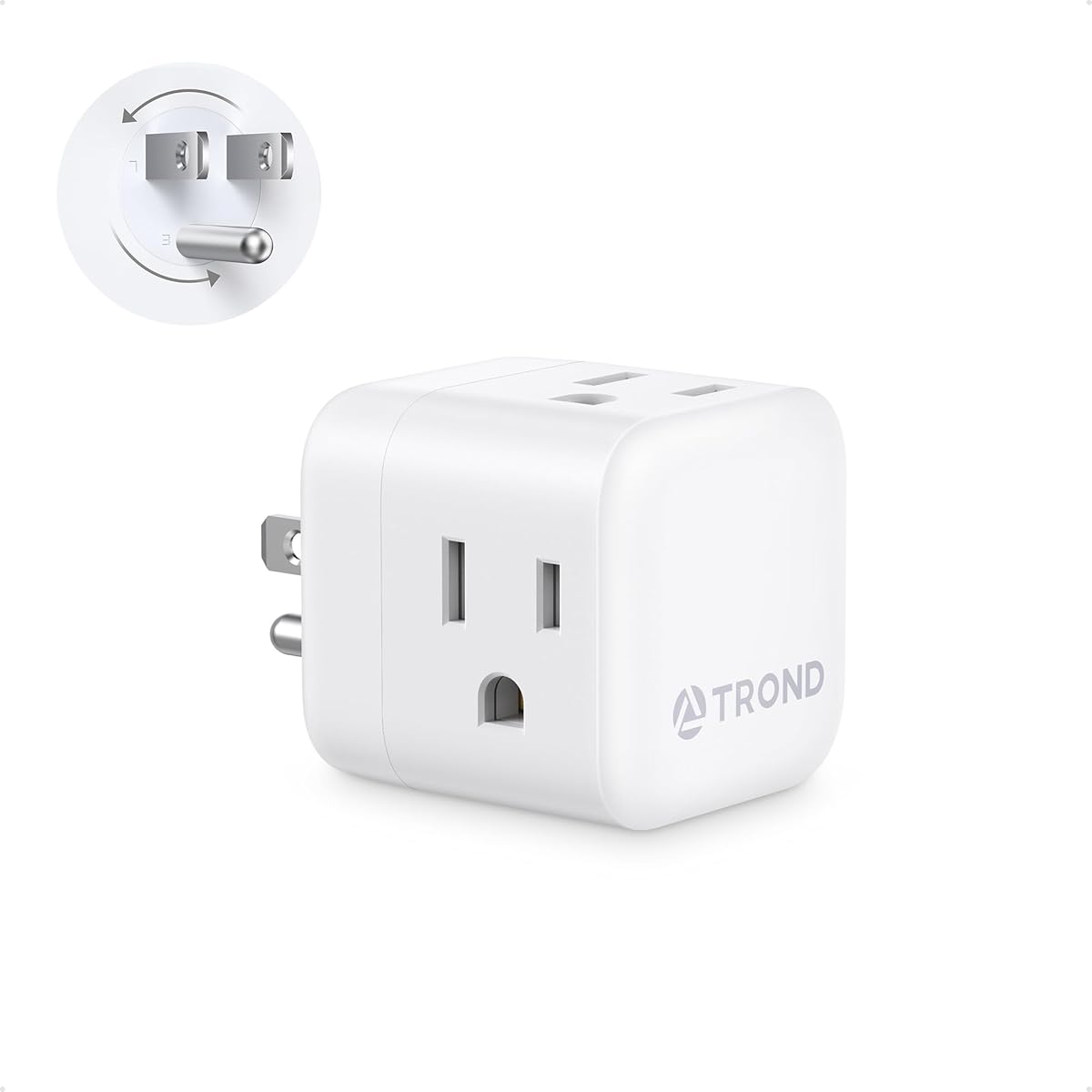
Sideways Outlet Extender: What to Know Before You Buy
The TROND Multi Wall Outlet Extender takes a different approach than bulky power strips: it plugs directly into a wall outlet and redirects the receptacle sideways, adding three sockets without blocking the second outlet or protruding far into the room. If you're dealing with tight spaces behind furniture or a shortage of accessible outlets, this low-profile format is worth understanding before you buy.
Key Considerations Before Buying
- Check whether the sideways orientation matches your outlet's position—this adapter is designed to keep cords running parallel to the wall, which helps behind sofas or desks but may not suit outlets mounted near a door frame or in a corner where the plug body could interfere.
- Confirm the plug type and grounding: this is a three-prong adapter for standard US 15-amp grounded outlets, so it won't fit older two-prong ungrounded receptacles without an adapter, and it should not be used with high-draw appliances like space heaters or window AC units.
- Consider the total load you'll connect. Three sockets invite you to plug in several devices at once, but the adapter—like the wall circuit—has a limit; keep combined draw modest (lamps, chargers, small electronics) and avoid daisy-chaining another power strip into it.
What Our Analysts Recommend
Look for a firm, snug fit when plugged in—a loose adapter can sag or partially unplug under cord weight, which is a safety concern. Check that the housing is made of flame-retardant material and that the prongs are solid metal rather than thin, plated blades, since flimsy prongs are a common failure point in cheap outlet extenders.
Multi-Outlets Market Context
Market Overview
Outlet extenders and multi-outlet adapters are a crowded, low-cost category dominated by generic imports, with quality varying widely between brands. Most units sell for under $15, so the differentiator is rarely price—it's build quality, fit, and whether the design actually solves a space problem rather than just adding sockets.
Common Issues
The most frequent complaints in this category are loose fits that cause the adapter to droop or fall out, blocked second outlets, and overheating when users overload them with high-draw devices. Cheap units also sometimes have prongs that bend easily or housing that cracks around the socket openings.
Quality Indicators
A quality outlet extender holds firmly in the receptacle without wobbling, leaves the adjacent outlet usable, and uses heat-resistant housing. UL listing or equivalent safety certification is a meaningful signal, as is a design that keeps the plug body compact enough to stay flush against the wall plate.
Review Authenticity Insights
Grade A Interpretation
A Grade A authenticity rating with an estimated 5% fake review rate is about as clean as this category gets—outlet adapters are frequently targeted by review manipulation, so this is a notable result. With 4,569 reviews at a 4.89 rating and all marked as verified purchases, the adjusted 4.80 rating suggests the high score is broadly earned rather than inflated.
Trust Recommendation
You can treat the review base as largely reliable, but still weight reviews that describe fit, outlet position, and load use over ones that only say 'works great.' Given the minor 5% adjustment, expect the true customer satisfaction to be slightly below the headline 4.89 but still strong.
Tips for Reading Reviews
For outlet extenders, prioritize reviews that mention the specific outlet location (behind furniture, kitchen counter, garage) and whether the adapter stayed put over time. Skip reviews that don't mention fit or durability, since those are the failure points that matter most in this product type.
Expert Perspective
The TROND Multi Wall Outlet Extender's strongest signal is its review profile: a 4.89 rating across more than 4,500 verified reviews, with only about 5% estimated manipulation, is unusually clean for a budget electrical accessory. That consistency suggests the sideways design and fit quality genuinely work for most buyers, not just that the listing is well-optimized. For a sub-$15 adapter, the main question isn't whether it's good value—it's whether its sideways format fits your specific outlet placement.
Purchase Considerations
Weigh your outlet's location and what you plan to plug in: this adapter shines for low-profile cord routing behind furniture, but it's not a substitute for a surge protector or a solution for high-wattage appliances. If you need surge protection or a longer reach, a different product class will serve you better.
Comparing Alternatives
Compare with other sideways and low-profile outlet extenders, and with compact power strips if you need cord length or surge protection—the right choice depends on whether space or protection is your priority.


