
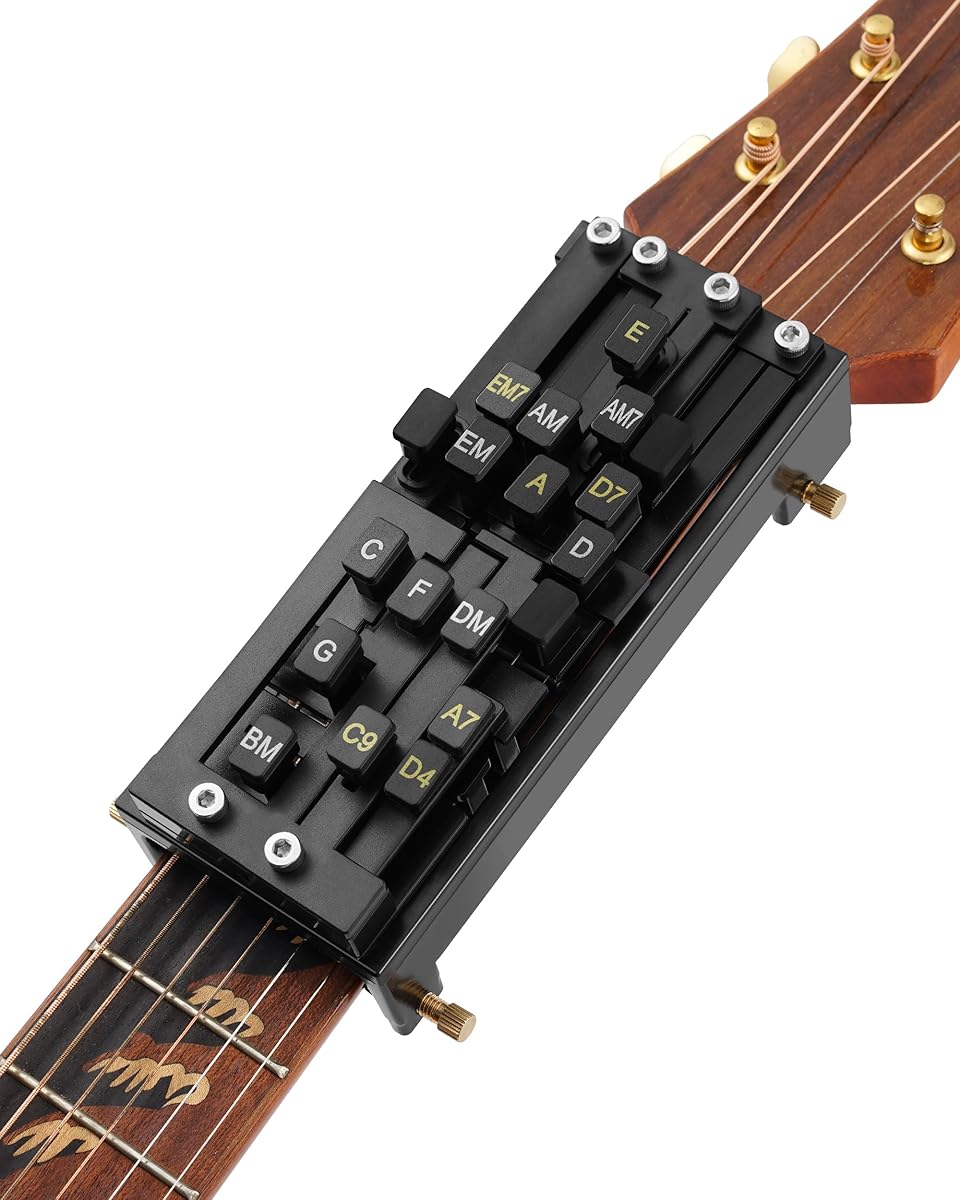
Assess This Chord Presser's Fit for Your Guitar, Hand Size, and Learning Style
This portable chord presser is designed as a physical aid for acoustic guitar beginners and players with hand limitations like arthritis. Unlike capos or standard finger trainers, it clamps across multiple strings to form chord shapes, requiring evaluation of its compatibility with your specific guitar's neck width and string action. Understanding its mechanical operation versus traditional finger placement is crucial before purchase.
Key Considerations Before Buying
- Measure your guitar's neck width and string height; this tool's fixed clamp design may not fit all acoustic models, especially those with high action or wide, flat fretboards.
- Consider your primary goal: this device builds muscle memory for chord shapes but bypasses the critical finger strength and callus development needed for long-term play.
- Evaluate hand mobility; while marketed for arthritis, the required pressure to engage the spring-loaded clamp may still pose a challenge for severely limited dexterity.
What Our Analysts Recommend
Quality indicators include durable, non-marring silicone pads on the clamp to protect your guitar's finish, and a spring mechanism with adjustable tension. The plastic mold should be smooth with no sharp seams that could snag strings, and the chord shape indentations must be precisely aligned to produce clear notes without buzzing.
Tools Market Context
Market Overview
The market for guitar learning tools has expanded beyond books and videos to include physical aids like this chord presser, which occupies a niche between traditional capos and more complex finger strength trainers. These devices appeal primarily to absolute beginners seeking immediate success and players with physical limitations who find standard chord formation painful.
Common Issues
Common problems include poor fit on certain guitar necks causing muted strings, plastic components that feel flimsy, and a learning dependency that hinders transition to unassisted playing. Users often report frustration when the device works for simple open chords but fails on barre chords or different fret positions.
Quality Indicators
Look for products specifying compatible neck dimensions (e.g., nut width) and string gauges. Higher-quality versions use reinforced nylon or composite materials rather than brittle plastic, and feature multiple clamping points for even pressure distribution across all six strings.
Review Authenticity Insights
Grade B Interpretation
A Grade B with an 11% estimated fake review rate suggests mostly authentic feedback, but a notable portion of reviews may be incentivized or biased. For this niche tool, this means the overall 3.3-star adjusted rating likely reflects genuine mixed experiences, not just review manipulation.
Trust Recommendation
Focus on reviews that mention specific guitar models (e.g., 'on my Yamaha FG800') and detail the transition process to playing without the aid. Be skeptical of overly emotional reviews that don't describe actual use mechanics, as they may be part of the estimated 11% questionable content.
Tips for Reading Reviews
Prioritize reviews discussing string buzz, fit adjustments, and long-term progress. Look for photos showing the device installed on a guitar, as these typically accompany genuine user experiences. Pay special attention to critical reviews citing physical limitations—they provide the most relevant insights for the arthritis player demographic.
Expert Perspective
The 3.3-star adjusted rating reveals a product that delivers on its promise of instant chord formation but creates a significant dependency hurdle. It functions as an effective 'training wheel,' providing beginners the auditory reward of a clean chord, which can boost initial motivation. However, expert consensus suggests it should be used sparingly as a confidence-building bridge, not a permanent crutch, to avoid developing poor technique. The mixed feedback strongly correlates with whether users had realistic expectations about its role in a broader learning regimen.
Purchase Considerations
Weigh your willingness to eventually wean off the device against the immediate frustration of sore fingers. This tool is most justifiable for players with genuine arthritis or mobility issues where traditional practice is physically prohibitive, rather than for beginners simply seeking to avoid temporary discomfort.
Comparing Alternatives
Shoppers should compare this with adjustable hand exercisers, lighter gauge strings, and proper guitar setup—often more effective long-term solutions for playability challenges.


