
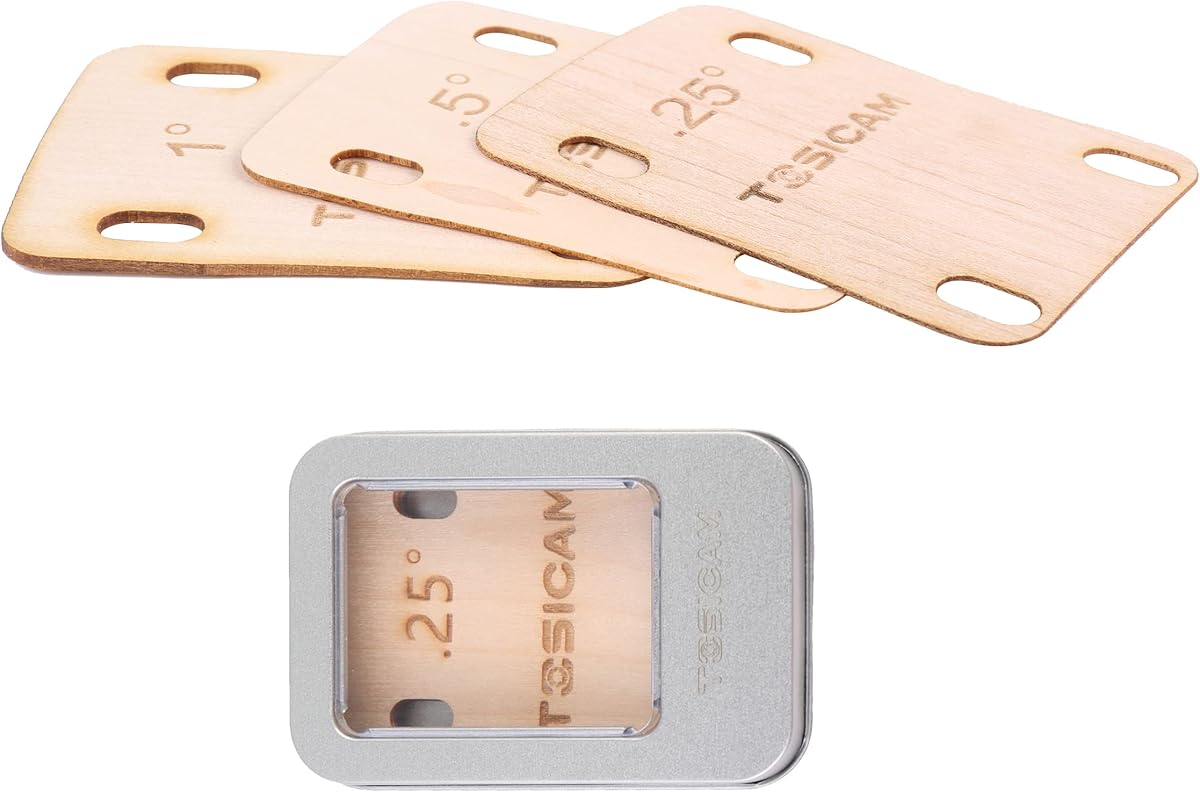
Choosing the Right Maple Neck Shims for Precise Bolt-on Guitar Adjustments
These Canadian solid maple shims offer a professional solution for adjusting neck angle on bolt-on guitars, specifically designed with three precise angles (0.25°, 0.5°, and 1°) to address different setup requirements. Unlike generic plastic or cardboard alternatives, these wooden shims provide stable, non-compressible support that maintains your guitar's structural integrity during seasonal changes.
Key Considerations Before Buying
- The 0.25° shim is ideal for minor action adjustments without significantly altering string tension or break angle, perfect for players seeking subtle improvements to playability.
- The 1° shim addresses more significant neck angle issues, often needed when converting to heavier string gauges or correcting pronounced relief problems in older instruments.
- Maple's density and grain structure make these shims particularly suitable for high-tension setups, as they won't compress under string pressure like softer materials might.
What Our Analysts Recommend
Quality maple shims should feature clean, consistent grain without knots or irregularities that could create weak points. The angled surfaces must be precisely milled to ensure proper contact with both neck pocket and neck heel, preventing rocking or uneven pressure distribution that could affect sustain and tuning stability.
Tools Market Context
Market Overview
The guitar neck shim market has shifted toward specialized wooden options as players recognize the limitations of makeshift solutions like business cards or plastic strips. Premium maple shims now compete with traditional brass and steel alternatives, offering a balance of durability and tonal characteristics that complement wooden guitar components.
Common Issues
Many generic shims lack precise angle specifications, forcing players to stack multiple pieces and creating potential instability points. Inconsistent thickness across the shim surface can cause uneven neck seating, leading to buzzing, intonation problems, or reduced sustain that defeats the purpose of the adjustment.
Quality Indicators
Look for shims with clearly labeled angles, consistent wood density, and smooth, sanded edges that won't damage neck pocket finishes. Premium options like these Canadian maple shims typically feature laser-cut precision and come in graduated sets that allow progressive adjustment without trial-and-error stacking.
Review Authenticity Insights
Grade B Interpretation
The Grade B authenticity rating with 10% estimated fake reviews indicates generally reliable feedback, though shoppers should remain discerning about overly enthusiastic claims. The 4.40 adjusted rating (down from 4.67) suggests some review inflation but still reflects strong genuine satisfaction.
Trust Recommendation
Focus on reviews that mention specific installation experiences, such as which angle worked for particular guitar models or how the maple material affected their setup process. Verified purchase reviews discussing technical aspects like neck pocket fit or long-term stability carry more weight than generic praise.
Tips for Reading Reviews
Prioritize reviews that reference using multiple angles from the set or compare these maple shims to other materials they've tried. Look for discussions about seasonal stability—a key advantage of solid wood shims—and how the specific angles addressed particular action or intonation issues.
Expert Perspective
This three-angle maple shim set represents a professional-grade solution for serious players and technicians, with the material choice and precision angles addressing common shortcomings in the accessory category. The strong adjusted rating of 4.40/5 from verified purchasers suggests these shims deliver on their specific promises for bolt-on neck adjustments. The inclusion of three distinct angles provides flexibility that single-angle shims lack, allowing users to fine-tune their approach rather than making compromises.
Purchase Considerations
Consider whether your guitar truly needs neck angle adjustment—common indicators include high action that won't lower with saddle adjustments, or strings that feel stiff despite proper relief. These maple shims are particularly valuable for players who make seasonal string gauge changes or own multiple guitars with different setup requirements.
Comparing Alternatives
Compare these wooden shims against brass or phenolic options, considering how each material might interact with your specific guitar's neck pocket and affect resonance transfer.


