
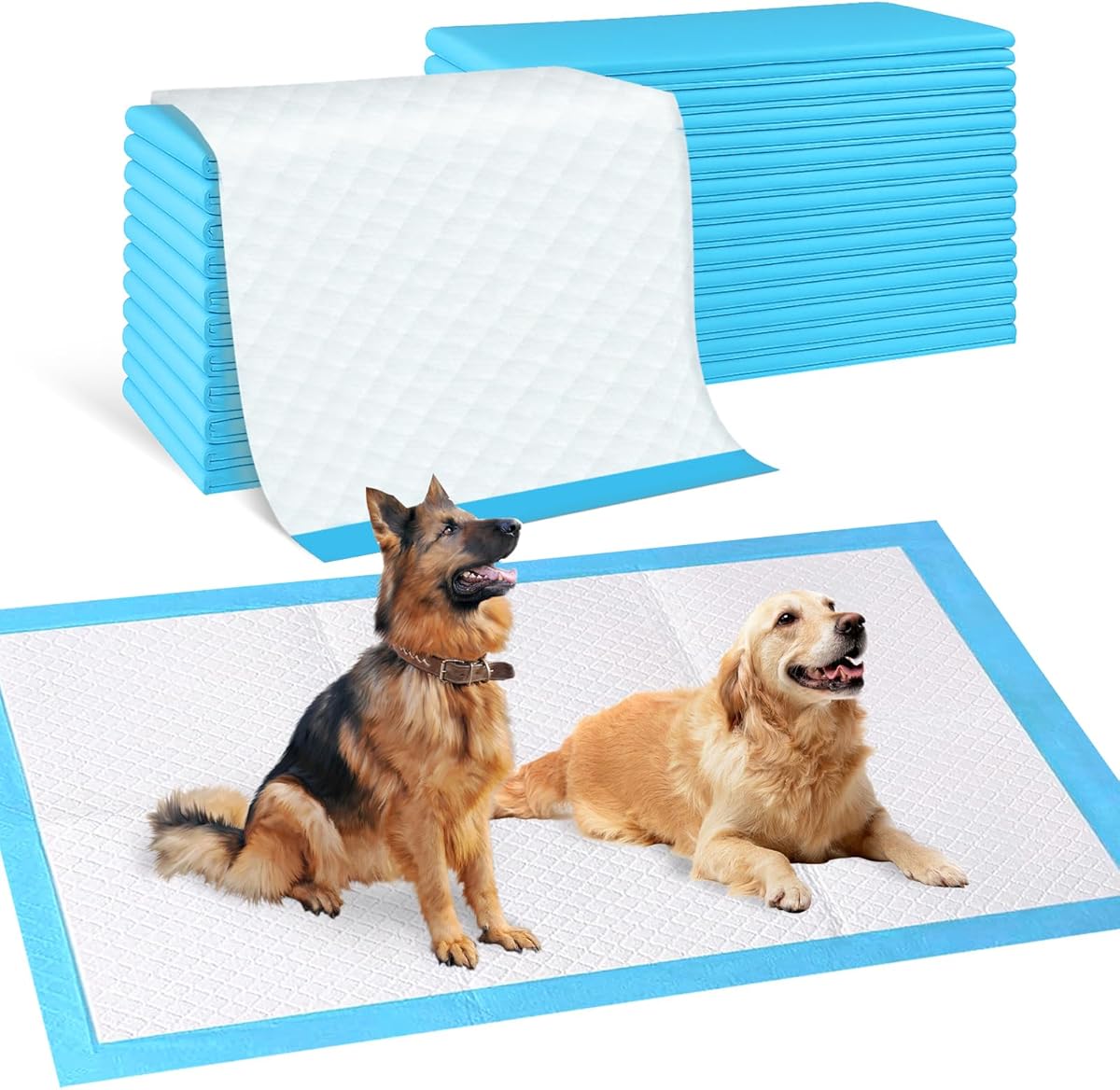
Choosing Extra-Large 36x51 Training Pads: What Size, Layers, and Absorption Really Mean
When selecting extra-large disposable training pads like these 36"x51" polymer-backed pads, buyers should understand that size alone doesn't guarantee performance. The six-layer construction with fluff pulp and polyethylene backing represents a specific approach to liquid management that balances absorption with leak prevention. These dimensions are particularly relevant for large breed dogs or for creating extended coverage areas.
Key Considerations Before Buying
- The 36"x51" size offers 12.75 square feet of coverage, making these pads suitable for Great Danes, multiple pets, or placement in high-traffic areas where standard pads would be insufficient.
- Six-layer construction typically includes a moisture-proof backing, absorbent core, and quick-dry top layer—the specific polymer and polyethylene combination here suggests enhanced leak resistance compared to basic plastic-backed pads.
- With 40 pads per package, calculate your replacement frequency: at one pad daily, this supply lasts approximately six weeks, making cost-per-pad more relevant than package price alone.
What Our Analysts Recommend
Quality indicators for polymer-backed training pads include edge sealing integrity to prevent side leakage and uniform fluff pulp distribution that prevents pooling. The blue color isn't just aesthetic—it helps mask stains between changes and provides visual contrast for pet training purposes. Check that the adhesive strips are properly positioned to secure these large pads during use.
Disposable Training Pads Market Context
Market Overview
The disposable training pad market has shifted toward specialized formulations, with polymer-backed pads like these representing the premium segment above basic plastic-backed options. Extra-large formats (36" and above) have grown in popularity as pet owners seek solutions for larger breeds or multi-pet households without using multiple standard pads.
Common Issues
Common problems in this category include inadequate adhesive strips that fail to secure large pads, inconsistent absorption leading to surface pooling, and polymer backings that crack or crinkle when pets walk on them. Scented variants sometimes irritate sensitive pets, though these particular pads appear to be unscented based on their material listing.
Quality Indicators
Quality in polymer-backed pads is demonstrated by consistent edge-to-edge absorption without channeling, backing that remains intact when wet, and sufficient adhesive strength to prevent shifting. The fluff pulp should maintain structural integrity when saturated rather than breaking down into clumps.
Review Authenticity Insights
Grade B Interpretation
A Grade B authenticity rating with 10% estimated fake reviews indicates generally reliable feedback with minor manipulation concerns. The 4.20 adjusted rating (down from 4.44) suggests some review inflation exists but doesn't fundamentally distort the product's reception. Verified purchase status across all reviews significantly boosts credibility.
Trust Recommendation
Focus on reviews discussing specific performance aspects like how the polymer backing handles heavy saturation or whether the 36"x51" size truly accommodates large breeds. The 4-5 star reviews constitute 80% of feedback, but pay particular attention to detailed 3-star reviews that often provide the most balanced assessments of limitations.
Tips for Reading Reviews
For training pads, prioritize reviews that mention usage duration (how long pads last between changes), breed-specific feedback, and comments about the adhesive strip effectiveness on different flooring types. Reviews discussing leakage incidents often reveal whether failures occur at seams or through the center—a critical distinction for six-layer construction.
Expert Perspective
This product's specifications suggest it occupies a middle-ground position: more substantial than basic plastic-backed pads but potentially less feature-rich than premium brands with odor-neutralizing technology or quilted top layers. The 4.20 adjusted rating from verified purchases indicates satisfactory performance for most users, particularly given the challenges of extra-large pad construction. The six-layer design with fluff pulp should provide adequate absorption for typical use, though heavy users might need more frequent changes.
Purchase Considerations
Consider whether your pet tends to target pad edges—the 36"x51" dimensions provide margin for error but don't eliminate edge-leakage risk. The polymer backing should offer better durability than standard plastic, but test adhesion on your specific flooring before committing to bulk purchase. For households with power chewers, note that no tear-resistant features are mentioned in the specifications.
Comparing Alternatives
Shoppers should compare these against similar-sized pads with different core materials (gel vs. fluff pulp) and backing types (non-woven vs. polymer) to determine which combination best suits their pet's habits and their cleanup preferences.


