Dual-Zone Coolers: Capacity, Fit, and Temperature Control
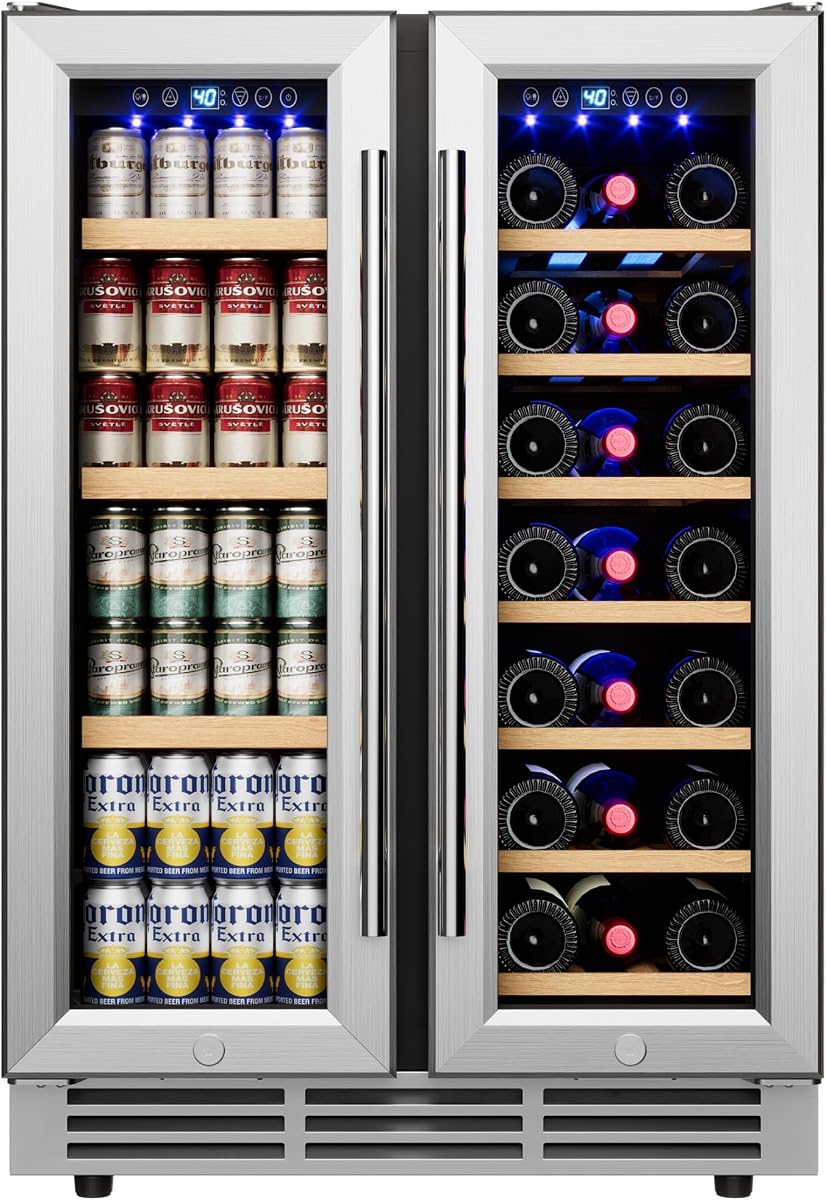
The Icyglee 24" Wine and Beverage Refrigerator promises dual-zone storage for 88 cans and 21 bottles, a glass door, and flexible built-in or freestanding installation. Before buying, understand how capacity, zone separation, and ventilation requirements affect real-world use.
Key Considerations Before Buying
- Dual-zone design lets you store wine near 55°F while keeping cans at 38–45°F, but verify the actual temperature range and independent controls—some budget units only offer a single compressor with a shared fan, causing temperature drift between zones.
- The 24-inch width fits under standard counters, but built-in installation requires front-facing ventilation; if the unit lacks a front-breathing design, it must be freestanding with clearance around the sides and back, which may not suit tight cabinetry.
- Glass doors look modern but let in light and heat; look for dual-pane low-E glass and a lock to protect your collection, and consider whether the LED interior light is cool-white or warm—warm LEDs can degrade wine over time if left on.
What Our Analysts Recommend
Check the compressor type (inverter compressors are quieter and more efficient), shelf material (wire vs. wood; wood is better for wine), and whether the unit includes a carbon filter to remove odors. Also verify the noise rating—under 40 dB is ideal for open-plan living.
Beverage Refrigerators Market Context
Market Overview
The beverage refrigerator market has exploded with direct-to-consumer brands offering dual-zone units at aggressive prices, often sacrificing build quality or temperature stability. Consumers now expect smart features like Wi-Fi and app control, but the core cooling performance remains the top differentiator.
Common Issues
Frequent complaints in this category include temperature fluctuations (especially in dual-zone models where one zone struggles), premature compressor failure, and misleading capacity claims (e.g., cans only fit without shelves). Condensation on glass doors and excessive noise are also common.
Quality Indicators
A quality beverage fridge will list a precise temperature range (e.g., 34–64°F), specify the compressor brand (Embraco, Secop), and provide clear ventilation requirements. Look for metal shelves, reversible door hinges, and a warranty of at least one year on parts and labor.
Review Authenticity Insights
Grade A Interpretation
Grade U indicates insufficient review data to assess authenticity, and with 0 reviews and a 0.00% fake rate, there is simply no track record. This means you cannot rely on crowd-sourced feedback to gauge performance or reliability.
Trust Recommendation
Given the absence of reviews, treat this as an unproven product. Seek out third-party testing, YouTube demos, or retailer return policies that allow you to test it risk-free. Avoid being an early adopter unless the price is significantly lower than established brands.
Tips for Reading Reviews
When reviews eventually appear, focus on those that mention long-term use (3+ months), temperature stability, and customer service experiences. Be wary of reviews that only praise aesthetics or shipping speed—they may not reflect cooling performance.
Expert Perspective
The Icyglee 24" Wine and Beverage Refrigerator appears to be a feature-rich dual-zone unit at a potentially attractive price point, but with zero reviews and an unknown brand, it carries significant risk. The 88-can/21-bottle capacity is competitive for a 24-inch model, but real-world performance hinges on compressor quality and insulation—areas where budget brands often cut corners. Without independent testing, it's impossible to confirm whether the dual zones maintain accurate temperatures or if the unit is as quiet as claimed.
Purchase Considerations
Weigh the lower upfront cost against the potential for poor reliability and lack of support. If you need a built-in unit, confirm the ventilation design; if noise matters, look for a decibel rating. Also check the return window and warranty length—a 1-year warranty is standard, but some brands offer 2+ years.
Comparing Alternatives
Compare with established brands like EdgeStar, NewAir, or Phiestina, which have extensive review histories and proven customer support. Reading their reviews can help you calibrate expectations for this product.