
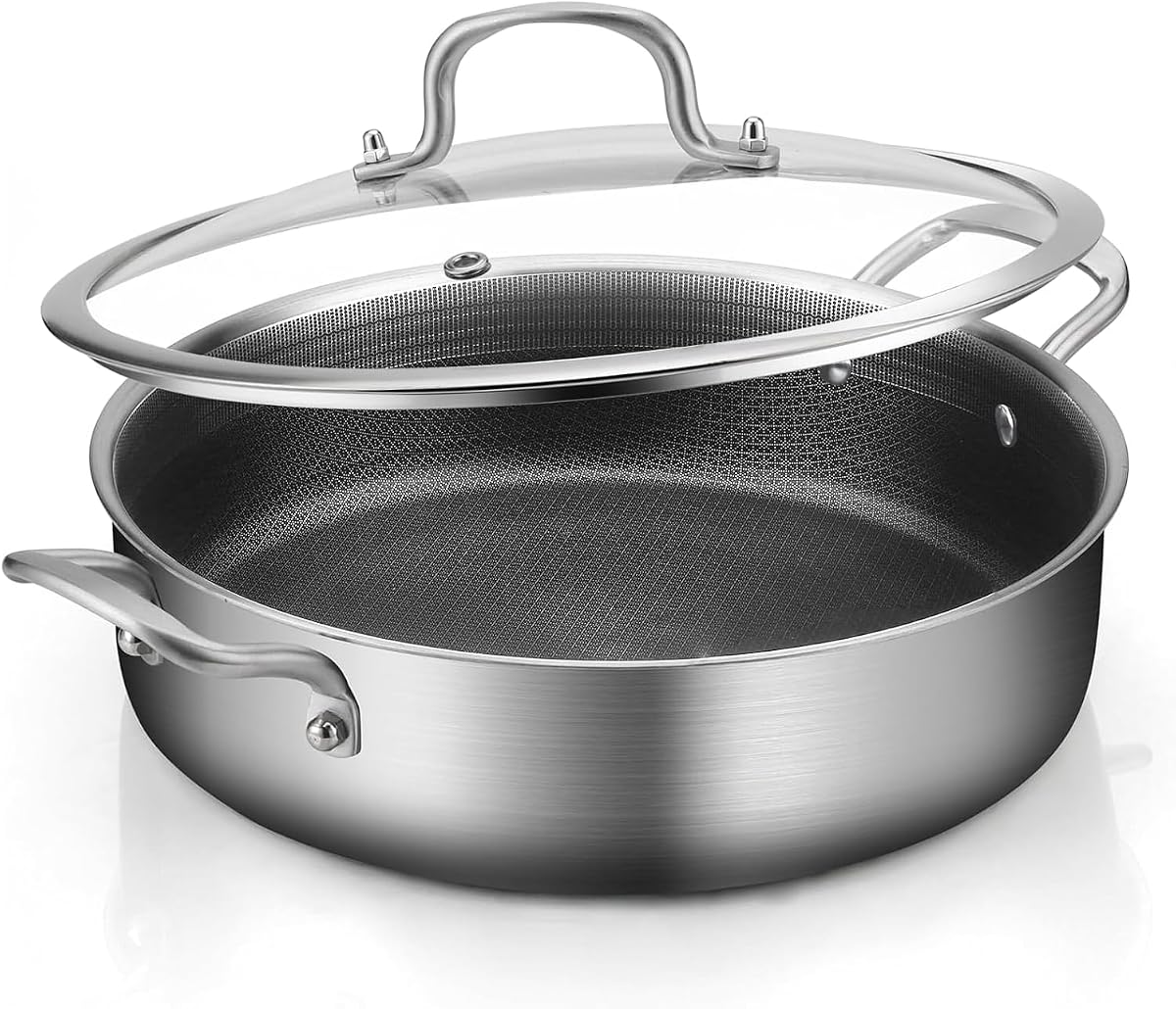
Tri-Ply, 18/10 Steel, 7 Quarts: What to Know Before Buying
This 12-inch hybrid sauté pan combines a tri-ply stainless steel body with a nonstick skillet surface and a 7-quart capacity, making it a crossover between a deep sauté pan and a large frying pan. With a 4.8/5 rating across 246 reviews, shoppers should understand how the multi-clad construction, 18/10 steel, and dual-finish design affect real-world cooking before committing.
Key Considerations Before Buying
- Tri-ply construction bonds a stainless exterior, aluminum core, and 18/10 stainless interior for even heat; confirm the core is full-clad to the rim rather than a disk base, since only full-clad walls prevent scorching at the sides during long simmers.
- The 7-quart capacity and 12-inch diameter suit family-sized batches like braises, stir-fries, and one-pan pasta, but the pan will be heavy and wide—measure your largest burner and storage space, and expect two-handed lifting when full.
- A nonstick interior paired with stainless steel means you get easy release for eggs and delicate fish but must avoid metal utensils and high-heat searing on the coating; check whether the lid is stainless or glass and whether it vents.
What Our Analysts Recommend
Look for an 18/10 stainless cooking surface (not just the exterior), a riveted stay-cool handle, and a flat, induction-compatible base that stays flat after heating. Oven and dishwasher safety claims should specify temperature limits and whether the nonstick coating is PFOA-free; flimsy lids and loose rivets are the most common failure points in hybrid pans at this size.
Market Context
Market Overview
The cookware market has shifted toward hybrid and multi-clad pans that promise stainless durability with nonstick convenience, and tri-ply sets from both legacy brands and newer direct-to-consumer labels now crowd the mid-to-premium tier. Induction-compatible cookware is also growing as more households adopt induction ranges, making base flatness and magnetic response key differentiators.
Common Issues
Buyers frequently report warped bases after high-heat use, nonstick coatings that degrade within a year, and misleading 'tri-ply' labels where only the base is clad. Handle looseness and lid fit are recurring complaints on large 12-inch pans, and dishwasher claims often conflict with coating longevity.
Quality Indicators
Genuine quality shows in full-clad walls visible at the rim, a weight that feels substantial without being unwieldy, and rivets that sit flush inside the pan. Reputable brands publish layer thickness, steel grade (18/10 vs. 18/0), and oven temperature ratings—details that separate real tri-ply from marketing language.
Review Authenticity Insights
Grade A Interpretation
An A authenticity grade with an estimated 8% fake review rate is strong for Amazon cookware, where incentivized reviews are common; the adjusted 4.60/5 rating still reflects genuine satisfaction. The analysis notes that most reviewers describe specific cooking scenarios and heat sources, which is a good sign that feedback is experience-based rather than scripted.
Trust Recommendation
Treat the 4.8 rating as credible but lean on the adjusted 4.60 figure when comparing against competitors, and weight reviews that mention induction performance, dishwasher cycles, and coating wear over time. The small share of generic five-star reviews is unlikely to distort the overall picture, but verify durability claims against longer-term reviews.
Tips for Reading Reviews
Prioritize reviews that name their stove type (gas, electric, induction), batch size, and months of ownership, since these reveal how the tri-ply core and nonstick layer hold up. Be skeptical of reviews that only praise 'fast even heat' without specifics, and look for complaints about weight, lid fit, or coating scratches to gauge realistic trade-offs.
Expert Perspective
This pan's appeal is its versatility: a 7-quart, 12-inch tri-ply body with an 18/10 interior and nonstick surface covers sautéing, frying, and braising in one vessel, and the 4.60 adjusted rating suggests buyers largely get what's promised. The hybrid design is a compromise, however—nonstick limits high-heat searing that stainless alone would handle—so it best suits cooks who value easy cleanup over restaurant-style browning. Induction compatibility and oven safety add genuine utility for modern kitchens.
Purchase Considerations
Weigh the pan's size and weight against your storage and burner setup, and decide whether nonstick convenience outweighs the durability of an uncoated tri-ply sauté pan. Confirm the warranty covers coating delamination and that dishwasher use won't void it, since those terms vary widely among hybrid cookware.
Comparing Alternatives
Compare against pure tri-ply sauté pans and dedicated nonstick skillets, which each excel at one job, as well as other 12-inch hybrid pans with published layer thickness and clearer coating warranties.