
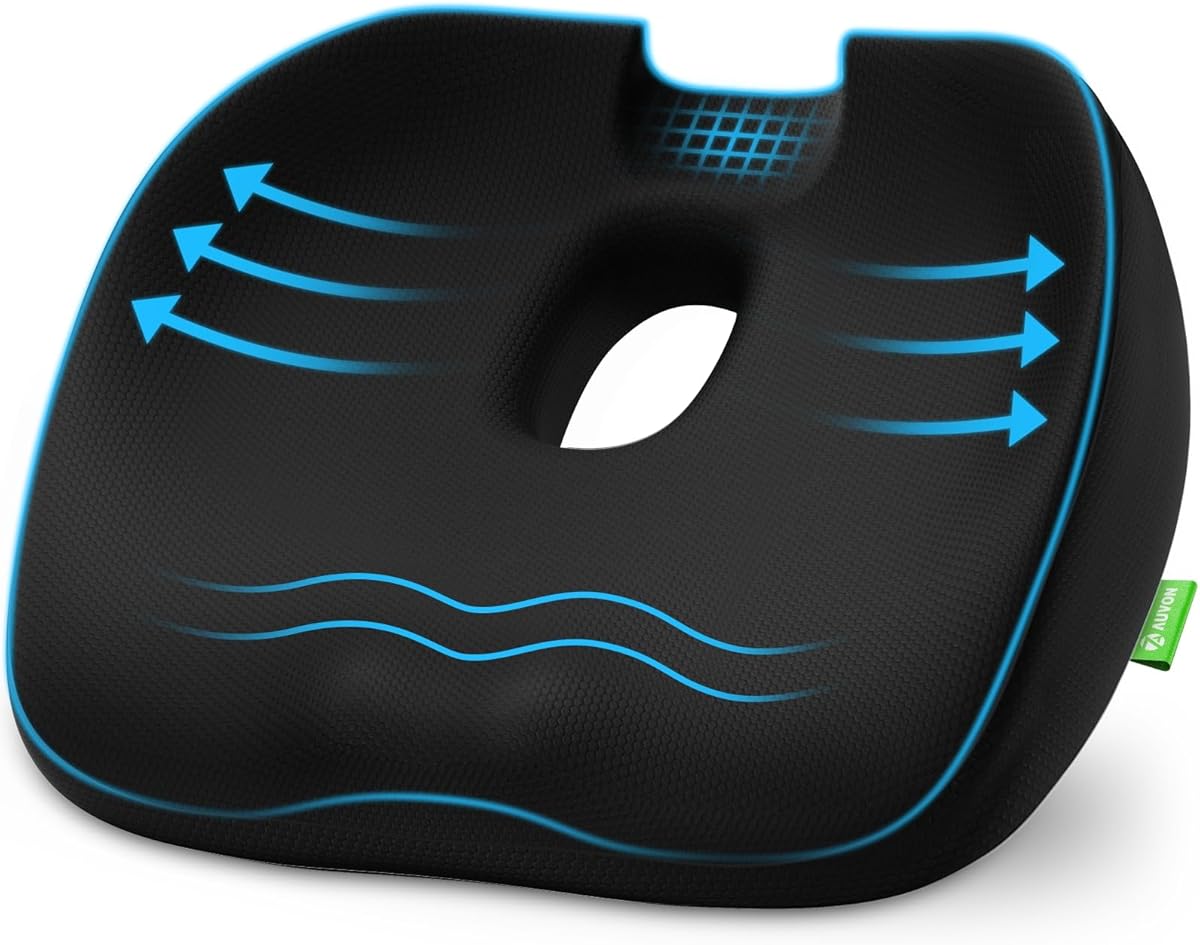
Choosing a Donut Cushion: Why Center Hole Design and Material Density Matter
When selecting a donut cushion like the AUVON model with its distinctive center hole and tailbone cutout, buyers should understand that not all orthopedic cushions provide equal pressure relief. This specific design aims to redistribute weight away from sensitive areas including the coccyx, perineum, and hemorrhoids, making the construction quality and foam resilience critical factors.
Key Considerations Before Buying
- The center hole's diameter and placement must align precisely with your anatomy to provide true offloading rather than creating new pressure points.
- Foam density determines longevity and support; medical-grade cushions typically use high-resilience foam that won't bottom out after weeks of use.
- The tailbone cutout's depth and the cushion's overall contour affect spinal alignment during prolonged sitting, crucial for sciatica and post-surgical recovery.
What Our Analysts Recommend
Examine the foam's compression recovery by checking if reviews mention the cushion maintains its shape. Quality indicators include a non-slip bottom cover to prevent sliding on chairs and a removable, washable cover for hygiene, especially important for postpartum and post-surgical use.
Back & Seat Cushions Market Context
Market Overview
The orthopedic seat cushion market is saturated with products making similar medical claims, but designs vary significantly between U-shaped, donut, and wedge cushions. The AUVON represents the 'scientific center hole' subcategory that specifically targets coccyx and hemorrhoid relief through complete pressure removal.
Common Issues
Many cheaper cushions use low-density foam that compresses permanently within months, while poor stitching on the center hole can cause tearing. Some designs create improper pelvic tilt that exacerbates back pain rather than alleviating it.
Quality Indicators
Look for dual-layer foam construction (firm base with softer top), CertiPUR-US certified materials, and precise ergonomic measurements. The best cushions specify their foam density (often 1.8-2.5 lb/ft³) and include a carrying handle for portability between office, car, and home use.
Review Authenticity Insights
Grade B Interpretation
A Grade B authenticity rating with 11% estimated fake reviews suggests generally reliable feedback but warrants careful review scrutiny. This level indicates most reviews are genuine, but some may be incentivized or overly promotional.
Trust Recommendation
Focus on verified purchase reviews that describe specific conditions like postpartum recovery or post-hemorrhoidectomy use. The adjusted rating of 4.40/5 (down from 4.67) provides a more realistic performance expectation after removing suspicious feedback.
Tips for Reading Reviews
Prioritize reviews mentioning long-term use (3+ months) to assess durability, and look for detailed comments about foam firmness and cover quality. Be skeptical of reviews that only use marketing language like 'scientific center hole' without personal context.
Expert Perspective
The AUVON cushion's strong adjusted rating of 4.40/5 from 2,299 reviews indicates genuine user satisfaction, particularly for targeted relief from coccyx and hemorrhoid pain. The product's specific design with dual cutouts addresses a common flaw in single-hole cushions that inadequately protect the tailbone. However, the authenticity analysis suggests while most feedback is credible, shoppers should weigh the 11% potentially artificial positivity when making decisions.
Purchase Considerations
Consider whether you need complete pressure removal (this design) versus more general support. This cushion works best for those with acute pain points rather than overall back discomfort. The non-portable design may limit use for people who need to move frequently between seating surfaces.
Comparing Alternatives
Compare this donut design with U-shaped cushions and memory foam wedches, as different pain conditions respond better to varying support geometries.


