
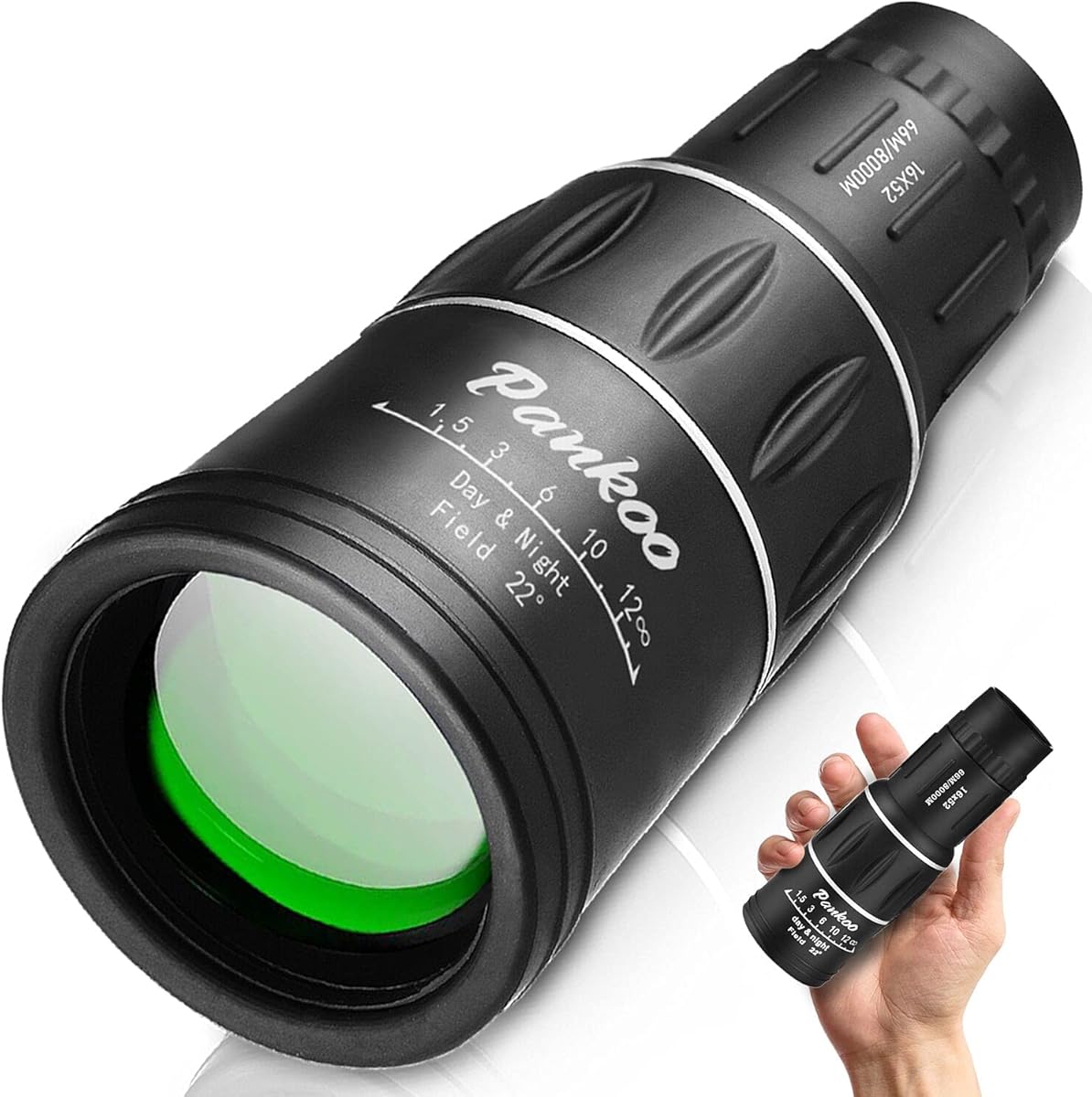
How to Choose a Compact 16x52 Monocular for Outdoor Use
A 16x52 monocular like this one offers a compelling balance of magnification and portability, making it a popular choice for bird watching, hunting, and hiking. But with a flood of similar-looking models on the market, understanding the specs and build quality is key to getting a unit that performs reliably in the field.
Key Considerations Before Buying
- Magnification and lens size: 16x magnification brings distant subjects close, but it also amplifies hand shake—so a 52mm objective lens is a smart pairing because it gathers enough light to keep the image bright even at high zoom. Look for fully multi-coated lenses to maximize clarity and contrast.
- Prism type and optical quality: This monocular uses a roof prism design, which keeps the body slim and pocket-friendly. However, cheaper prisms can cause chromatic aberration (color fringing) and soft edges; reviews that mention sharpness across the entire field of view are a good sign of better optical quality.
- Durability and weather sealing: Waterproof, fogproof, and shockproof claims are common, but their real-world effectiveness varies. For outdoor use, prioritize models with rubberized armor, nitrogen purging, and a hand strap that stays secure—especially if you plan to use it in rain or cold.
What Our Analysts Recommend
When evaluating a compact monocular, check the eye relief (at least 15mm for glasses wearers), the field of view (wider is better for tracking moving subjects), and whether the focus wheel moves smoothly without backlash. A solid warranty and responsive customer service are also strong indicators of a manufacturer that stands behind its product.
Monoculars Market Context
Market Overview
The monocular market has exploded with budget-friendly, high-magnification models, largely driven by online marketplaces. While this gives consumers more options, it also means many products are rebranded versions of the same generic design, making it hard to distinguish true quality from marketing hype.
Common Issues
A frequent complaint among monocular buyers is that the actual magnification falls short of the advertised number, or that the image is blurry at the edges. Another common issue is poor low-light performance, which is critical for dawn and dusk wildlife viewing. Build quality can also be inconsistent, with some units developing fogging or focus mechanism failures after a few months.
Quality Indicators
Genuine customer photos and videos that show the monocular in use are more reliable than studio shots. Look for reviews that mention specific details like 'clear image at 100 yards' or 'no color fringing on birds.' A high ratio of reviews with 4-5 stars that include personal stories and comparisons to other brands is a positive signal, as is a seller who responds to negative feedback.
Review Authenticity Insights
Grade B Interpretation
A Grade B authenticity rating with an estimated 15% fake reviews means that while most reviews are likely genuine, there is a noticeable minority of potentially manipulated feedback. This is common for high-volume electronics accessories, where sellers may use incentivized reviews to boost early ratings. The adjusted rating of 3.90 (down from 4.22) suggests that when suspicious reviews are removed, the product is still decent but not outstanding.
Trust Recommendation
Given the 15% fake review estimate, it's wise to read a mix of critical and positive reviews, focusing on those that describe specific use cases and include photos. Pay extra attention to reviews that mention durability over time, as these are harder to fake and more indicative of long-term satisfaction. If possible, cross-check with independent forums or YouTube reviews before purchasing.
Tips for Reading Reviews
For monoculars, prioritize reviews that discuss optical performance in different lighting conditions, ease of focusing, and comfort during extended use. Be skeptical of reviews that are overly brief, use generic praise, or repeat marketing phrases verbatim. Also, look for reviewers who mention their experience level (e.g., 'I've owned several binoculars')—their insights tend to be more reliable.
Expert Perspective
The Monocular Telescope High Power 16X52 is a mid-range option that appeals to casual outdoor enthusiasts and gift-givers. Its 16x magnification and 52mm lens are impressive on paper, and the waterproof/fogproof claims add versatility. However, the adjusted rating of 3.90 indicates that while many users are satisfied, a significant number encounter issues like blurry edges or mechanical problems, suggesting inconsistent quality control.
Purchase Considerations
Before buying, consider your primary use: if you need a lightweight monocular for occasional hiking or concerts, this could suffice. But for serious bird watching or hunting, where optical clarity and durability are paramount, you may want to invest in a higher-end brand with a proven track record. Also, check the return policy in case you receive a defective unit.
Comparing Alternatives
Shoppers should compare this monocular with similar 16x52 models from established optics brands, as well as 10x42 or 12x50 options that may offer a better balance of magnification and image stability.


