
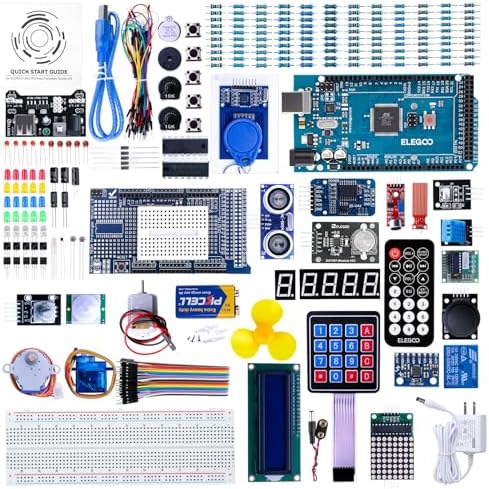
Choosing an Arduino Starter Kit: What Makes the ELEGOO Mega R3 Stand Out
When selecting an Arduino starter kit, the ELEGOO Mega R3's 'Most Complete Ultimate' designation warrants scrutiny. This kit distinguishes itself with a Mega 2560 R3 board rather than the standard Uno, offering 54 digital I/O pins and 16 analog inputs for more complex projects. Buyers should evaluate whether this expanded capability aligns with their learning trajectory beyond basic tutorials.
Key Considerations Before Buying
- The Mega 2560 microcontroller provides significantly more I/O pins than Uno-based kits, making it suitable for projects requiring multiple sensors, displays, or motors simultaneously.
- ELEGOO's included tutorial and component selection (like the RFID module and stepper motor driver) targets intermediate learners ready to move beyond basic LED and button circuits.
- Compatibility with the Arduino IDE is standard, but verify your computer's USB drivers support the CH340 chip used on this board, as some users report initial setup hurdles.
What Our Analysts Recommend
Quality in starter kits is shown by clear pin labeling on components, inclusion of a project book with code that actually compiles, and robust breadboard connections. The ELEGOO kit's high rating suggests success here, but examine reviews mentioning the durability of jumper wires and the clarity of the tutorial's English translations.
Computer Components Market Context
Market Overview
The Arduino starter kit market is saturated with clones and bundles of varying quality, often centered on the Uno R3. ELEGOO has carved a niche by offering kits based on the more powerful Mega board at a competitive price point, appealing to hobbyists who anticipate outgrowing an Uno's limitations quickly.
Common Issues
Common frustrations include poorly documented tutorials, missing components, flimsy breadboards that lose grip, and driver issues with non-genuine Arduino boards using CH340 or similar USB-to-serial chips. Kits labeled 'complete' often still require a separate power supply for certain motors or displays.
Quality Indicators
Look for kits that organize components in a labeled case, include a wide variety of sensors (not just LEDs and resistors), and provide downloadable, well-commented code. A quality kit will have tutorials that explain both the 'how' and the 'why' of each circuit.
Review Authenticity Insights
Grade B Interpretation
A Grade B with an 11% estimated fake review rate indicates a generally trustworthy review pool with a minor but notable level of potentially inauthentic praise. For a high-volume product like this, it suggests the overwhelming positive sentiment (4.6 adjusted rating) is rooted in genuine user satisfaction, not just manipulation.
Trust Recommendation
Focus on reviews that detail specific projects built, mention troubleshooting steps, or compare components to other kits. Be slightly more skeptical of brief, hyperbolic reviews that don't mention using the Mega's advanced features, as they may be part of the estimated 11%.
Tips for Reading Reviews
Prioritize reviews that discuss the tutorial's pacing for beginners versus the utility of the Mega board's extra pins. Look for mentions of long-term component reliability over several months, not just unboxing impressions.
Expert Perspective
The ELEGOO Mega R3 kit presents a compelling value proposition for the right user. Its adjusted 4.6/5 rating from nearly 8,000 reviews is exceptionally strong for this category, indicating it delivers on its promise of a 'complete' experience. The inclusion of components like an LCD1602 display, servo, and stepper motor driver allows learners to graduate to substantive robotics and automation projects without immediate additional purchases. However, its suitability for an absolute beginner is nuanced; the Mega board can be intimidating, and the tutorials may assume a slightly steeper learning curve than an Uno-focused kit.
Purchase Considerations
This kit is an ideal purchase for a motivated beginner who knows they want to build multi-sensor projects, or for an Uno user seeking an affordable upgrade path. It's less ideal for a young child or someone who just wants to dabble with simple electronics, where a smaller, Uno-based kit might be less overwhelming.
Comparing Alternatives
Shoppers should compare the component list and board type against kits from brands like SunFounder (which often focus on Raspberry Pi) or official Arduino Starter Kits, which use an Uno but have superior documentation.


