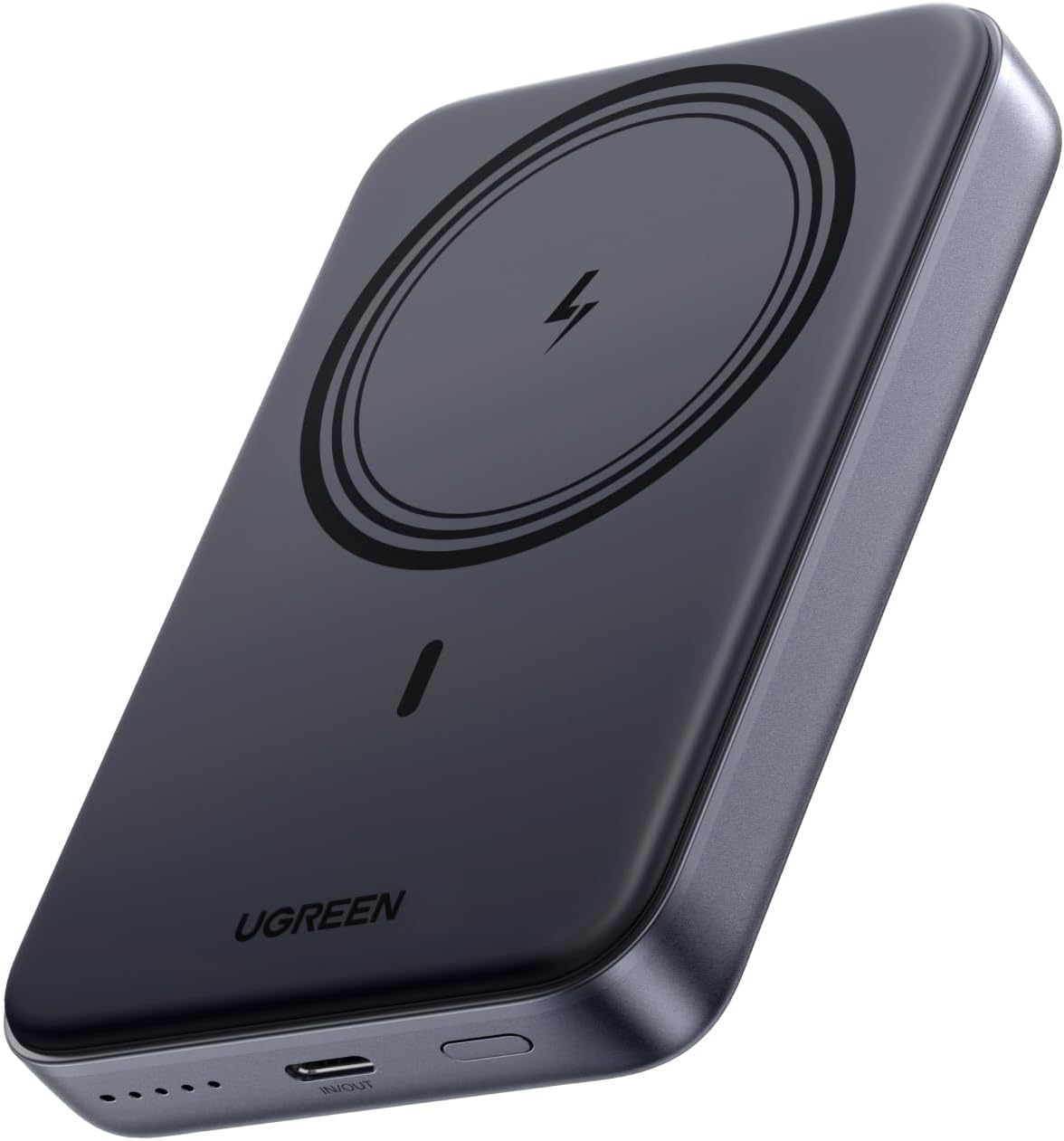
What to Know Before Buying a 20,000mAh Power Bank With Built-In Cables
This 20,000mAh power bank pairs a 22.5W fast-charging output with two integrated cables and an LCD battery display, positioning it as a grab-and-go option for commuters and travellers. Before buying, it's worth understanding how capacity, cable design and charging standards affect real-world performance.
Key Considerations Before Buying
- Check the wattage against your device: 22.5W is enough for fast charging on many Samsung and Android phones, but iPhones generally cap at around 20W via USB-C Power Delivery, so confirm the bank supports the PD standard your phone uses.
- Built-in cables add convenience but create a single point of failure; look at whether the cables are reinforced at the strain points and whether the USB-C port can still be used for charging other devices or the bank itself.
- A 20,000mAh cell is rated capacity, not usable output; expect roughly 60–70% of that to reach your phone after conversion losses, which typically equates to three to four full phone charges.
What Our Analysts Recommend
Prioritise banks that clearly state PD and QC compatibility rather than vague 'fast charging' claims, and check that the LCD shows a percentage rather than four vague dots. Build quality matters too: a 20,000mAh unit weighs around 350–450g, so a compact housing with rounded edges makes a real difference in a bag or pocket.
Portable Power Banks Market Context
Market Overview
The UK portable power bank market is crowded with near-identical 20,000mAh units from dozens of brands, and prices range from budget imports to premium names like Anker and Belkin. Built-in cables have become a popular differentiator because they remove the need to carry a separate lead.
Common Issues
The most frequent complaints in this category are inflated capacity claims, cables that fray within months, and fast-charging that only works on one port or with specific cables. Buyers also report confusion over airline rules, since 20,000mAh (about 74Wh) sits comfortably under the 100Wh carry-on limit but must go in cabin baggage, not checked luggage.
Quality Indicators
Reputable brands publish the exact output wattage per port, the supported fast-charge protocols, and the cell type. CE and UKCA marking is a baseline legal requirement for sale in the UK, and independent safety certification such as IEC 62133 is a stronger signal of a well-engineered battery.
Review Authenticity Insights
Grade B Interpretation
A Grade B authenticity rating with an estimated 15% fake review rate means most reviews look genuine but the sample isn't clean enough to take the 5.00/5 score at face value. The adjusted rating of 4.60/5 is a more realistic guide to buyer satisfaction, and it remains a strong score for this category.
Trust Recommendation
Treat the perfect 5.00/5 with mild caution and focus on the adjusted 4.60/5, which still suggests a well-liked product. With only 31 reviews, the sample is small, so weigh the rating alongside the product specifications rather than relying on it alone.
Tips for Reading Reviews
Look for reviews that mention specific charging times, how many times the bank recharged a particular phone model, and how the built-in cables have held up after weeks of use. Reviews that only praise the display or the price without performance detail are less informative for a power bank purchase.
Expert Perspective
This power bank competes on convenience rather than raw specification: 22.5W is respectable but not class-leading, and the real draw is the two built-in cables plus an LCD percentage readout. The 4.60/5 adjusted rating from 31 verified-purchase reviews suggests buyers are broadly satisfied, though the small sample and Grade B authenticity mean the score should be treated as indicative. For a compact 20,000mAh unit, the combination of features is sensible for everyday carry.
Purchase Considerations
Weigh whether built-in cables suit your devices, since they're only useful if the connectors match your phone and you don't mind the extra bulk. Check the warranty length and confirm the bank supports USB-C Power Delivery if you own an iPhone, as 22.5W alone won't guarantee fast charging on Apple devices.
Comparing Alternatives
Compare this against established brands offering similar capacity with published PD specifications and longer warranties before committing, particularly if you plan to rely on it for travel.