
Choosing a Wooden Baby Walker: What UK Parents Should Know
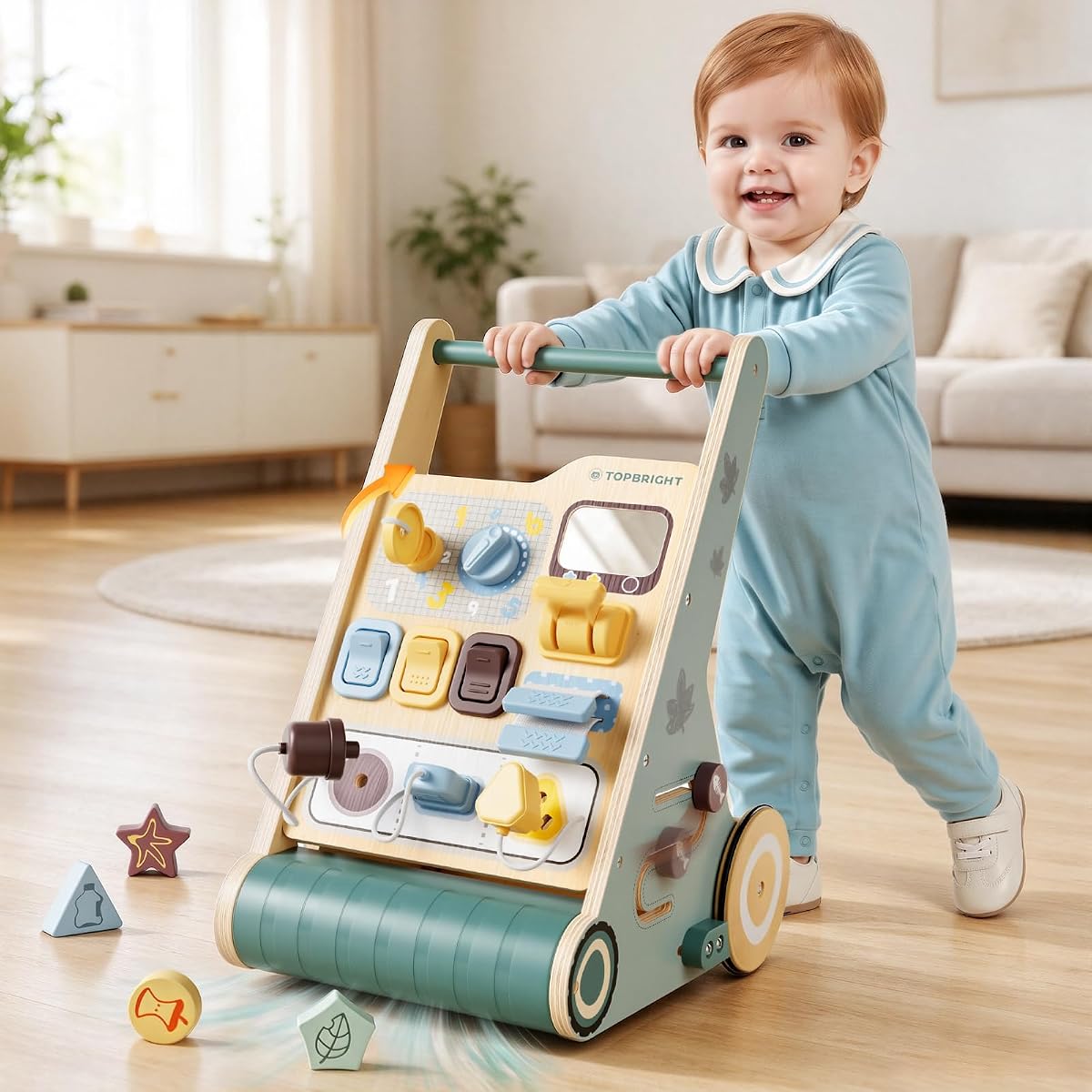
A wooden baby walker with an activity centre, like the TOPBRIGHT model, combines first-steps support with sensory play, making it a popular gift for one-year-olds. But not all wooden walkers are built to the same standard, and the differences matter once a toddler starts pulling up and pushing off.
Key Considerations Before Buying
- Stability and weight are critical: a walker that is too light tips when a child leans on it, while one that is too heavy is hard for a new walker to push. Look for a wide wheelbase and a body weighted for toddler momentum.
- Check the activity panel's construction. On the TOPBRIGHT walker, the front activity centre includes gears, beads and shape elements; ensure any moving parts are securely fixed and sized above choking-hazard thresholds for under-threes.
- Consider floor surface and storage. Wooden wheels roll differently on carpet versus hardwood, and a walker with a foldable or compact profile is easier to store in smaller UK homes.
What Our Analysts Recommend
Prioritise solid wood or plywood with smooth, rounded edges and non-toxic, water-based paints, as teething toddlers will mouth the frame. Check that wheels are firmly attached with recessed axles and that the handle height suits a one-year-old's reach, roughly 40-50cm from the floor.
Pull-Along Toys Market Context
Market Overview
The pull-along and push-along toy market has shifted toward multi-function wooden designs, with activity-centre walkers now competing directly with plastic electronic walkers. Parents increasingly favour wood for durability and aesthetics, which has pushed prices up and quality variance wider across budget and premium brands.
Common Issues
Frequent complaints in this category include walkers that tip forward when a child pulls up on the activity panel, wheels that loosen or squeak within weeks, and paint that chips at high-contact edges. Assembly instructions and missing fixings are also recurring frustrations reported by buyers.
Quality Indicators
Well-made wooden walkers use thicker gauge timber, have wheels mounted on metal axles rather than wooden pegs, and show consistent finishing at joints and edges. A reputable brand will state paint safety standards (such as EN71 for the UK) and provide clear assembly guidance.
Review Authenticity Insights
Grade A Interpretation
A Grade A authenticity rating with an estimated 5% fake review rate is strong for this category, where gift-heavy products often attract incentivised reviews. With 3,080 reviews and an adjusted rating of 4.70 versus 4.78 raw, the small gap suggests genuine satisfaction rather than rating inflation.
Trust Recommendation
Shoppers can treat the review base as broadly reliable, but should still scan for reviews mentioning assembly, wheel durability and tipping, as these are the practical failure points. Verified-purchase reviews with photos of the walker in use are the most useful signal.
Tips for Reading Reviews
For baby walkers, prioritise reviews from parents whose children are in the 9-18 month range, as feedback from grandparents buying gifts is less informative about real use. Look for mentions of specific floors, weights and how long the walker held a child's interest.
Expert Perspective
The TOPBRIGHT Wooden Baby Walker with Activity Centre earns its 4.70 adjusted rating through a combination of solid construction and engaging play value, and the authenticity analysis gives confidence that this score reflects real buyer experience. Its dual role as a first-steps aid and seated activity toy suits the one-year-old gift market well. The main caveats are typical of the category: assembly effort and the need to supervise use on hard floors.
Purchase Considerations
Weigh the walker's footprint against your home's floor space and whether your child is already pulling to stand, since the activity panel is most useful before independent walking. Check the brand's paint and safety certifications if the walker will be used daily.
Comparing Alternatives
Compare against other wooden activity walkers and simpler pull-along toys to see whether the activity centre justifies the price for your child's stage.


