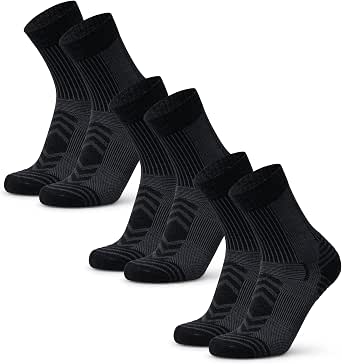
Waterproof Socks That Breathe: What to Check Before You Buy
Waterproof mid-calf socks are a niche but essential piece of kit for UK hikers, runners, and cyclists who refuse to let wet feet ruin a day out. Unlike fully sealed waterproof socks that trap sweat, this pair claims breathability and stretch—two features that are notoriously hard to combine with a waterproof membrane. Understanding how these socks actually perform in real conditions is key before you commit.
Key Considerations Before Buying
- Waterproof membranes in socks typically sit between an inner and outer layer; check whether reviews mention sweat buildup or clamminess, because 'breathable' waterproof socks still vary hugely in how well they manage moisture during high-output activities like running.
- Mid-calf height is a versatile choice for hiking and cycling—it clears most walking boots and cycling shoes—but fit matters: a stretchy sock that's too loose can bunch and rub, while one that's too tight can restrict circulation and compromise the membrane.
- Durability at high-wear points (heel, toe, and the seam where the membrane is bonded) is a common failure point; look for feedback on how the socks hold up after repeated washes and abrasive use inside boots.
What Our Analysts Recommend
Quality waterproof socks use a three-layer construction with a proven membrane (often PU or ePTFE-based) and reinforced heel and toe zones. Check that the cuff has a secure but non-binding elastic and that the inner lining is soft and moisture-wicking—cheap versions often feel plasticky against the skin. Also verify care instructions: most waterproof socks should be hand-washed or washed cold to preserve the membrane.
Socks Market Context
Market Overview
The waterproof sock market has grown as more outdoor enthusiasts seek lightweight alternatives to waterproof boots, especially for trail running and cycling where full waterproof footwear is impractical. UK buyers in particular value breathability given the country's damp, variable climate, and mid-calf styles are increasingly popular for three-season use.
Common Issues
The most frequent complaints in this category are poor breathability leading to sweaty feet, membranes delaminating after a few months, and sizing inconsistencies between brands. Some waterproof socks also feel stiff or bulky inside tight-fitting cycling shoes, which can affect pedalling comfort.
Quality Indicators
Look for socks that specify the membrane technology and have a seamless toe construction to reduce blister risk. Reinforced heel and toe panels, a snug but flexible cuff, and clear washing guidance are signs of a considered design. Reviews that mention multi-day use without leaks are a stronger quality signal than first-impression comfort alone.
Review Authenticity Insights
Grade B Interpretation
A Grade B authenticity rating with an estimated 10% fake review percentage means the review base is largely trustworthy but not pristine. All reviews are verified purchases, which is a meaningful positive, but the adjusted rating of 4.20 versus the displayed 4.44 suggests a small cluster of inflated reviews may be nudging the score upward.
Trust Recommendation
Treat the 4.20 adjusted rating as the more realistic performance indicator and read the mid-range (3-star) reviews closely—they're where balanced feedback about breathability and durability tends to appear. Given the 10% estimated fake rate, don't rely on the headline score alone; look for reviewers who describe specific use cases like multi-hour hikes or wet commutes.
Tips for Reading Reviews
Prioritise reviews that mention conditions (rain, stream crossings, sweaty runs) and longevity (how many months of use). Be wary of short five-star reviews that repeat marketing phrases like 'totally waterproof' without context. For socks, fit and breathability complaints are the most useful signals because they're hard to fake convincingly.
Expert Perspective
This is a solid mid-market waterproof sock with a genuine verified-purchase review base and a realistic adjusted rating above 4.0. The mid-calf, stretchy design suits hikers and cyclists who want a versatile sock that works across activities, and the breathability claim is plausible given the category's typical membrane construction. However, the 10% estimated fake review share means the displayed rating slightly overstates consensus satisfaction, so expectations should be calibrated to the adjusted score.
Purchase Considerations
Weigh how often you'll actually be in wet conditions against the breathability trade-off—if you run hot, a waterproof sock will always feel warmer than a standard technical sock. Check the seller's returns policy, as fit is the most common reason these socks get sent back, and confirm washing instructions before buying to avoid premature membrane failure.
Comparing Alternatives
Compare this pair with other mid-calf waterproof socks that specify their membrane technology and offer a satisfaction guarantee, as the category has several established brands with longer track records.