
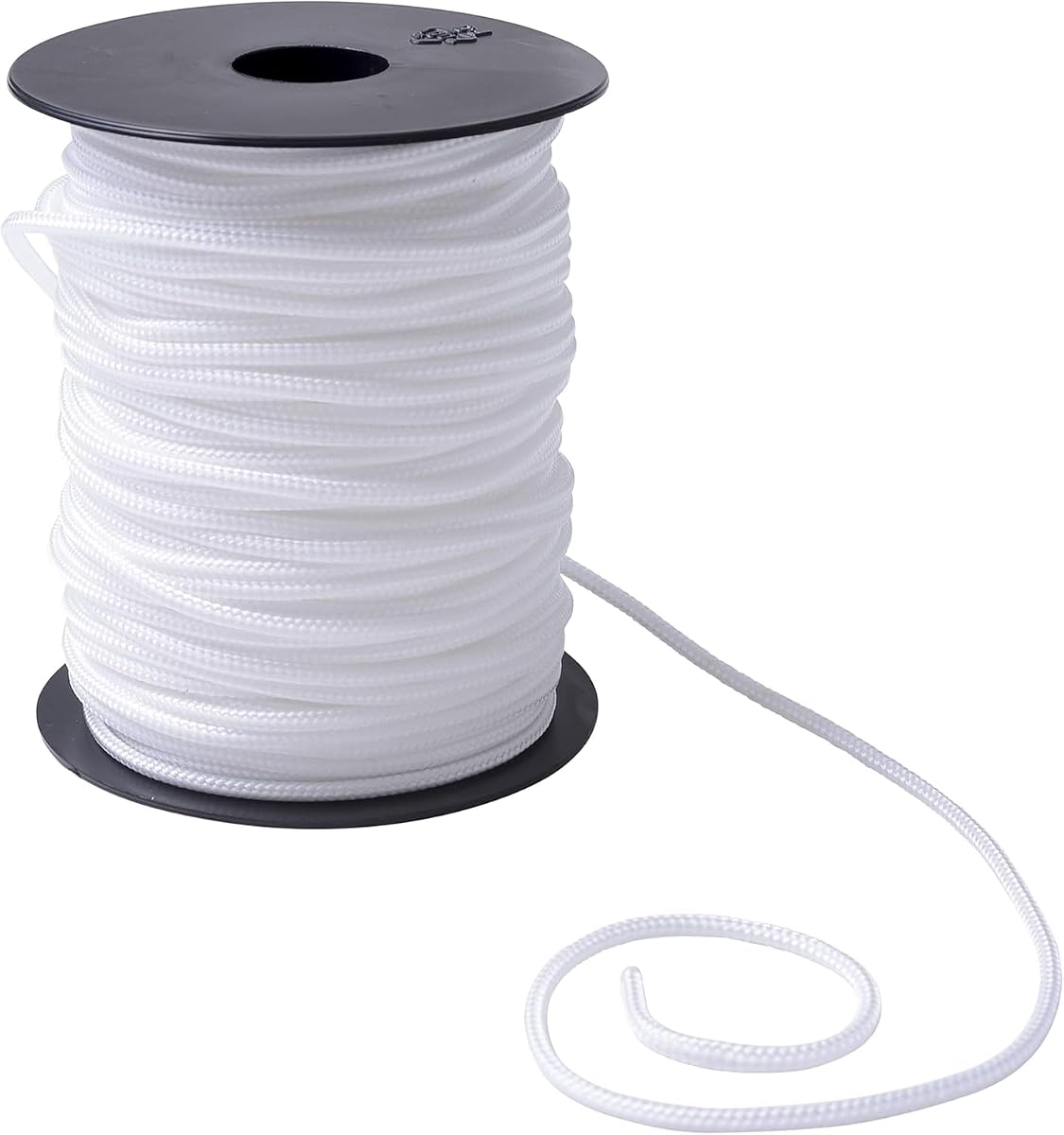
Choosing Nylon Curtain Cord: Diameter, Length, and Braid Quality Matter
This IPEA product is a 3mm braided nylon cord sold in a 50-metre white pack, made in Italy and marketed for Venetian blinds, curtain tie-backs, awnings, and general DIY. Before buying, understand how cord diameter, braid construction, and UV exposure affect performance in these applications.
Key Considerations Before Buying
- Diameter and load: 3mm braided nylon is a light-to-medium cord suited to blind ladders and tie-backs, not heavy lifting; confirm your hardware's pulley or eyelet accepts 3mm without binding.
- Braid versus twisted construction: a braided (tressé) sheath resists abrasion and kinking better than twisted cord, which matters for cords that run through pulleys or rub against window frames daily.
- Length and waste: 50 metres covers multiple windows or a full re-cord job, but nylon stretches slightly under sustained tension, so allow a little extra when measuring runs for Venetian blinds.
What Our Analysts Recommend
Check that the braid is tight and uniform with no frayed ends or loose strands, since a loose weave unravels quickly once cut. Nylon's UV resistance is moderate, so for south-facing windows look for cord rated for outdoor or sun-exposed use, and confirm the stated diameter matches the actual cord.
Ropes Market Context
Market Overview
Curtain and blind cord is a small but crowded hardware niche, dominated by low-cost imported reels alongside European-made options like this Italian product. Buyers increasingly choose braided nylon over natural fibres for its strength and moisture resistance, though UV degradation remains the main long-term weakness.
Common Issues
The most frequent complaints in this category are cords that fray at cut ends, stretch or sag over time, and arrive thinner than the advertised diameter. Colour fastness is another issue: white cord can yellow with sun exposure, which is noticeable on light-coloured curtains and blinds.
Quality Indicators
Uniform braid density, clean selvedges, and a manufacturer origin label (Made in Italy here) are good signs. A cord that holds its shape when knotted and resists flattening under tension usually indicates a denser, better-made braid.
Review Authenticity Insights
Grade B Interpretation
A Grade B with an estimated 15% fake review rate means most of the 39 reviews look genuine, but a small share are low-effort and should be discounted. The adjusted 4.60/5 rating is still strong and more realistic than the perfect 5.00 displayed.
Trust Recommendation
Treat the product as well-reviewed but not flawless: read the handful of detailed reviews for comments on fraying, stretching, or actual thickness. Since all reviews are verified purchases, the overall sentiment is credible, but weigh the adjusted rating over the headline score.
Tips for Reading Reviews
For cord, prioritise reviews that mention specific uses (Venetian blinds, tie-backs) and long-term wear after weeks or months. Ignore one-line praise and look for mentions of diameter accuracy and how the cord behaves when cut.
Expert Perspective
This IPEA cord is a sensible mid-range choice for household re-cording and tie-back work: Italian manufacture, a 50-metre reel, and a braided 3mm nylon construction that suits Venetian blinds and light hardware. The adjusted 4.60 rating suggests buyers are largely satisfied, though the 15% questionable-review estimate means the perfect 5.00 should be read with caution. For light-duty indoor use, the value proposition is solid.
Purchase Considerations
Weigh whether your application is indoor and light-duty; if you need cord for outdoor awnings or heavy loads, a UV-stabilised or larger-diameter option may serve better. Also confirm 3mm fits your existing pulleys and cleats before committing to 50 metres.
Comparing Alternatives
Compare with other braided nylon cords in 3–4mm and with polyester options, which resist UV better but stretch less predictably.


