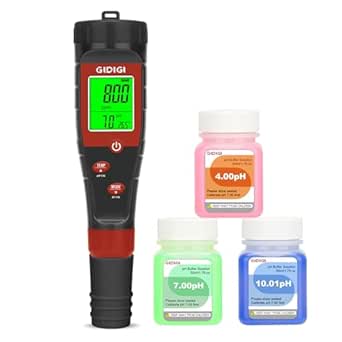
Food pH Meter: Calibration, ATC, and Probe Design Matter
A food-grade pH meter like this model with calibration kits, a color display, and a spear-tip probe is built for fermenters, sourdough bakers, and cosmetic makers who need reliable readings outside a lab. Unlike basic pen testers, it combines automatic temperature compensation (ATC) with a piercing electrode, so you can measure semi-solids such as dough, sauerkraut, or creams directly.
Key Considerations Before Buying
- Calibration discipline is non-negotiable: the included pH calibration kits are only useful if you calibrate before each session or at least weekly, since food proteins and oils foul the glass bulb and drift readings by 0.1–0.3 pH.
- Probe geometry drives usability: a spear-tip electrode penetrates dense media like sourdough or meat, but it is more fragile than a flat-surface sensor, so avoid twisting it into hard solids and rinse it immediately after contact with acidic ferment brines.
- ATC range and resolution matter for fermentation: most fermentations sit between 3.0 and 5.0 pH, so check that the meter resolves to 0.01 pH and that its ATC covers your working temperature (typically 0–50 °C) rather than assuming room-temperature accuracy.
What Our Analysts Recommend
Prioritize meters that ship with fresh pH 4.00 and 7.00 buffer powders or sachets, a clearly specified accuracy figure (look for ±0.01–0.02 pH), and a replaceable electrode. A backlit color display is genuinely useful in dim kitchens or fermentation chambers, but confirm the probe is rated for food contact and that replacement tips or electrodes are available in Germany.
pH Meters Market Context
Market Overview
The food pH meter segment has shifted from lab-only instruments to affordable handhelds aimed at home fermenters, sourdough bakers, cheesemakers, and DIY cosmetics producers. German shoppers now see a crowded field of sub-€60 meters that promise lab-grade specs, though few publish traceable calibration certificates.
Common Issues
The most frequent complaints in this category are drifting readings after a few weeks, probes that cannot be replaced, and calibration solutions that expire before use. Users also underestimate how quickly dairy, oil, and dough residue coat the glass bulb, which causes slow or erratic responses.
Quality Indicators
A credible food pH meter specifies electrode type (glass bulb vs. ISFET), accuracy, and ATC range, and sells replacement probes or storage solution. Look for a meter that includes KCl storage solution or at least instructs you to keep the bulb moist — dry storage is the leading cause of early failure.
Review Authenticity Insights
Grade B Interpretation
A Grade B authenticity rating with an estimated 12% fake review share means most reviews are credible but a meaningful minority may be incentivized or superficial. The adjusted rating of 4.00 versus the displayed 4.22 suggests genuine buyer sentiment is slightly more mixed than the headline score implies.
Trust Recommendation
Treat the 4.22 rating as directionally positive but not definitive; read the verified-purchase reviews that mention calibration drift, probe durability, and ATC performance specifically. Given the 12% suspicious share, weight detailed multi-language reviews from fermentation and lab users more heavily than short five-star entries.
Tips for Reading Reviews
For pH meters, prioritize reviews that state the calibration frequency, the buffer solutions used, and whether readings matched a reference meter or test strips. Be skeptical of reviews praising the color display without mentioning accuracy, since display quality is unrelated to measurement reliability.
Expert Perspective
This meter targets a real gap: an affordable food-oriented pH tester with calibration kits, ATC, and a spear-tip probe for semi-solids, which basic pen meters handle poorly. The 4.00 adjusted rating is respectable for the category, where probe drift and calibration hassle are the usual failure points. However, the 12% estimated fake review share and the absence of published accuracy specifications in the listing warrant caution. It is best suited to hobbyist fermenters and sourdough bakers who will calibrate diligently, not to commercial kitchens needing traceable measurements.
Purchase Considerations
Weigh the included calibration kits and replaceable probe against the cost of buffer solutions and a storage solution you will need to buy repeatedly. If you ferment weekly, budget for probe replacement every 12–18 months; if you only test occasionally, a simpler meter or pH strips may be more cost-effective.
Comparing Alternatives
Compare this model with other food pH meters that publish accuracy figures and offer replaceable electrodes, and check whether a lab-grade meter is justified for your volume of testing.