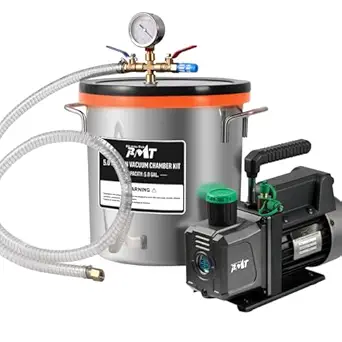
Choosing an Oil-Free Lab Vacuum Pump: Power, Flow, and Noise Trade-Offs
This 150W oil-free vacuum pump delivers up to 45 L/min flow at 1450 RPM and reaches −90 kPa, making it suitable for airbrush work, medical machinery, and laboratory filtration. Unlike oil-lubricated pumps, it avoids oil mist contamination, but you need to match its specs to your application's vacuum depth and duty cycle.
Key Considerations Before Buying
- Vacuum depth versus flow rate: This pump reaches −90 kPa (about 90% vacuum), which is adequate for filtration, aspiration, and airbrush use but not for high-vacuum tasks like freeze-drying or rotary evaporation that require near-absolute vacuum. Confirm your process needs no deeper than −90 kPa.
- Duty cycle and continuous operation: Oil-free diaphragm pumps in this class often have limited continuous-run ratings, and heat buildup affects longevity. Check whether your workflow requires hours of uninterrupted use or short bursts, and look for thermal protection features.
- Noise level and vibration: The listing calls it 'leise' (quiet), but 150W diaphragm pumps typically produce 50–60 dB. If the pump will run in a shared lab or near a work area, request a measured dB figure or plan for an enclosure or anti-vibration mounts.
What Our Analysts Recommend
Prioritize pumps with clearly stated flow curves (not just peak flow), replaceable diaphragm and valve kits, and a documented duty cycle. Build quality shows in metal-bodied pump heads, thermal overload protection, and availability of spare parts—critical for lab equipment that must stay serviceable.
Vacuum Pumps Market Context
Market Overview
The oil-free diaphragm vacuum pump segment has grown as labs and workshops seek contamination-free vacuum without oil maintenance. German-market buyers can choose from established instrument brands and lower-cost imports, with prices and build quality varying widely at the 150W, 45 L/min tier.
Common Issues
Buyers frequently report overstated vacuum specs, shorter-than-expected diaphragm life under continuous use, and noise levels higher than advertised. Another recurring issue is unclear spare-parts availability, which can turn a minor valve failure into a full replacement.
Quality Indicators
Look for published performance curves, stated duty cycles, and CE/GS certification for the German market. Replaceable wear parts, a metal pump head, and responsive German-language support are stronger quality signals than a low price alone.
Review Authenticity Insights
Grade B Interpretation
A Grade B authenticity rating with an estimated 15% fake review rate means most of the five reviews look genuine, but the perfect 5.00 average should be read with caution. The adjusted 4.60 rating is a more realistic signal of customer satisfaction for this pump.
Trust Recommendation
Treat the high rating as encouraging but not conclusive given the small review count. Seek out reviews that mention specific use cases—airbrush, lab filtration, medical equipment—and verify seller warranty and return terms before buying.
Tips for Reading Reviews
For vacuum pumps, prioritize reviews that cite measured vacuum levels, noise in decibels, or months of service life over brief praise. Watch for repeated phrasing across reviews, a common sign of incentivized feedback in this category.
Expert Perspective
This pump's 150W motor, 45 L/min flow, and −90 kPa limit place it in the entry-to-mid tier of oil-free diaphragm pumps, well suited to airbrush compressors, lab aspiration, and light medical machinery support. The 5.00 rating from only five reviews—adjusted to 4.60—suggests genuine but limited feedback, so durability under continuous use remains unproven. Buyers should weigh the convenience of oil-free operation against the need for verified duty-cycle and noise data.
Purchase Considerations
Confirm that −90 kPa meets your application's requirement and that the pump's duty cycle matches your runtime; if you need continuous operation, consider a higher-tier model. Also factor in spare diaphragm kits and German-language support when comparing total cost of ownership.
Comparing Alternatives
Compare this pump with similarly spec'd oil-free models from established lab suppliers, checking published flow curves, noise ratings, and warranty length before deciding.