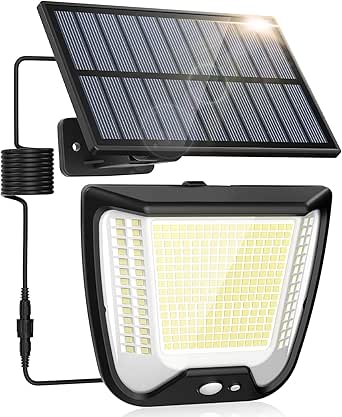
Solar Wall Lights: Motion Detection, Panel Placement & Brightness Matter
The nipify 318 LED solar wall light stands out for its separate solar panel and motion sensor, allowing flexible installation even in shaded areas. With a 4.67-star rating from over 1,000 reviews, it's a popular choice for German homeowners seeking off-grid outdoor lighting.
Key Considerations Before Buying
- The separate solar panel is a key advantage: it can be placed in direct sunlight while the light itself is mounted in a shaded entryway or garage wall, ensuring reliable charging. Check the cable length to confirm it reaches between your desired panel and light locations.
- Motion detection range and sensitivity are critical for security and convenience. Look for adjustable settings (range, duration, and sensitivity) so you can tailor activation to your space, avoiding false triggers from passing cars or pets.
- Battery capacity and LED brightness determine performance on cloudy days and light coverage. A higher mAh battery and lumen output (typically 300-600 lumens for this category) mean longer runtime and brighter illumination, but consider whether the light output is appropriate for your wall height and area.
What Our Analysts Recommend
Prioritize IP65 or higher weatherproofing for German winters, and check that the solar panel is monocrystalline for better low-light performance. Also, verify the motion sensor's detection angle (often 120-180 degrees) and range (up to 8-10 meters) to match your coverage needs. Build quality—such as ABS plastic or aluminum housing—affects durability against UV and frost.
Outdoor Wall Lights Market Context
Market Overview
The outdoor solar wall light market has grown rapidly, driven by energy efficiency and easy installation without wiring. German consumers favor models with separate panels and motion sensors for flexibility, but quality varies widely, from budget imports to premium brands with better weather resistance.
Common Issues
Common complaints include inadequate brightness, short battery life in winter, and sensors that trigger too easily or fail in cold weather. Many cheaper models use low-quality solar panels that degrade quickly, and some lack proper IP ratings, leading to water damage.
Quality Indicators
Look for certified IP ratings (IP65 or higher), brand reputation for solar products, and detailed specifications like battery type (Li-ion vs. NiMH) and lumen output. Reviews mentioning long-term performance (over a year) and winter operation are strong signals of reliability.
Review Authenticity Insights
Grade B Interpretation
A Grade B authenticity rating with an estimated 10% fake reviews means most reviews are genuine, but some may be incentivized or exaggerated. The adjusted rating of 4.40/5 still indicates strong overall satisfaction, though slightly lower than the displayed 4.67.
Trust Recommendation
Trust the adjusted rating as a more realistic measure, but focus on reviews that detail specific use cases and long-term experiences. Be cautious of reviews that are overly brief or generic, and look for patterns in complaints about battery life or sensor performance.
Tips for Reading Reviews
Filter for reviews with photos or those mentioning installation challenges and winter performance. Pay attention to verified purchases and reviewers who have used the product for several months, as initial impressions can be misleading for solar lights.
Expert Perspective
The nipify 318 LED solar wall light offers a practical solution for areas without wiring, thanks to its separate panel and motion sensor. The high review volume and adjusted rating suggest it performs well for many users, but the 10% fake review estimate means you should weigh genuine feedback carefully. Its success likely stems from flexibility and ease of installation, though long-term durability in harsh weather remains a question.
Purchase Considerations
Consider your local climate: if you have long, dark winters, ensure the battery capacity is sufficient and the panel can be optimally placed. Also, check the motion sensor's customization options to avoid nuisance triggering. Compare the lumen output to your needs—higher isn't always better if it drains the battery quickly.
Comparing Alternatives
Before buying, compare with similar solar wall lights that offer larger panels or higher IP ratings, especially if you live in an area with extreme weather. Brands like Ring or Philips may offer more robust options at a higher price.