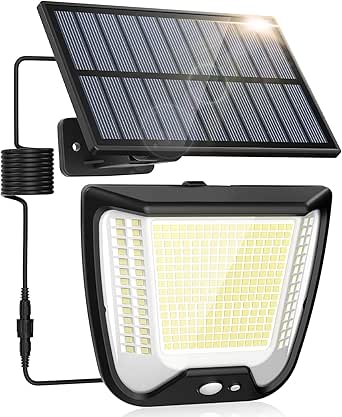
Solar Wall Lights: Brightness, Motion Detection, and Real-World Performance
The FLOWood solar wall light packs 156 LEDs and a motion sensor into a single unit, promising bright, hands-free illumination for German outdoor spaces. But solar-powered security lights live or die by their battery capacity, sensor accuracy, and winter performance—not just LED count.
Key Considerations Before Buying
- Battery storage is the real bottleneck: 156 LEDs draw significant power, so check whether the integrated battery (typically 1200–2000 mAh in this class) can sustain multiple days of cloudy weather. A high LED count with a weak battery means dim output by morning.
- Motion sensor range and angle matter more than lumens: look for a detection range of at least 3–5 meters and a 120-degree field of view, and confirm the light has adjustable sensitivity and duration settings. Fixed sensors often trigger on pets or miss approach angles.
- IP rating and mounting flexibility: for German weather, IP65 is the practical minimum for outdoor wall lights. Also verify the solar panel can be angled or detached—wall-mounted panels in shaded courtyards may never fully charge.
What Our Analysts Recommend
Prioritize reviews that mention winter performance and battery life after several months, as these reveal real capacity. Check whether the listing specifies battery type (Li-ion vs. NiMH) and wattage—vague specs often signal cost-cutting. A clear IP rating and a detachable or adjustable panel are strong quality signals in this category.
Outdoor Wall Lights Market Context
Market Overview
Solar outdoor wall lights have surged in popularity in Germany as energy costs rose, with hundreds of similar 100–200 LED models flooding Amazon. The market is crowded with white-label brands, so differentiation comes down to battery quality, sensor reliability, and honest lumen ratings rather than LED counts.
Common Issues
The most frequent complaints in this category are batteries failing after one winter, motion sensors that trigger constantly or not at all, and plastic housings that yellow or crack within a year. Many listings overstate brightness by counting LEDs rather than measuring actual lumens.
Quality Indicators
Look for listings that specify battery capacity in mAh, actual lumen output, and IP rating rather than just LED count. Brands with consistent review histories across multiple products and detailed responses to negative reviews tend to be more reliable. Metal or UV-resistant housings are a step up from basic ABS plastic.
Review Authenticity Insights
Grade B Interpretation
A Grade B with an estimated 15% fake review rate means the 4.67-star rating is somewhat inflated; the adjusted 4.30 rating is a more realistic guide. This is typical for high-volume Amazon lighting products, where some sellers use incentivized reviews to boost early ratings.
Trust Recommendation
Treat the adjusted 4.30 rating as credible and focus on verified reviews with photos and long-term updates. Be cautious of reviews that praise brightness without mentioning battery life or winter use, as these are common patterns in incentivized reviews for solar lights.
Tips for Reading Reviews
Sort by 'Most recent' rather than 'Top rated' to see how units perform after months of use, especially through a German winter. Look for reviewers who mention installation details and sensor behavior—specificity is the best authenticity signal. Ignore reviews that only describe packaging or delivery speed.
Expert Perspective
The FLOWood 156-LED solar wall light is a mid-tier option in a crowded category, with a solid adjusted rating of 4.30 from over 1,600 reviews suggesting most buyers find it functional. The 156-LED count is impressive on paper but only meaningful if the battery and panel can support it through cloudy periods. At this price point, expect plastic construction and a sensor that works but isn't premium.
Purchase Considerations
Weigh your installation location: this light performs best where the panel gets direct sun for 6+ hours daily, so shaded walls may disappoint. If you need reliable security lighting year-round, a hardwired model or a solar light with a larger separate panel may be worth the extra cost.
Comparing Alternatives
Compare with models from established brands like Steinel or Philips, and check whether competitors offer higher battery capacity or a detached panel at a similar price.