Solar Pathway Lights: Brightness, Durability, and Installation Matter
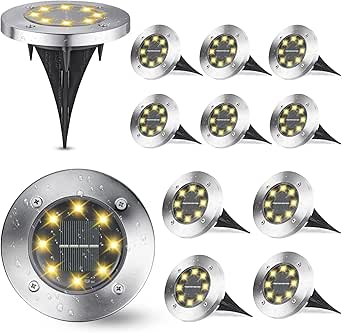
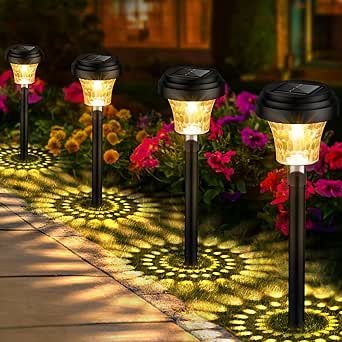
This 3-pack of 72-LED solar spotlights delivers 6500K cool white light with three modes and an IP67 waterproof rating, designed for wall mounting or ground placement along paths, fences, and driveways. Before buying, understand how solar charging capacity, beam direction, and mounting flexibility affect real-world performance in German gardens.
Key Considerations Before Buying
- Battery and panel quality determine runtime: With 72 LEDs per unit, the solar panel must be efficient enough to recharge the battery fully even on overcast days. Check whether the listing specifies battery capacity (mAh) and panel wattage—undersized panels are the most common reason solar lights dim after a few hours.
- IP67 rating means true weatherproofing: Unlike IP44 or IP65 lights, IP67 protects against temporary immersion and dust, making these suitable for exposed fences and low-lying path edges where rain pooling or sprinkler overspray occurs. Verify the rating applies to the entire housing, not just the LED compartment.
- Mounting flexibility affects placement options: The ability to wall-mount or stake into the ground lets you direct light precisely—upward for fence accents or downward for pathway illumination. Consider whether the mounting hardware suits your surface (wood, brick, or soil) and whether the light head pivots for angle adjustment.
What Our Analysts Recommend
Prioritize lights with monocrystalline solar panels, which charge more efficiently in low-light conditions than amorphous panels. Look for clear specifications on lumens output (not just LED count) and battery type—Li-ion batteries generally outperform NiMH in cold weather. A sturdy ABS or die-cast aluminum housing with sealed seams signals better long-term durability than thin plastic.
Pathway Lighting Market Context
Market Overview
The German solar pathway lighting market has grown crowded with low-cost imports, many of which overstate brightness and battery life. Brands that publish honest lumen ratings and use replaceable batteries are gaining trust, while generic listings with vague specs dominate the budget tier. Cool white (6500K) options are increasingly popular for security-style illumination, though warm white remains preferred for decorative ambience.
Common Issues
Buyers frequently report that solar lights stop working after one winter due to water ingress or battery failure, and that actual brightness falls far short of advertised LED counts. Another common complaint is that motion or mode settings reset unpredictably, or that the solar panel cannot keep up with nightly use during short winter days.
Quality Indicators
Reliable products specify battery capacity in mAh, panel wattage, and lumen output rather than just LED quantity. A genuine IP67 rating, replaceable batteries, and a clear warranty (even 12 months) are strong signals of quality. Reviews mentioning multi-season durability—especially through a German winter—are more telling than initial impressions.
Review Authenticity Insights
Grade A Interpretation
An authenticity grade of A with an estimated 5% fake review rate means the 4.56-star rating is highly trustworthy; the adjusted 4.40 rating still reflects strong satisfaction. This is notable in a category where review manipulation is common, suggesting the product's performance claims are largely backed by real buyers.
Trust Recommendation
You can rely on the review consensus more than usual here—focus on detailed reviews that mention winter performance, actual brightness, and mounting experiences. The small fake-review percentage is unlikely to skew your decision, but as always, skim the 1- and 2-star reviews for recurring issues rather than isolated defects.
Tips for Reading Reviews
For solar lights, prioritize reviews written after at least three months of use, as battery and waterproofing failures often emerge after weeks. Look for reviewers who describe their specific installation (e.g., 'mounted on a north-facing fence') because solar performance is highly location-dependent. Photos of the lights in use at night are especially valuable for judging real brightness.
Expert Perspective
With a verified-purchase-heavy review base and a 4.40 adjusted rating, this 3-pack represents a solid mid-tier option in the solar spotlight segment. The 72-LED count and 6500K color temperature suggest a bright, security-oriented beam, while IP67 and wall-mount capability add versatility beyond typical stake lights. However, buyers should temper expectations on runtime during German winters and confirm the battery is user-replaceable for longevity.
Purchase Considerations
Weigh whether you need directional spot lighting (for highlighting features or improving safety) versus softer ambient path lighting—6500K is quite cool and may not suit every garden aesthetic. Also factor in installation: wall mounting requires drilling and a sunny exposure, while ground staking limits placement to areas with direct sun. If your priority is all-season reliability, check whether replacement batteries are available.
Comparing Alternatives
Compare this set against single-unit solar spotlights with higher individual lumen output or warm-white options if ambience matters more than brightness. Also consider brands that publish detailed battery specs and offer multi-year warranties, as they often provide better long-term value despite a higher upfront cost.