
Choosing a Drywall Sander That Won't Leave You in Dust
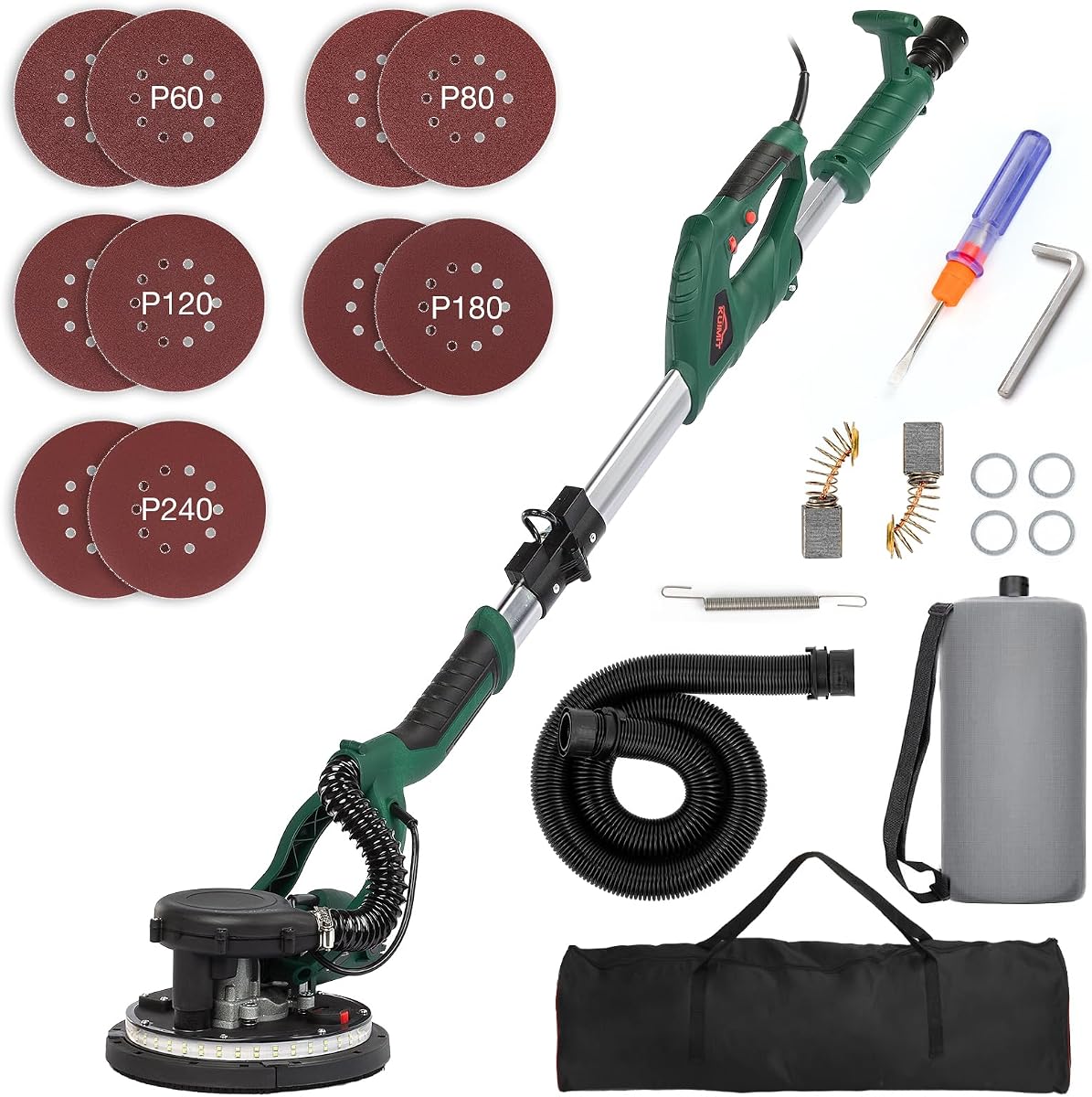
Drywall sanding is the messiest, most physically demanding phase of finishing a room, and a dedicated wall sander like this 800W unit with a 6-speed 800–1750 RPM range and extendable handle is built to spare your shoulders and your air quality. But not every drywall sander is worth the storage space—dust control, weight, and disc compatibility separate the workhorses from the gimmicks.
Key Considerations Before Buying
- Dust collection is the single biggest differentiator: this model includes a long dust hose and 12 sanding discs, but confirm the hose diameter mates with your shop vac and that the head has a sealed dust shroud—otherwise you'll be breathing gypsum dust despite the hose.
- The 800–1750 RPM variable range matters because drywall compound sands best at lower speeds (around 800–1200 RPM) to avoid gouging paper facing, while higher speeds suit heavy joint compound removal—check that the speed dial is reachable while the tool is on the pole.
- An extendable handle plus LED light sounds convenient, but the real question is balance: a heavy motor head on a long pole fatigues your arms on ceilings, so look for a pivoting head and a pole lock that doesn't slip under load.
What Our Analysts Recommend
Quality drywall sanders use a flexible, articulating sanding head that follows wall contours without digging in, and a brush-ring or foam shroud that seals against the wall to capture dust at the source. Check that replacement discs are a standard size (often 9-inch) and widely available—proprietary disc sizes turn a cheap tool into an expensive one. Also verify the motor's duty rating; 800W is adequate for homeowner jobs but continuous professional use demands a tool rated for sustained runtime.
Disc Sanders Market Context
Market Overview
The drywall sander market has shifted from expensive professional pole sanders toward affordable 750–900W electric units aimed at DIYers and renovators, many of them imported and sold under a rotating set of brand names. This has driven prices down but made it harder to distinguish a solid tool from a rebadged generic unit, since specs like 800W and 6-speed control now appear on nearly every listing.
Common Issues
The most frequent complaints in this category are weak or leaky dust collection, sanding heads that wobble or fail to pivot, and poles that flex or collapse under pressure on ceilings. Motor brushes and switches are also wear points on budget units, and buyers often discover that the included discs are low quality and load up quickly.
Quality Indicators
Look for a metal (not plastic) sanding head mount, a hose that's at least 1.5 meters and flexible rather than stiff corrugated plastic, and a pole with a cam-lock or twist-lock rather than a friction collar. Reviews that mention specific jobs—basement ceilings, garage drywall, full-room renovations—are more reliable signals of real-world durability than star ratings alone.
Review Authenticity Insights
Grade B Interpretation
A Grade B authenticity rating with an estimated 15% fake review rate is middling: most of the 63 reviews appear genuine and verified, but roughly one in seven may be incentivized or low-substance. The adjusted rating of 4.20/5 versus the displayed 4.56/5 suggests the genuine consensus is positive but less glowing than the headline number implies.
Trust Recommendation
Treat the 4.56 rating as an optimistic ceiling and the 4.20 adjusted figure as the more realistic expectation—still solid for a budget drywall sander. Prioritize reviews that describe dust capture performance, pole stability, and motor longevity over short five-star entries, and be skeptical of clusters of reviews posted within days of each other.
Tips for Reading Reviews
For drywall sanders, the most useful reviews mention the size of the job (a single room versus a whole basement), whether the reviewer used their own vacuum, and how the tool held up after several hours of use. Filter for verified purchases and look for mentions of the LED light's usefulness and the hose's fit—details fakers rarely bother to invent.
Expert Perspective
This 800W drywall sander packages the features buyers actually want—variable speed, an extendable pole, LED lighting, and a dust hose—at what is typically a budget-friendly price point, and the adjusted 4.20/5 rating suggests most buyers find it performs as advertised for homeowner-scale projects. The 12 included discs and storage bag add practical value, though the discs are likely consumable-grade rather than premium abrasives. The main risk is not the feature set but long-term durability of the pole lock and dust shroud, which are the usual failure points on tools in this class.
Purchase Considerations
Weigh the size of your project: for a single room or patch job, this tool's 800W motor and dust hose are likely sufficient, but for full-house drywall work you may want a more powerful, pro-grade unit with a rigid pole. Also budget for a shop vac and a supply of quality 9-inch discs, since dust collection and abrasive quality determine the actual finish more than the sander itself.
Comparing Alternatives
Compare this unit against other 750–900W pole sanders from established tool brands, paying particular attention to warranty length and replacement-part availability before deciding.


