
Choosing a Drywall Sander: Power, Dust Control, and Handle Design Matter Most
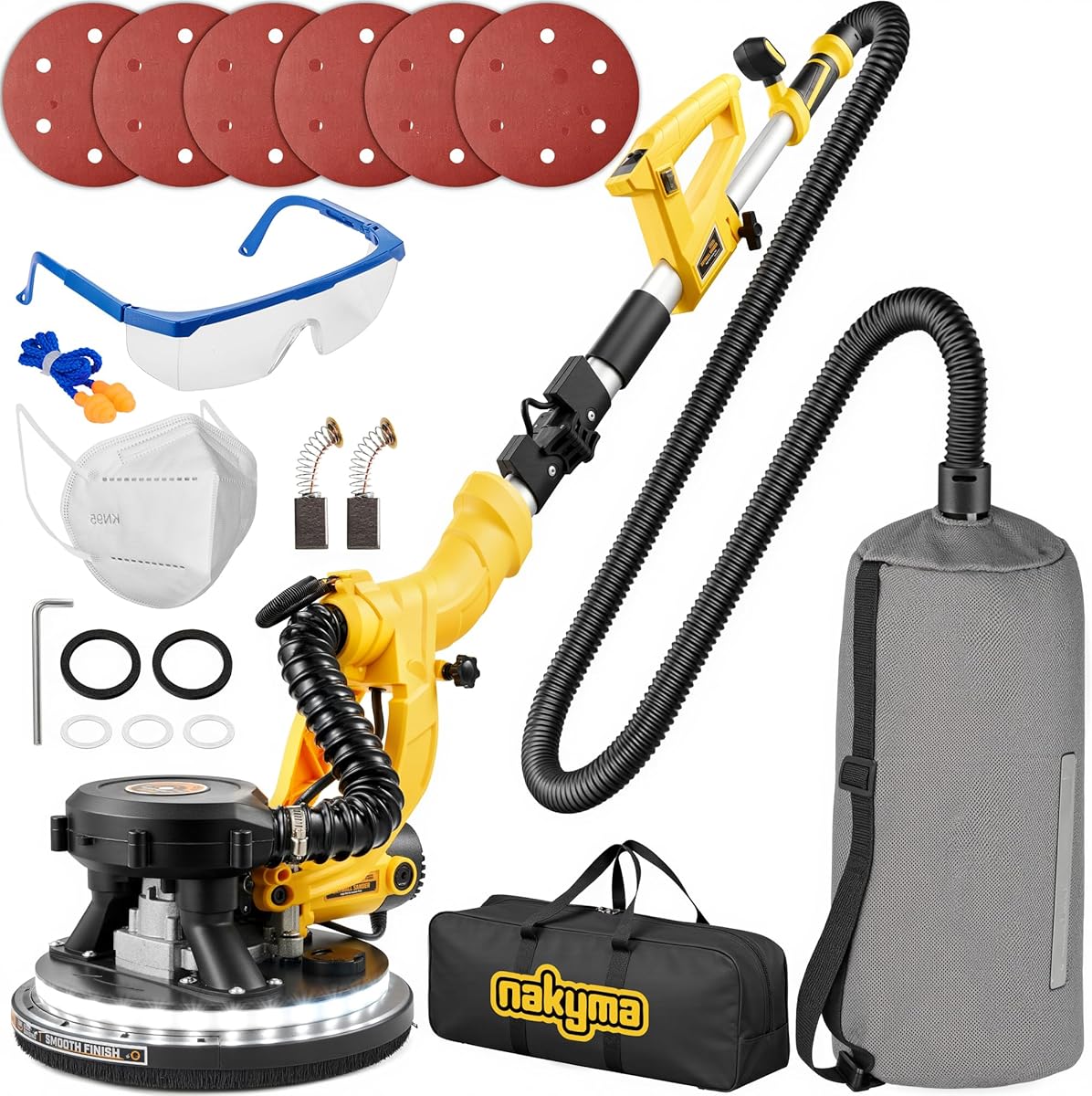
When selecting a drywall sander like this 950W model with vacuum dust collection, focus on how its specific features match your project needs. The 9-speed range from 800-2100RPM and extendable pole handle directly impact performance on different surfaces from smooth drywall to textured popcorn ceilings.
Key Considerations Before Buying
- Dust collection effectiveness is critical—this model's integrated vacuum system must handle fine drywall dust without clogging, especially important for indoor renovation work.
- Variable speed control (800-2100RPM here) allows adjustment for different materials; lower speeds prevent gouging fresh drywall mud while higher speeds tackle stubborn textures.
- Handle design directly affects fatigue—this sander's foldable and extendable pole should provide proper leverage for ceiling work while allowing compact storage.
What Our Analysts Recommend
Quality drywall sanders feature durable sanding pads that resist tearing, smooth speed transitions without cogging, and secure vacuum hose connections. Check that the dust collection system maintains suction through extended use, as drywall dust quickly clogs inferior filters.
Disc Sanders Market Context
Market Overview
The disc sander category for drywall has evolved toward integrated dust management systems, with professional contractors demanding tools that minimize cleanup time. Current models like this 950W unit emphasize variable speed control for versatile application across different finishing stages.
Common Issues
Many budget drywall sanders suffer from inadequate dust collection that creates hazardous airborne particles, while others have poorly balanced handles causing user fatigue during overhead work. Motor burnout under continuous load remains a frequent complaint in lower-amperage models.
Quality Indicators
Look for robust amperage ratings (8.5A here indicates substantial power reserve), metal gear housings rather than plastic, and commercial-grade vacuum adapters. Quality sanders maintain consistent RPM under load and feature ergonomic handle designs that reduce vibration transfer.
Review Authenticity Insights
Grade B Interpretation
The Grade B authenticity rating with 10% estimated fake reviews suggests mostly reliable feedback, though shoppers should remain slightly cautious of overly enthusiastic claims. The minimal gap between the 4.80/5 rating and adjusted 4.60/5 indicates review manipulation isn't significantly inflating scores.
Trust Recommendation
Focus on reviews discussing specific use cases like popcorn ceiling removal or extended drywall finishing sessions, as these demonstrate actual experience. Verified purchase indicators on all reviews increase credibility, but still compare experiences across multiple detailed accounts.
Tips for Reading Reviews
Prioritize reviews mentioning dust collection performance during multi-hour sessions and handle comfort during overhead work—these reflect real-world testing. Be skeptical of reviews that don't mention the vacuum system's effectiveness or speed control usability.
Expert Perspective
This 950W drywall sander presents compelling specifications for serious DIYers and contractors tackling textured surfaces. The 8.5A motor provides sufficient power for demanding applications like popcorn ceiling removal, while the 9-speed range offers needed versatility. The integrated dust collection system addresses the primary pain point in drywall sanding, though its long-term filter maintenance deserves consideration. The high adjusted rating of 4.60/5 from verified purchasers suggests the tool delivers on its core promises.
Purchase Considerations
Evaluate whether your projects require the full 2100RPM for aggressive texture removal or if primarily working with fresh drywall compound. Consider the physical demands of overhead work with this 950W unit's weight distribution and whether the extendable handle provides adequate reach for your space dimensions.
Comparing Alternatives
Compare this model's 800-2100RPM range and 8.5A motor against competitors offering different speed increments or lighter-weight designs for less strenuous applications.


