
Evaluating a 32-inch curved 240Hz gaming monitor: What competitive gamers need to know
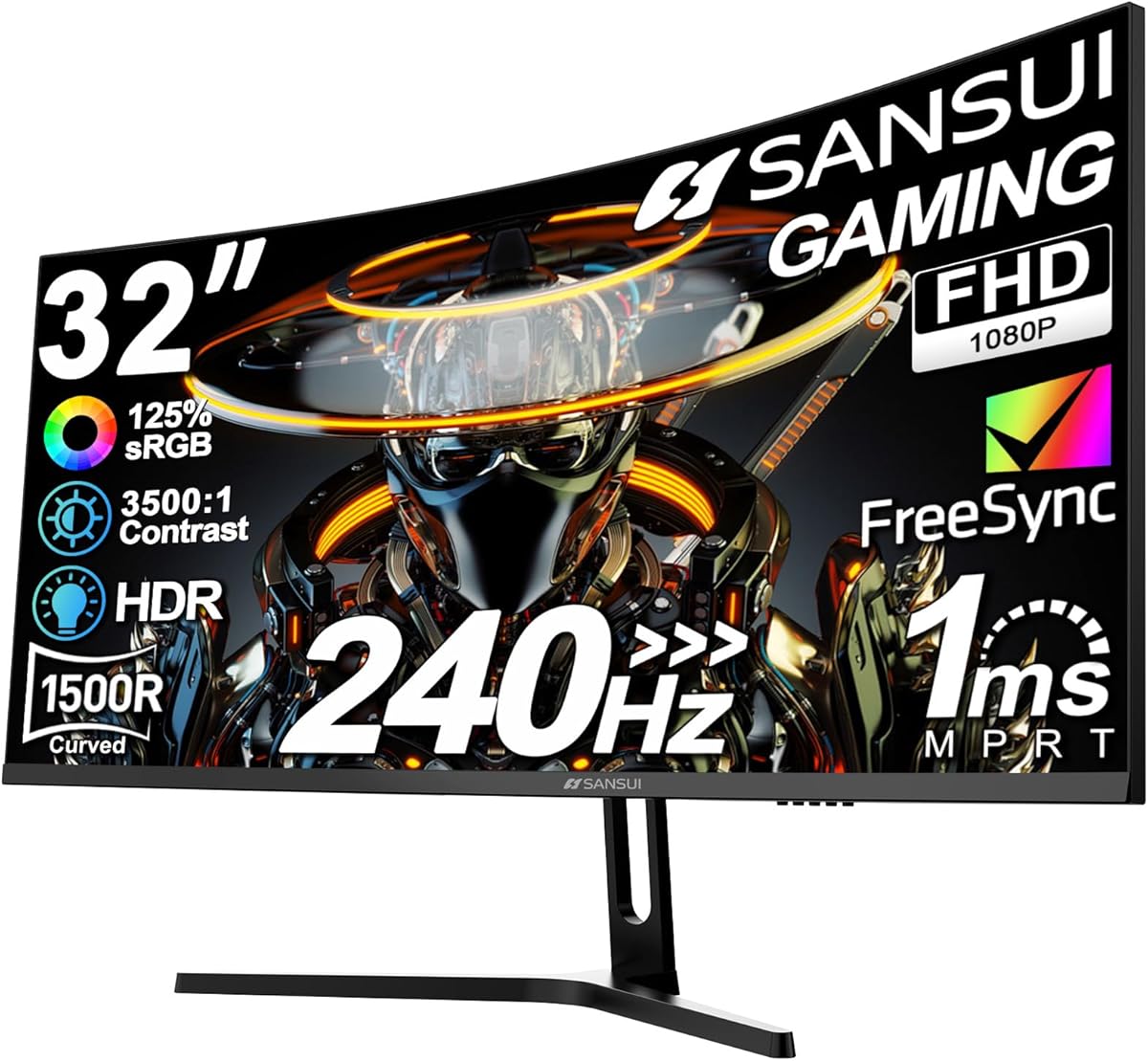
The SANSUI ES-G32C3F targets gamers seeking immersion and speed with its 1500R curvature and 240Hz refresh rate. Buyers should understand that these specs create a specific use case, balancing a large, enveloping screen against a 1080p resolution stretched across 32 inches. This combination prioritizes fluid motion in fast-paced titles over pixel density for productivity.
Key Considerations Before Buying
- The 240Hz refresh rate is a genuine competitive advantage for esports titles like Valorant or Apex Legends, but requires a GPU capable of consistently pushing high frame rates to be fully utilized.
- A 1080p resolution on a 32-inch screen results in a pixel density of roughly 70 PPI, which can make individual pixels noticeable during desktop use or slower-paced games, a trade-off for the expansive, curved view.
- The 1ms MPRT (Moving Picture Response Time) specification reduces motion blur but is different from a true 1ms GtG (Gray-to-Gray) response time; it often relies on backlight strobing which can cause flicker for some users.
What Our Analysts Recommend
For a monitor in this class, scrutinize reviews for comments on motion clarity at 240Hz, the performance of the HDR implementation (often basic on monitors at this price point), and the quality of the included stand. A metal stand, like the one mentioned, typically offers better stability than plastic for a screen this size.
Market Context
Market Overview
The market for large, high-refresh-rate 1080p curved monitors is competitive, often featuring brands like SANSUI that offer value-focused alternatives to mainstream gaming labels. These models appeal to gamers who prioritize refresh rate and screen size over stepping up to 1440p or 4K resolutions, which demand more powerful graphics hardware.
Common Issues
Common issues in this segment include backlight bleed on curved VA panels, overly aggressive pixel overdrive causing inverse ghosting, and HDR that is functionally a compatibility feature rather than a true high dynamic range experience. The curvature can also introduce slight color and brightness uniformity shifts when viewed off-center.
Quality Indicators
Look for mentions of a consistent panel with minimal ghosting, a sturdy stand that minimizes wobble, and reliable performance over DisplayPort for achieving the full 240Hz. VESA compatibility is a key indicator of future-proofing, allowing for mounting on more robust arms.
Review Authenticity Insights
Grade B Interpretation
A Grade B authenticity score with an estimated 10% fake review rate suggests the feedback is largely reliable but requires discerning reading. This level is common for electronics where some incentivized reviews may be present, but the core sentiment from verified purchasers is likely accurate.
Trust Recommendation
Given the 4.10 adjusted rating from a substantial pool of 2,866 reviews, you can place good confidence in the overall positive reception. Focus on the detailed, verified purchase reviews that discuss specific performance in games, rather than brief, generic praise.
Tips for Reading Reviews
Prioritize reviews that mention using the 240Hz feature with specific games or GPUs, comments on text clarity for non-gaming use, and any notes on the setup process or OSD (On-Screen Display) menu. The single one-star review, while an outlier, should be examined for any recurring hardware defect complaints.
Expert Perspective
The SANSUI ES-G32C3F presents a compelling value proposition for a specific gamer: one who wants maximum screen immersion and motion fluidity for competitive gaming at 1080p. The high 240Hz refresh rate and 1500R curve are its defining features, while the 1080p resolution on a 32-inch panel is its primary compromise. The strong adjusted rating of 4.10/5 from thousands of reviews indicates it delivers well on its core promises for most buyers in its target market.
Purchase Considerations
Your decision should hinge on your GPU's capability to drive high frame rates, your tolerance for lower pixel density in exchange for a larger field of view, and whether your gaming is dominated by fast-paced titles that benefit from 240Hz. This monitor is less ideal for mixed-use productivity or cinematic games where resolution is paramount.
Comparing Alternatives
Shoppers should compare this model directly against other 32-inch 240Hz curved options, paying close attention to panel type (VA vs. IPS) and the specifics of the warranty and return policy.


