

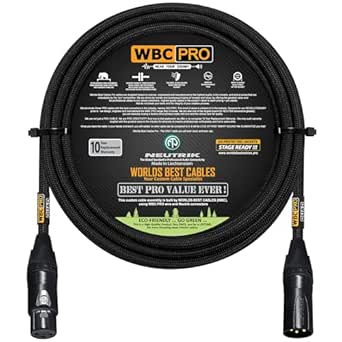
50-Foot XLR Cable 2-Pack: Nylon Braid, OFC Shielding, and Balanced Audio Essentials
When you're running long distances between a mixer and powered speakers or a stage snake, a 50-foot XLR cable is a critical link in your signal chain. This 2-pack from a brand focused on durability uses oxygen-free copper (OFC) conductors and a braided nylon exterior, promising both flexibility and longevity. But length brings challenges—capacitance, noise rejection, and strain relief—so here's what to weigh before you buy.
Key Considerations Before Buying
- Cable length and capacitance: At 50 feet, low capacitance is vital to preserve high-frequency clarity, especially for condenser mics or line-level signals. Look for specs like pF/ft—lower is better for long runs.
- Balanced vs. unbalanced: Ensure the cable is truly balanced (pin 2 hot, pin 3 cold, pin 1 ground) to reject hum and interference over long distances. This product claims balanced construction, which is essential for professional use.
- Durability for stage and studio: The nylon braid adds abrasion resistance, but check the connector strain relief—a weak joint is the most common failure point in XLR cables, especially when coiled tightly or stepped on.
What Our Analysts Recommend
High-quality XLR cables in this class should have OFC or pure copper conductors, a foil or braided shield (preferably both), and metal connectors with positive locking mechanisms. Also, verify the cable's flexibility—a stiff 50-foot cable is a nightmare to route—and whether the jacket is PVC or rubberized for outdoor or stage use.
Cables Market Context
Market Overview
The market for XLR cables is crowded with options ranging from budget no-names to premium brands like Mogami and Canare. Most musicians and home studio owners need reliable, affordable cables that don't kill their tone, and this 2-pack at 50 feet targets that mid-tier segment with a balance of cost and performance.
Common Issues
Common problems include microphonic cables (which pick up handling noise), poor shielding causing buzz, and connectors that loosen over time. Long cables also suffer from signal degradation if capacitance is high, leading to dull highs or even oscillation in some condenser mics.
Quality Indicators
Indicators of a quality XLR cable include a tight braided shield, gold-plated or nickel-plated connectors with a snug fit, and a flexible yet durable outer jacket. Also, check for a warranty—reputable manufacturers often back their cables for life, which signals confidence in construction.
Review Authenticity Insights
Grade B Interpretation
The Grade B and 10% estimated fake review rate suggest that while the majority of the 3,020 reviews are authentic, a small fraction may be incentivized or overly promotional. This is common for popular cables, but the high rating (4.89 raw, 4.60 adjusted) still indicates strong real-world satisfaction.
Trust Recommendation
You can trust the adjusted rating of 4.60 as a realistic baseline. Given the 10% fake rate, focus on reviews that mention specific gear (e.g., 'with my SM7B' or 'to my JBL monitor') and those that describe long-term use or durability issues, as these are harder to fabricate.
Tips for Reading Reviews
For XLR cables, read reviews that discuss noise floor, build quality after months of use, and compatibility with specific devices. Be cautious of reviews that use generic praise like 'great cable' without context, and prioritize those that mention the braided nylon or OFC aspects specifically.
Expert Perspective
This 2-pack of 50-foot XLR cables appears to be a solid value for musicians and content creators who need long runs without breaking the bank. The OFC shielding and nylon braid address the two biggest concerns—signal integrity and physical durability—and the adjusted rating of 4.60 suggests consistent performance. However, the 10% fake review rate means you should verify the cable's specs (like capacitance) before purchase, as some marketing claims may be inflated.
Purchase Considerations
Consider your actual cable run distance: 50 feet is long for a home studio, so measure first. Also, if you're using these for live gigs, the braided nylon is a plus, but check the connector quality—metal is better than plastic. Finally, the 2-pack price should be compared to buying two singles; if it's under $40, it's a reasonable deal.
Comparing Alternatives
Shoppers should compare this with premium options like Mogami Gold or Canare Star Quad if they need maximum noise rejection, but for most uses, this budget-friendly 2-pack will suffice. Also, consider shorter lengths (e.g., 20 or 25 feet) if you don't need the extra slack.
![Monoprice Premier Series XLR Male to XLR Female - 35ft - Black - Gold Plated 16AWG Copper Wire Conductors [Microphone & Interconnect]](https://m.media-amazon.com/images/I/51SfJlqC+cL._AC_SX300_SY300_QL70_ML2_.jpg)


