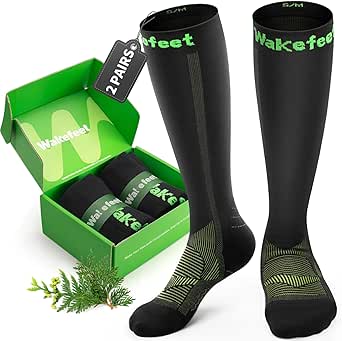
What to Know Before Buying 20-30 mmHg Compression Socks
The Physix Gear Sport compression socks are a graduated 20-30 mmHg pair marketed for travel, pregnancy, and everyday leg fatigue. At this compression level, fit and sizing accuracy matter more than almost any other feature, so understanding how the brand sizes and how graduated pressure behaves on your leg is essential before ordering.
Key Considerations Before Buying
- Confirm the 20-30 mmHg rating matches your need: this is a moderate-to-firm medical-grade range suited to travel swelling and pregnancy, but it is firmer than 15-20 mmHg casual socks and can feel tight for all-day wear if you are new to compression.
- Sizing is based on calf and ankle circumference, not shoe size, so measure both legs and check the Physix Gear size chart carefully; a sock that is too small will bind at the calf and one too large will not deliver the graduated pressure.
- Graduated compression means the pressure is strongest at the ankle and eases toward the calf, so pay attention to where the sock tops out on your leg, since a band that sits too low can roll or dig in during long flights or shifts.
What Our Analysts Recommend
Quality compression socks in this range should use a breathable blend with enough elastane to hold shape after repeated washes, plus a reinforced heel and seamless or flat toe seam to prevent rubbing. Check that the cuff has a wide, non-binding band and that the fabric feels dense rather than thin and stretched, since thin knits lose their mmHg rating quickly.
Compression Socks Market Context
Market Overview
Compression socks have moved from clinical supply closets into mainstream travel and fitness gear, and the 20-30 mmHg segment is now crowded with brands claiming medical-grade pressure. Many listings use the same mmHg language without independent pressure testing, so the category rewards shoppers who read sizing and durability feedback rather than marketing claims.
Common Issues
The most frequent complaints in this category are inaccurate sizing charts, socks that lose compression after a few washes, and cuff bands that roll down or leave marks. Buyers also report difficulty putting on firmer 20-30 mmHg socks, especially those with limited hand strength or larger calves.
Quality Indicators
Look for graduated compression described with ankle-to-calf specifics, reinforced construction at heel and toe, and fabric blends with a meaningful elastane percentage. Brands that publish circumference-based sizing charts and respond to fit complaints tend to produce more consistent pairs than those relying on shoe-size conversions.
Review Authenticity Insights
Grade A Interpretation
An A authenticity grade with an estimated 5% fake review rate is strong for a high-volume listing like this one, which has over 83,000 reviews. All reviews being verified purchases and the presence of 3-star as well as 5-star ratings are positive signals that the feedback reflects real buyers rather than a curated wall of praise.
Trust Recommendation
You can treat the 4.40 adjusted rating as a reasonably reliable signal, though the small gap from the 4.56 displayed rating suggests a handful of inflated reviews. Weight the adjusted figure when comparing against competitors, and treat the volume of reviews as more informative than any single glowing or scathing post.
Tips for Reading Reviews
For compression socks, filter reviews by mention of calf size, wash durability, and cuff rolling, since these reveal whether the graduated pressure holds up in real use. Pay particular attention to reviewers who share their measurements, as their fit feedback is far more useful than star ratings alone.
Expert Perspective
The Physix Gear Sport socks sit in a competitive middle ground: a firm 20-30 mmHg graduated sock with a large, largely authentic review base and a solid adjusted rating. The verified-purchase requirement and multilingual, mixed-rating reviews suggest the feedback is genuine, which is meaningful in a category where pressure claims are hard to verify. The main risk is fit rather than authenticity, since compression effectiveness depends entirely on matching the sock to your calf and ankle measurements.
Purchase Considerations
Weigh whether you need true 20-30 mmHg pressure or would be better served by a gentler 15-20 mmHg sock for daily wear, and budget for replacing them if you use them heavily, as compression garments degrade with washing. If you have circulation conditions or are managing pregnancy-related swelling, confirm the pressure range with a clinician before relying on an over-the-counter sock.
Comparing Alternatives
Compare Physix Gear against other 20-30 mmHg graduated socks with published circumference sizing and similar review volumes before committing, especially if your measurements fall near a size boundary.