
What to Know Before Buying 20-30 mmHg Compression Socks
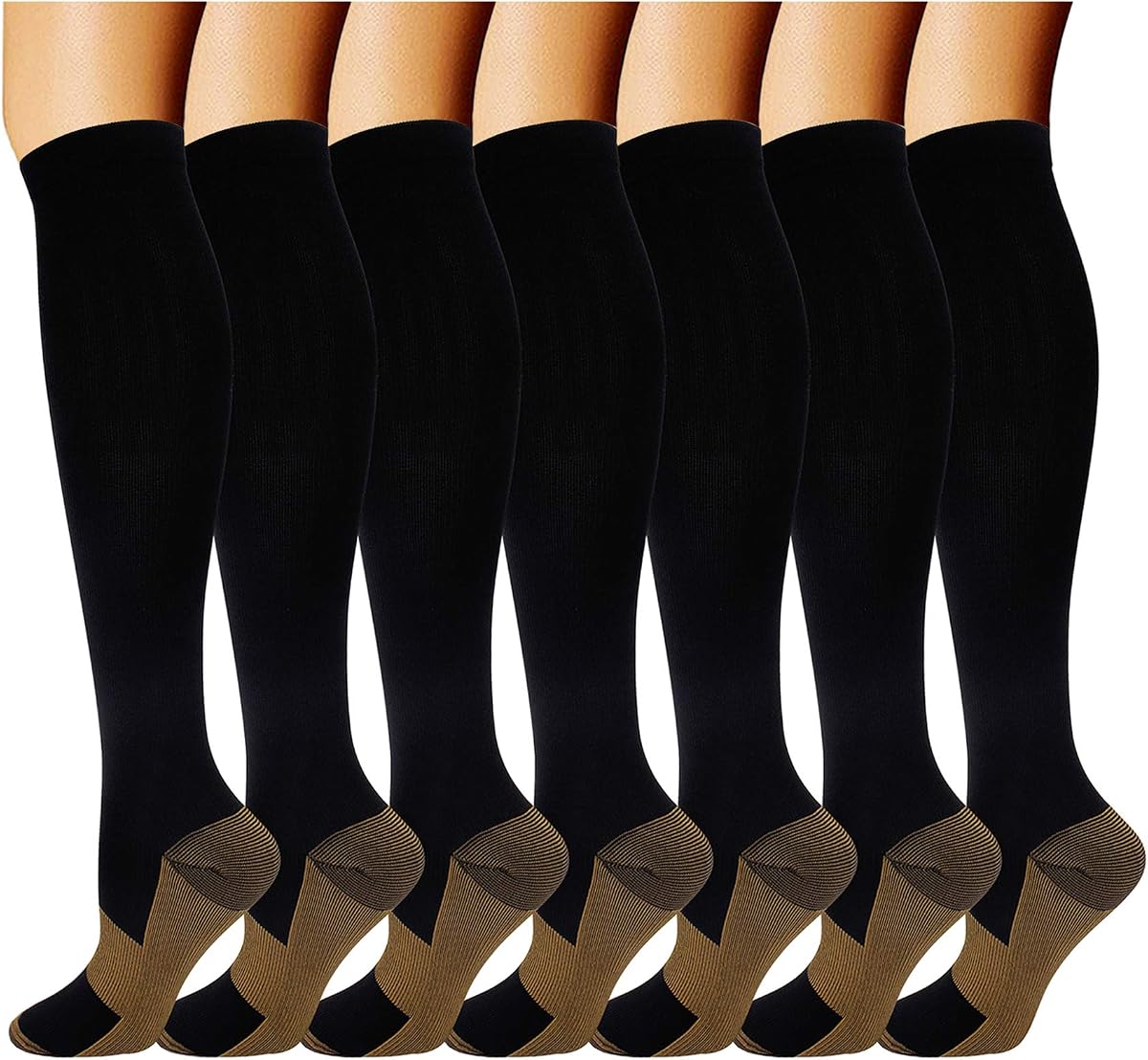
Double Couple's 7-pair bundle delivers medical-grade 20-30 mmHg compression in a knee-high design aimed at nurses, travelers, athletes, and anyone managing swelling or tired legs. With seven pairs per order, the value proposition hinges on fit consistency, fabric durability, and whether the graduated pressure holds up after repeated washing.
Key Considerations Before Buying
- Compression class matters: 20-30 mmHg is a true medical-grade range suited to varicose veins, post-surgical recovery, and long-haul travel, but it is firmer than the 15-20 mmHg socks casual buyers often expect. Confirm your needs before ordering, since this level can feel restrictive if you only want mild support.
- Sizing is the make-or-break factor: knee-high compression socks must match calf circumference and shoe size, and a poor fit either cuts off circulation or slides down. Measure your calf at its widest point and compare against the brand's chart rather than defaulting to shoe size alone.
- Seven-pair value cuts both ways: a multi-pack lowers cost per pair and simplifies laundry rotation, but fit and fabric consistency can vary between colors and batches. Check reviews that mention specific colorways if you plan to rely on one style.
What Our Analysts Recommend
Quality compression socks use graduated compression that is tightest at the ankle and eases toward the calf, with reinforced heels and seamless toes to prevent blisters and pressure points. Look for breathable, moisture-wicking blends and a wide, non-rolling cuff, and be wary of listings that omit a clear sizing chart or mmHg specification.
Compression Socks Market Context
Market Overview
Compression socks have moved from clinical supply closets into mainstream activewear, driven by nurses, runners, frequent flyers, and pregnant shoppers. The market is crowded with budget multi-packs and premium medical brands, and the 20-30 mmHg tier sits at the boundary between consumer comfort wear and prescribed medical garments.
Common Issues
The most frequent complaints in this category are inconsistent sizing between pairs, cuffs that roll or dig in, and compression that fades after a few washes. Buyers also report that budget multi-packs sometimes vary in tightness across colors, and that 'medical-grade' claims are not always backed by testing documentation.
Quality Indicators
Reliable compression socks publish a detailed size chart with calf measurements, state the mmHg rating clearly, and use graduated knitting rather than uniform elastic. Reinforced heel and toe zones, flat seams, and breathable synthetic blends are practical markers of a sock built to survive regular wear and washing.
Review Authenticity Insights
Grade A Interpretation
An A authenticity grade with an estimated 8.00% fake review rate is strong for a high-volume listing, meaning most of the 17,911 reviews likely reflect real buyers. The 3.33/5 overall rating and 3.20/5 adjusted rating suggest genuine but mixed satisfaction, so the adjusted figure is the more trustworthy signal.
Trust Recommendation
Treat the 3.2 adjusted rating as a realistic picture of average buyer experience rather than a red flag. Since the review base spans English, French, and Portuguese with ratings from 2 to 5 stars, focus on the recurring themes in mid-range reviews, which tend to describe fit and durability issues most honestly.
Tips for Reading Reviews
For compression socks, prioritize reviews that mention the buyer's calf size, shoe size, and how long the sock held its pressure. Sort by recent reviews to catch batch or sizing changes, and discount reviews that praise or condemn the product without referencing fit, mmHg feel, or wash durability.
Expert Perspective
Double Couple's 7-pair bundle is a value-oriented entry into true 20-30 mmHg compression, and the authenticity data suggests its mixed 3.33/5 rating comes from real customers rather than manipulated feedback. The gap between the overall and adjusted ratings is small, which points to consistent, if unspectacular, performance. For buyers who need firm compression at a low per-pair cost, it is worth a look, provided the sizing chart matches your measurements.
Purchase Considerations
Weigh the multi-pack savings against the risk of inconsistent fit across seven pairs, and consider whether 20-30 mmHg is the right pressure level for your use case. If you have a medical condition, confirm the pressure range with a clinician before relying on an over-the-counter sock.
Comparing Alternatives
Shoppers should compare this bundle with single-pair medical-grade brands and other multi-packs that publish calf-based sizing charts, since fit quality varies widely in this category.


