
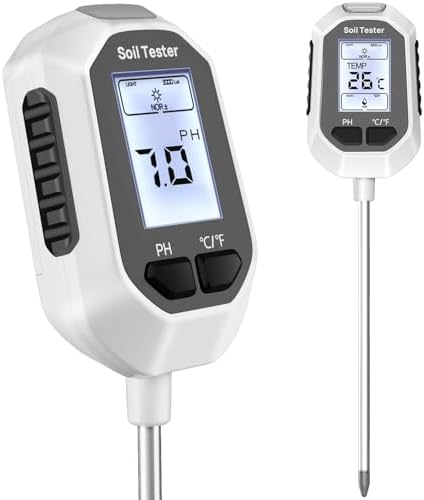
4-in-1 Soil Meter: What to Check Before You Buy
A 4-in-1 digital soil meter like this one combines moisture, pH, temperature, and sunlight intensity readings into a single handheld tool. For gardeners and farmers, that means fewer devices to juggle, but the accuracy of each sensor can vary widely. Understanding how these multifunction meters work—and their limits—helps you decide if this model suits your soil-testing needs.
Key Considerations Before Buying
- Probe depth and soil contact: Most 4-in-1 meters need the probe inserted 10–15 cm into moist soil for stable readings; dry or rocky soil can skew results. Check whether the probe length matches your typical planting depth.
- pH accuracy limitations: Inexpensive digital pH sensors often have a tolerance of ±0.5 pH, which is fine for general gardening but not for precise agricultural adjustments. If exact pH matters, consider a dedicated pH meter.
- Backlight and display: The backlight LCD is useful for early morning or evening readings, but it can drain batteries faster. Look for auto-off features and clear, large digits for easy reading in bright sunlight.
What Our Analysts Recommend
Prioritize models with separate sensor tips for each function, as combined sensors can interfere with accuracy. A sturdy, corrosion-resistant probe and a sealed battery compartment are signs of durability. Also check user feedback on calibration and whether the meter can be recalibrated if readings drift over time.
Soil Meters Market Context
Market Overview
The soil meter market has grown with the rise of home gardening and precision farming, offering everything from basic analog probes to Bluetooth-enabled digital models. 4-in-1 meters sit in the mid-range, appealing to hobbyists who want more data without professional-grade prices. However, quality varies, and many low-cost units sacrifice accuracy for features.
Common Issues
A frequent complaint is inconsistent readings, especially for pH and moisture, due to poor sensor quality or inadequate soil contact. Another issue is durability: probes can corrode or break if left in soil, and displays may fail after exposure to moisture. Battery life and calibration drift are also common pain points.
Quality Indicators
Well-made soil meters typically use stainless steel or coated probes, have a water-resistant housing, and specify accuracy ranges in their manuals. Brands that offer calibration instructions or replacement parts demonstrate a commitment to longevity. Reading reviews that mention long-term use (6+ months) can reveal reliability trends.
Review Authenticity Insights
Grade B Interpretation
The B authenticity grade indicates that while most reviews are genuine, about 15% show signs of possible manipulation. This is not uncommon for popular gardening tools, where sellers may try to boost ratings. The adjusted rating of 4.40/5 still suggests strong overall satisfaction, but the inflated original rating (4.78) means you should weigh reviews carefully.
Trust Recommendation
Focus on reviews with detailed, specific feedback about accuracy, durability, and customer service, as these are harder to fake. Be cautious of reviews that only praise the product without mentioning its limitations or that use overly promotional language. Cross-reference with independent gardening forums for unbiased opinions.
Tips for Reading Reviews
Look for reviewers who mention their soil type, plant varieties, or how they tested the meter against other tools—these details indicate genuine use. Pay attention to negative reviews that describe specific failures, as they often highlight common issues. Also, check the dates: a cluster of 5-star reviews posted within a short period can be a red flag.
Expert Perspective
This 4-in-1 soil meter offers convenience and a solid feature set for gardeners who want quick, combined readings. With an adjusted rating of 4.40/5 from over 3,400 reviews, it appears to satisfy most users, though the 15% fake review estimate suggests some caution. The backlight LCD and multi-functionality are standout features, but pH accuracy may be its weakest point. For general gardening, it's likely a reliable helper; for precise scientific work, it may fall short.
Purchase Considerations
Weigh the convenience of a 4-in-1 tool against the need for high accuracy in any single measurement. If you mainly need moisture readings, a dedicated moisture meter might be more reliable and cheaper. Consider your soil conditions: heavy clay or rocky soils can damage probes, so durability is key. Also, check the warranty and return policy, as sensor issues may not appear immediately.
Comparing Alternatives
Before buying, compare this model with other 4-in-1 meters that offer calibration options or longer probes. Dedicated single-function meters from reputable brands may provide better accuracy for specific needs.


