
Amazon Fitness Equipment Reviews: Walking Pads, Bands, and Bottles You Should Not Trust on Stars Alone
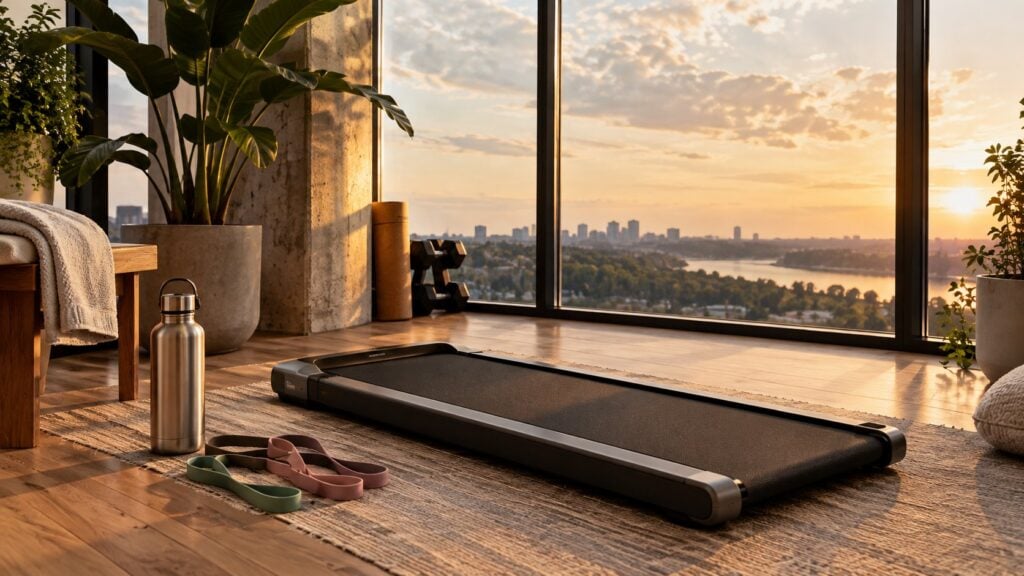
If you have ever scrolled Amazon for a compact walking pad or a resistance band kit for your apartment, you already know the feeling: everything seems to sit at 4.5 stars and above, every review says “great quality,” and every listing looks like the answer to your fitness goals. But behind those glowing numbers, a significant portion of reviews for fitness equipment are fake, incentivized, or AI-generated. This article breaks down exactly where the manipulation hides, which product categories are worst, and how to protect yourself before you buy.
Key Takeaways
- Many Amazon fitness equipment and fitness accessories listings-especially walking pads, resistance bands, and water bottles-carry inflated star ratings driven by fake or AI-written reviews.
- For apartment home gym shoppers, the repeated “quiet and sturdy” five-star walking pad reviews can bury 3-star complaints about motor noise audible through thin floors and weight limits that don’t hold up in practice.
- Review photos sometimes show a completely different walking pad or full body workout setup than the listing’s main images, a sign of listing hijacking or image theft.
- Leak-prone “hydration game changer” bottles and easily torn resistance bands often rely on Vine-heavy or incentivized review patterns that exaggerate first impressions.
- Before buying any home workouts gear, paste the Amazon link into Null Fake or use the free Chrome extension for an instant authenticity grade, then explore the sports hub for alternatives with healthier review patterns.
Why Apartment Shoppers Can’t Rely on Amazon Stars for Fitness Equipment
Between 2024 and 2026, compact home gym gear exploded. Walking pads, under-desk treadmills, foldable benches, and all-in-one band kits flooded Amazon, and star ratings became the single biggest factor in purchase decisions. Most Amazon fitness products have ratings above 4.0, which sounds reassuring until you realize that high-ticket fitness categories are frequent targets for review manipulation.
Consider a 4.6-star walking pad listing that looks perfect for a 500-square-foot apartment. The main photos show a sleek, thin unit tucked under a standing desk. But scroll past the first page of reviews and you find dozens of 1- to 3-star complaints about grinding motor noise, belts that slip under a 180 lb user, and a burning-rubber smell after 20 minutes. Those complaints were invisible because the listing’s front page was stacked with staged praise.
In fitness equipment specifically, fake or distorted reviews carry real physical risks. An unstable treadmill can cause a fall. A resistance band that snaps near your face during a set can cause eye injury. A fitness tracker that misreads heart rate might encourage someone to push past a dangerous threshold. This is not a matter of mild disappointment-it is a safety issue.
This article focuses on apartment-friendly workout equipment: walking pads, resistance bands with door anchors, foam rollers, gym bags, water bottles, and wearables. Shift8 Web created Null Fake precisely for shoppers who want to cut through misleading stars before bringing new gear into a small living space.
How Fake and Manipulated Reviews Actually Work on Fitness Gear
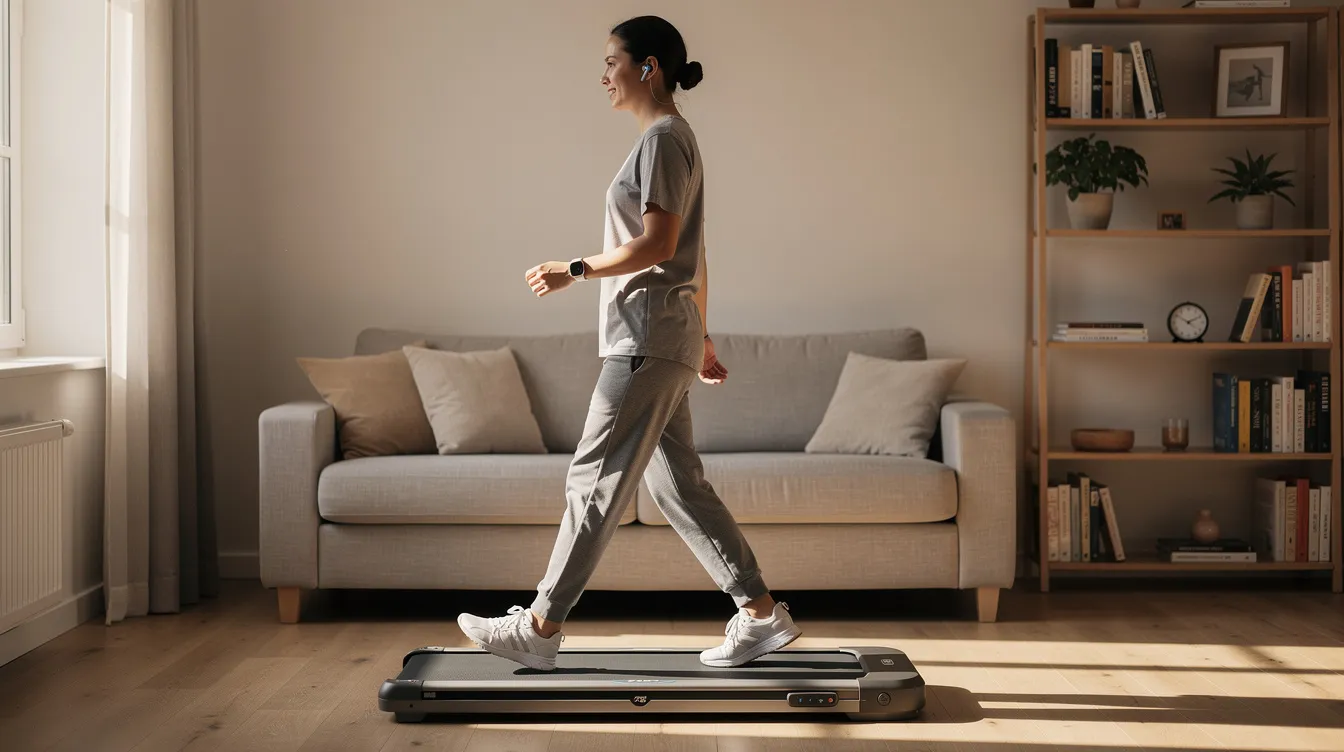
Sellers in categories like fitness equipment and fitness accessories don’t leave their ratings to chance. When a product enters a competitive space-think search results for “walking pad for apartment” or “home gym full body workout kit”-companies invest in review manipulation to grab the best seller badge and climb above rivals.
Key tactics include:
- Review factories that fabricate reviews for various products at scale, often paying workers pennies per post.
- Rebate-for-review groups on Facebook and Telegram where buyers purchase the item at full price, leave a 5-star review, and receive a refund via PayPal or gift card.
- AI-generated text that produces dozens of unique-sounding reviews with phrases like “changed my fitness journey” or “game changer for my home workouts.”
- Seller employees leaving 5-stars, meaning some verified buyers may be employees of manufacturers posing as regular shoppers.
- Competitor sabotage: rival companies dropping 1-star attacks to drag down a legitimate product.
Scammers often target the front page with staged reviews while real feedback appears only when you sort chronologically. Many reviews are posted before products arrive or after a single use, meaning the reviewer never tested the item through a real week of training. Amazon lacks meaningful enforcement against these fake review manipulations, and unverified reviews can be manipulated despite appearing to be genuine purchases. Even verified purchase reviews can be manipulated by sellers using rebate schemes.
Amazon’s product pages contain layers of internal interface elements-identifiers such as nav rufus disc txt, nav app banner container, test amzn nav app, and test amzn nv flyout-that control how listings render for shoppers. Additional layout modules like test nav rufus disc, amzn nv flyout healthy, amzn nav app banner, test amzn box inner, test a image container, and nv flyout healthy choice determine what appears above the fold, including how the review summary and rating histogram display. Manipulative sellers understand these layout mechanics and optimize listings to ensure the glowing praise is what shoppers see first.
Walking Pads and Under-Desk Treadmills: The Quiet-and-Sturdy Mirage
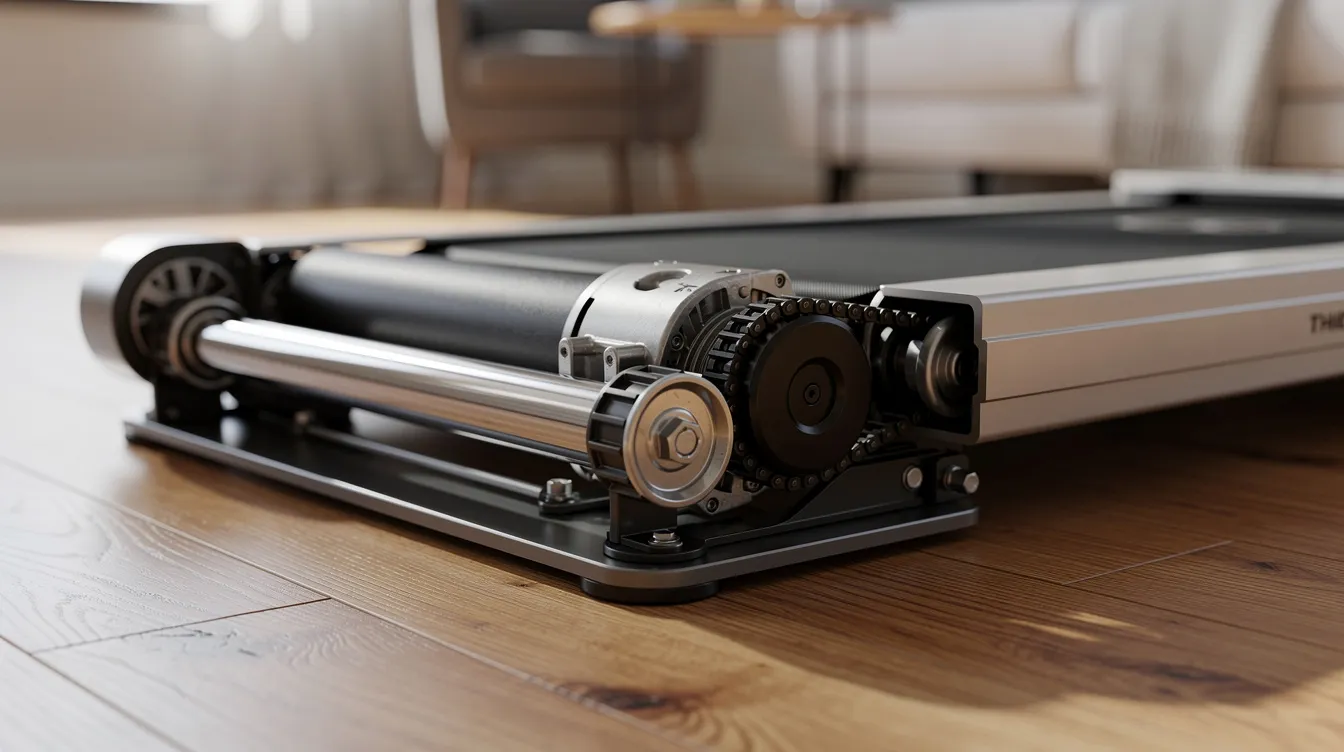
Since 2023, walking pads have become the default office and apartment exercise machine. Listings promise “whisper quiet” motors, generous weight limits, and enough belt length for a comfortable stride. The problem is that endless cloned 5-star reviews repeat the same phrases-“quiet and sturdy,” “perfect for my small home gym,” “barely any noise”-while critical details hide below.
An overwhelming majority of 5-star reviews with few middle ratings can indicate review manipulation. When a walking pad listing shows 93 percent five-star and almost nothing in the 2- to 4-star range, something is off. One listing analyzed by Null Fake (a treadmill with auto incline and a claimed 450 lb capacity) earned a “D” authenticity grade, with roughly 42 percent of reviews flagged as suspicious. The adjusted star rating was significantly lower than the displayed 4.67.
Check if 5-star reviews match the item being reviewed. In several walking pad listings, review photos show a clearly different model-different LED display panel, different frame color options, even a different brand logo printed on the motor housing. Consumer Reports has documented cases where the product received had a different brand than what appeared in the listing images, suggesting rebranded factory stock or outright image theft.
Red flags to watch:
- Multiple reviews posted on the same day with similar sentence structure
- Reviewers mentioning features not present on the product (e.g., an LED display speed panel when the model is remote-only)
- Identical wording across different walking pad brands sold by different companies
- No mention of user weight, height, or how many feet of belt they actually need
Weight Limits, Motor Noise, and the Honest 3-Star Reviews You Should Read First
Buyers overestimate treadmill safety by trusting the printed weight limit and the advertised “peak” horsepower without reading critical mid-range reviews. A 3-star review often indicates dissatisfaction without harshness-the reviewer liked something about the product but ran into a real problem. A 4-star review often indicates at least one issue worth knowing about.
For walking pads, those mid-range reviews are gold. You will find comments like “I’m 190 lbs, the motor strains at 2.5 mph” or “loud grinding noise after two weeks” that directly contradict the official 265–300 lb spec. The UREVO SpaceWalk 5L, for instance, claims 400 lb capacity on its brand site but lists 320 lb on Amazon, while the manual says 300 lb. One Reddit user, well under the claimed weight rating, reported a burning rubber smell during first use and had to fight for a return.
Fake “quiet and sturdy” five-star clones bury these honest reviews, pushing them off the first page of Amazon’s default “Top reviews” sorting. If you live above neighbors in an apartment, always filter to 3-star reviews first for fitness equipment. Then stack that step with a Null Fake check to see whether the product’s overall grade confirms that those noise and weight-limit issues are systemic, not just bad luck.
Resistance Bands, Door Anchors, and “Gym in a Bag” Bundles
Resistance band sets with door anchors are among the most popular purchases for small-space full body workouts. A typical set includes bands in multiple sizes, handles, two ankle straps, a door anchor, and sometimes a knee pad or carrying case. The listing says the set includes everything you need for different exercises targeting legs, core, and upper body. The five-star reviews call it “better than the gym” and a “total home gym in one gym bag.”
But those glowing reviews are almost always vague about long-term stretch degradation, snapping risk, or door anchor safety. In apartments specifically, a weak door anchor tearing out during a heavy pull can send a metal clip into your face or scratch a hollow core rental door-a cost you will pay out of your security deposit.
Real buyers mention ankle straps fraying after a few weeks, handles with non slip grips that peel, and bands losing resistance after a month of daily use. These details are missing from AI-written praise.
When evaluating a band bundle, scan 1- to 3-star reviews for words like “snapped,” “door frame damage,” and “returned after three workouts.” If the honest reviews describe safety failures, run the listing through Null Fake before trusting that 4.7-star average.
Foam Rollers, Mats, and Recovery Gear: When “Firm but Comfortable” Is Copy-Pasted
Apartment dwellers use foam rollers and compact yoga mats for stretching, recovery, and mobility work without leaving home. These products sit at modest price points, but they are not immune to review manipulation.
The suspicious uniformity of many 5-star reviews for foam rollers is striking: “firm but comfortable,” “perfect density,” “great for my home workouts”-repeated across dozens of reviews with no mention of body weight, specific pain points, or actual use during hot yoga or post-run recovery.
Authentic reviews mention specifics: IT band tightness, lower back soreness, which floor type (hardwood vs. carpet) affects rolling noise, and whether the roller squeaks loudly at night in a quiet apartment. Photos in reviews that showcase generic packaging or stock images may not relate to actual use-be skeptical if every lifestyle image looks like it came from a product photography studio.
Fake reviews can hide hollow core rollers that collapse under heavier users or foam that flattens after a week of regular use. Cross-check roller diameter, length, and density against reviewer photos, and look for images taken in real living rooms rather than white-background setups.
Hydration Game Changer? Water Bottles and “Leak-Proof” Claims
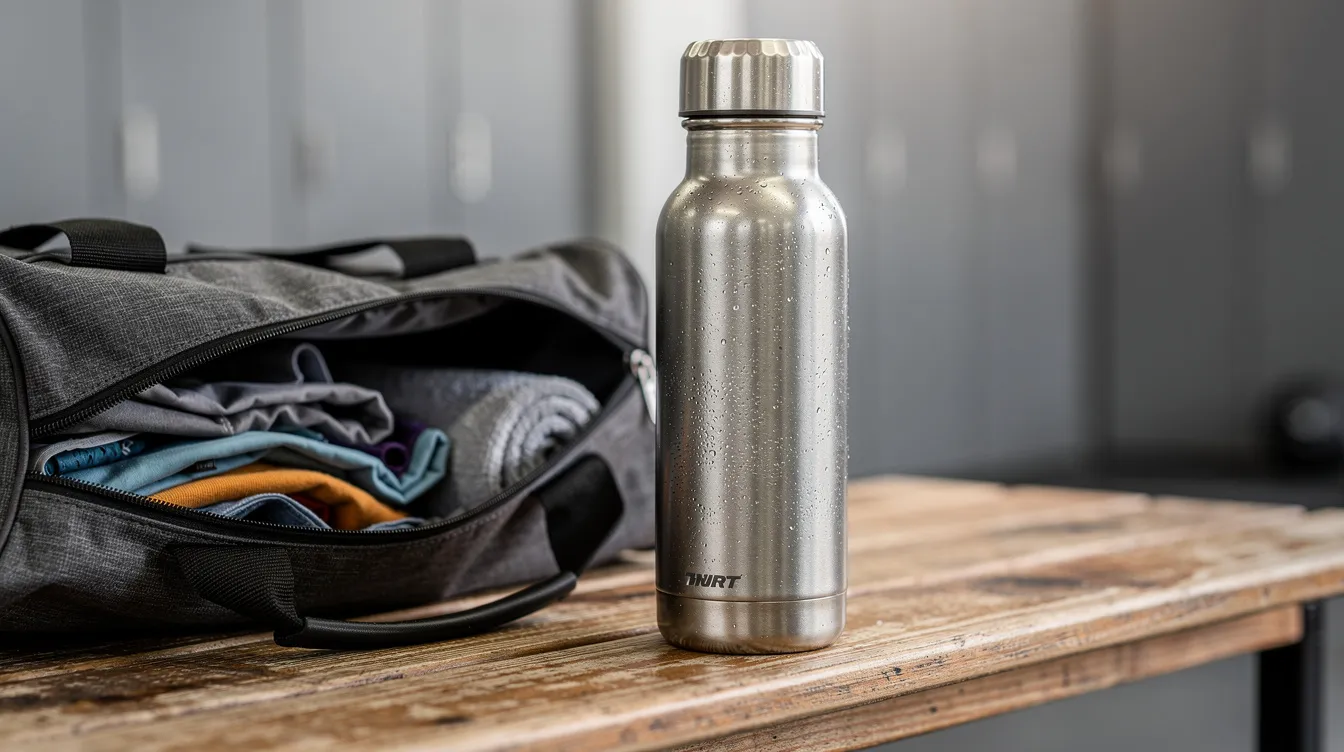
Large insulated bottles have become a default fitness accessory, tossed into a gym bag, carried to the office, or wedged into a cup holder during a commute. The reviews are enthusiastic: “leak-proof,” “hydration game changer,” “never spills in my bag.” The same phrases appear across dozens of five-star posts, sometimes with identical wording across entirely different brand listings.
Buried beneath that praise are critical reviews with real-world photos: soaked laptops, stained gym bags, and lids that pop open in transit. Fake fitness reviews often use generic, overly enthusiastic phrases without specific details, and that pattern is especially visible in water bottle listings where the praise could describe any product.
Features reviewers commonly misrepresent include straw vs. chug lid performance, compatibility with standard cup holders, and actual temperature retention over a full workday. A bottle that keeps water cold for “24 hours” in a controlled test may fail in a hot car after four hours.
Look for multi-week or multi-month follow-up reviews mentioning gasket wear, mold around straw assemblies, and how often the bottle actually rides in a commuter bag. Those are the reviews that reflect real energy and real use, not a scripted post written minutes after unboxing.
Fitness Trackers, LED Displays, and Spec Sheet Fiction
Affordable fitness trackers and smart bands flood Amazon with promises of advanced metrics-SpO2, sleep staging, VO2 max estimates-at a fraction of big-brand cost. These devices attract heavy review manipulation because the price is low enough for rebate schemes and the specs are complex enough that most shoppers cannot verify claims before purchase.
Fake reviews exaggerate accuracy: “more accurate than Apple Watch” or “medical-grade heart rate monitoring.” Real users note LED display dimness in sunlight, step overcounting during arm movements, and heart rate spikes at rest that make the data useless for training. Reviews that could describe any product often signal potential inauthenticity-when a review of a $25 fitness tracker reads like it could apply to a $400 smartwatch, that is a warning.
A strong tell: reviewers raving about features (GPS, NFC, ECG) that the specific budget model clearly does not have. This is a sign of template or copy-paste reviewing, where the same text is deployed across multiple listings.
Check 2- to 4-star reviews for honest feedback about strap comfort during exercise, Bluetooth drops in small apartments, and battery drain when all sensors are active. Cross-reference these wearables with Null Fake grades because AI-written reviews have become especially common in this subcategory since late 2024.
Clothing and Gym Bags: When Fit Photos Tell a Different Story
Building a home gym wardrobe on a budget often means buying leggings, shorts, and gym bags from Amazon value labels. Multiple people shop these categories daily, and the listings are flooded with incentivized campaigns: sudden bursts of 5-stars praising “buttery soft,” “squat proof,” and “fits like premium” with minimal sizing detail.
Authentic reviews for leggings and shorts usually mention height, weight, and use in squats, lunges, or running, along with comments about whether the fabric is see through during deep stretches or whether the waistband rolls during yoga. Gym people who actually train in the clothes mention fit across multiple sizes and whether the material holds up after machine washing.
For gym bags, the red flags are similar: endless praise for “perfect compartments” and “multiple pockets for all my fitness accessories” without photos, while lower-star reviews show broken zippers or ripped shoulder straps after a month. Some reviews mention discounts received in exchange for feedback-a clear signal of incentivized reviewing.
Rely on user photos with natural lighting and messy backgrounds. Those images are far more likely to come from real shoppers than from a marketing team staging shots in a studio.
Vine, Early Reviews, and the Illusion of Long-Term Quality
Amazon Vine is a program where selected Amazon reviewers receive free or discounted products in exchange for a review. The program is legitimate, but it creates a specific bias that matters enormously for fitness equipment.
Vine-heavy fitness gear listings skew toward quick first impressions, often posted just days after unboxing. You see reviews like “feels sturdy out of the box” and “excited to build my home gym” that say nothing about how the product performs after weeks of full body workouts. Users often rate products based on expectations, not performance, and Vine reviews amplify this tendency because the reviewer has no financial stake in the purchase.
Compared to Vine first-look reviews, later buyer reviews surface belt wear on walking pads, band snapping on resistance kits, or foam roller flattening after a month. These long run durability issues are exactly what apartment shoppers need to know but rarely find on the front page.
Vine reviews are not automatically fake, but they should be weighed differently for products whose failures show up after weeks of real training. Check Null Fake’s explanation text for mentions of timing bursts or incentivized-review patterns, then pair that context with chronological sorting of Amazon reviews.
Shipping Damage vs. Product Quality: What Fake Reviews Can Hide
Heavy or bulky fitness equipment-benches, compact racks, walking pads-is vulnerable to shipping damage. Bent frames, cracked plastic covers, misaligned tracks, and missing bolts are common complaints in 1- and 2-star reviews.
Some sellers try to drown out these complaints with waves of generic 5-star praise focusing on “fast delivery” and “great value.” Many generic five-star reviews may indicate a significant level of review manipulation, especially when they say nothing about the product after assembly.
There is an important difference between damage from poor packaging and underlying product design flaws. Reviews should help you distinguish them, but manipulation makes that harder. Here is a simple heuristic: if multiple low-star reviews show the same bent support bar or cracked plastic in photos, it is likely a product issue, not a one-off courier mishap.
Also skim the Questions & Answers section for repeated “arrived broken” posts that might not be obvious in the star breakdown. Checking the detailed functionality reported in reviews is essential for assessing fitness products-don’t let delivery-focused praise distract you from structural concerns.
Spotting Cloned and AI-Written Reviews on Fitness Equipment
Since late 2023, AI-written Amazon reviews have become dramatically cheaper and easier for sellers to deploy, especially in exercise fitness categories where product descriptions are generic enough to feed into a template.
Textual red flags include:
- Stock phrases repeated verbatim: “changed my fitness journey,” “game changer for my home workouts,” “perfect for achieving my goals”
- Reviews that read like mini product descriptions rather than lived experiences
- Overly generic praise that would fit any product-reviews that could describe any product often signal potential inauthenticity
- No mention of concrete exercises (squats, deadlifts, planks) or user-specific details (height, weight, how many times per week)
Structural patterns matter too. Date clustering of 5-star reviews within a few days often indicates manipulation. Suspicious reviewer profiles often post glowing reviews across unrelated product categories-a reviewer who praised a walking pad, a set of kitchen knives, and a phone case all within 24 hours is not someone whose opinion you should trust. Reviewer’s profiles with numerous glowing reviews within 24 hours across unrelated categories are suspect, and legitimacy of reviews can often be determined by checking the authenticity of those profiles.
Unnatural rating spikes with clustered review dates are among the clearest signs of manipulation. A high concentration of unverified 5-star ratings on expensive items often suggests a coordinated campaign. Warnings about fake reviews emphasize looking for patterns rather than relying on star ratings alone.
You can use Null Fake to test whether the text and timing patterns suggest a high probability of fabricated reviews before trusting those claims.
How to Use Null Fake Before You Buy Fitness Gear on Amazon
Null Fake is a free, no-account Amazon fake-review checker built by Shift8 Web for shoppers who do not trust star ratings. It does not sell products, take money from sellers, or change grades on request. It is focused solely on review authenticity and consumer protection.
Here is how to use it:
- Copy the Amazon URL of a walking pad, gym bag, foam roller, fitness tracker, or any workout equipment listing.
- Paste it into the search box at nullfake.com and wait a few seconds.
- Read the authenticity grade (A through F, or U when there are not enough usable reviews to analyze). Authenticity grades range from A to F, and a grade of U means reviews are unanalyzable.
- Review the details: fake-review percentage estimate, a written explanation (e.g., “suspicious timing bursts in early reviews”), and buying context on a permanent, shareable page.
- Use the free Chrome extension: click the Null Fake icon while viewing any Amazon product page to see the grade overlaid without leaving Amazon.
Null Fake analyzes reviews using AI and statistical methods, including timing patterns, linguistic overlap, and rating-curve anomalies. Fake-review percentages are provided alongside authenticity grades to give you a concrete risk number. The tool supports over 20 Amazon marketplaces globally-US, CA, UK, DE, FR, JP, and more-which is helpful for readers buying fitness gear from international sellers or comparing links across regions.
Using the Sports & Fitness Hub to Find Safer Alternatives
When a walking pad, foam roller, or resistance band kit scores a poor authenticity grade, the next question is: what should I buy instead? Null Fake’s category hubs-specifically the sports and fitness hub-help you explore products with healthier review patterns without starting your search from scratch.
When you land on a product analysis page, scroll to the related reading and category links to see other items that have been analyzed in the same space. The sports hub aggregates articles and product analyses for fitness equipment, fitness accessories, and home gym setups. It is not a “best products” list or a shop-it is a lens for finding listings where reviews are more likely to reflect real buyer experiences.
For apartment shoppers, think in terms of safer categories. If an all-in-one “home gym tower” scores an F and the honest reviews describe wobbling frames, consider simpler, single-purpose tools with better review integrity: a standalone pull-up bar, a basic set of dumbbells, or a brand with a longer track record. The point is to reduce risk without abandoning your fitness goals.
Null Fake does not sell or manufacture the gear, and the hub exists purely to help you navigate toward products where the reviews are more trustworthy.
Practical Review-Reading Routine for Apartment Home Gym Shoppers
Here is a repeatable checklist you can use for every fitness gear purchase, from walking pads to knee pads and gym bags:
- Run the listing through Null Fake. Paste the URL or click the Chrome extension. Note the grade and the fake-review percentage.
- Sort reviews by “Most recent.” This surfaces real buyer experiences rather than the seller-curated front page.
- Filter to 3-star reviews. A 3-star review often indicates honest dissatisfaction-enough frustration to write, not enough anger to exaggerate.
- Scan photos for real apartments. Look for messy backgrounds, actual home gym spaces, and natural lighting. Stock-looking images are a red flag.
- Check for repeated language. If five reviews all say “game changer” with no specifics, that is a pattern, not a coincidence.
- Use the Amazon search bar within reviews. Using the search bar to find keywords like “broken,” “assembly,” “noise,” or “leak” helps identify genuine reviews that describe real problems.
Product-specific checks:
Product | What to look for in honest reviews |
|---|---|
Walking pad | Motor noise level, weight at which belt slips, surface area for your feet |
Resistance bands | Snap incidents, door anchor durability, band resistance after a month |
Water bottles | Leak reports after a week, gasket mold, cup holder fit |
Gym bags | Zipper failure timeline, strap durability, whether multiple pockets actually hold gear |
Fitness trackers | Heart rate accuracy vs. manual count, LED display readability outdoors |
Foam rollers | Core density after weeks of use, noise on hard floors, whether it supports your weight |
If Null Fake shows heavy manipulation and the honest reviews look worrying, apply a simple cooling-off rule: wait a day before buying, or look for alternatives in the sports hub. The cost of patience is zero. The cost of a fall from a faulty walking pad is not.
And do not feel guilty about returning unsafe or misleading fitness equipment. Your honest review-detailing your weight, how you used the product, and what went wrong-protects the next shopper and gives tools like Null Fake better data to work with. Honest reviews help everyone achieve better purchasing decisions in the long run.
The FTC’s Consumer Review Rule, active since October 2024, makes it illegal for sellers to suppress negative reviews or condition rewards on positive sentiment, with fines up to $53,088 per violation. Amazon’s own 2025 Trustworthy Shopping Report notes that the platform shut down over 40 fake review broker websites. But enforcement remains inconsistent, and the responsibility to read critically still falls on you.
FAQ
How accurate are Amazon reviews for walking pads and compact treadmills?
While some walking pad reviews are honest, this subcategory has seen heavy manipulation since around 2023. Many products maintain 4.4 to 4.8 stars despite repeated complaints about motor noise, belt slipping, and inflated weight limits. Treat star ratings as a rough starting point, not a verdict. Always read several mid-range reviews and run a Null Fake analysis before placing a large, noisy item in an upstairs apartment. Remember that Amazon has no consistent enforcement against fake reviews in this category, so the burden is on you.
Are Amazon Vine reviews trustworthy for fitness equipment?
Vine reviews are not automatically fake-those users did receive the item. However, they are often written after only a few days of use and tend to overemphasize initial build quality, packaging, and excitement. Use Vine reviews only as a first look, then weigh them against later, non-Vine reviews that report on band snapping, foam roller flattening, or walking pad motor problems after weeks of real training and daily exercise.
Can Null Fake tell if a specific individual review is fake?
Null Fake grades the overall review set for a product using AI plus statistical and pattern analysis. It does not mark individual reviews as “fake” or “real.” Instead, it surfaces patterns-timing bursts, language overlap, abnormal rating curves-to estimate a fake-review percentage and provide an A-to-F authenticity grade. This helps you make risk-informed decisions rather than guessing. If a product scores a D or F, treat the five-star praise with serious skepticism regardless of which individual reviews look convincing.
What should I do if a “leak-proof” bottle ruins items in my gym bag?
Document the issue with photos showing the bottle, damage to your gym bag or belongings, and visible water leakage. Contact Amazon and the seller through official channels for a refund or replacement. Then leave a detailed, honest review describing how you used the bottle-how long you owned it, whether you carried it horizontally, what got damaged-so other shoppers and authenticity tools like Null Fake have better data. Your review is worth more to the community than another “love it” post.
Is it safer to buy big-brand fitness gear to avoid fake reviews?
Well-known brands may have less incentive to flood their own listings with fake reviews, but they are not immune to manipulation or to competitors leaving false negatives. Some brand listings also suffer from listing hijacking, where third-party sellers attach counterfeit inventory to a legitimate page. Treat every Amazon listing-big brand or not-the same way: run it through Null Fake, read a mix of 3-star and recent reviews, and look for concrete, specific user experiences that match your home gym situation.
About the Author
Null Fake Research Team
Consumer Protection Researchers
The Null Fake Research Team consists of data scientists, consumer advocates, and e-commerce specialists dedicated to protecting online shoppers from fraudulent reviews. Our team has collectively analyzed over 40,000 Amazon products and published findings on review manipulation tactics, AI-generated content detection, and consumer protection strategies.
- 40,000+ products analyzed
- Specialized in AI content detection
- Consumer advocacy focus
- Documented methodology