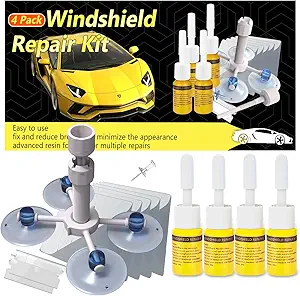
Choosing a DIY Windshield Repair Kit: What Matters for Chips, Cracks, and Bullseyes
When selecting a DIY windshield repair kit like this 2026 model with an enhanced injection head, focus on its ability to handle specific damage types. This particular 2-pack kit is designed for chips, cracks, and bullseye patterns, requiring evaluation of its resin injection mechanism and suction cup stability. Understanding the limitations of DIY repair versus professional service is crucial before purchase.
Key Considerations Before Buying
- Assess the type and size of your damage; this kit targets chips and bullseyes under 1-inch diameter, not long cracks or edge damage.
- Evaluate the injection head design—the enhanced suction cup must create a perfect seal on curved windshields to build proper pressure for resin penetration.
- Consider the resin quality and UV curing capability, as inferior resin can yellow or fail to bond, requiring professional removal later.
What Our Analysts Recommend
Quality kits feature precision-molded bridges with adjustable arms for different windshield curvatures. The resin should be fresh with a clear expiration date and include a UV shield for proper curing. Look for kits with multiple suction cups or stabilizers to prevent movement during the 20-30 minute curing process.
Windshield & Glass Repair Tools Market Context
Market Overview
The DIY windshield repair market has expanded with improved resin formulas and application tools, making temporary fixes more accessible. Most kits now include UV-curing technology previously available only to professionals, though results vary significantly by brand and user technique. The 2-pack format, like this offering, reflects consumer demand for multiple attempts or multiple vehicle repairs.
Common Issues
Users frequently struggle with improper suction seal on curved glass, leading to resin leaks and failed repairs. Incomplete resin penetration leaves air bubbles that weaken the repair, while expired or low-quality resin fails to cure properly. Many underestimate the skill required for crack 'stop-drill' techniques to prevent spreading.
Quality Indicators
Superior kits include crystal-clear, low-viscosity resin that flows easily into microfractures. The injection bridge should have a pressure screw or plunger for controlled application, not just gravity feed. Packaging should be airtight with desiccant to prevent resin degradation from moisture exposure.
Review Authenticity Insights
Grade B Interpretation
A Grade B authenticity rating with 15% estimated fake reviews suggests generally reliable feedback with some inflated positivity. For this product category, this often manifests as over-enthusiastic claims about repair invisibility or durability compared to professional results. The 4.60 adjusted rating (from 5.00) indicates genuine satisfaction but with more realistic expectations.
Trust Recommendation
Focus on reviews that detail specific damage scenarios—bullseye versus star crack repairs—and include photos showing results after 30+ days. Verified purchase status (100% here) adds credibility, but still prioritize reviews discussing both successes and limitations of the enhanced injection head.
Tips for Reading Reviews
Search for reviews mentioning the suction cup's performance on curved windshields and resin clarity post-cure. Be skeptical of reviews claiming 'perfect' or 'invisible' repairs, as even professional fixes leave slight distortions. Look for discussions about the two-pack value when first attempts fail.
Expert Perspective
This 2026 kit's enhanced injection head and dual-pack format address common DIY failures: insufficient pressure and single-attempt limitations. The high adjusted rating (4.60/5) from verified purchases suggests it delivers on core promises for small chip and bullseye repairs. However, the authenticity analysis indicates some reviews may overstate results, particularly regarding crack repair or long-term durability. The product appears strongest for immediate damage containment before professional assessment.
Purchase Considerations
Purchase if you have fresh damage under 1-inch diameter away from windshield edges, and can work in temperatures between 50-80°F for optimal resin flow. Consider professional repair if the damage is in the driver's sightline, as DIY repairs often create minor optical distortions. The 2-pack provides valuable practice opportunity, as first attempts frequently have learning curve issues.
Comparing Alternatives
Compare resin volume, bridge adjustability, and included curing methods with competing kits from brands like Rain-X or BlueStar, which may offer different suction mechanisms.