
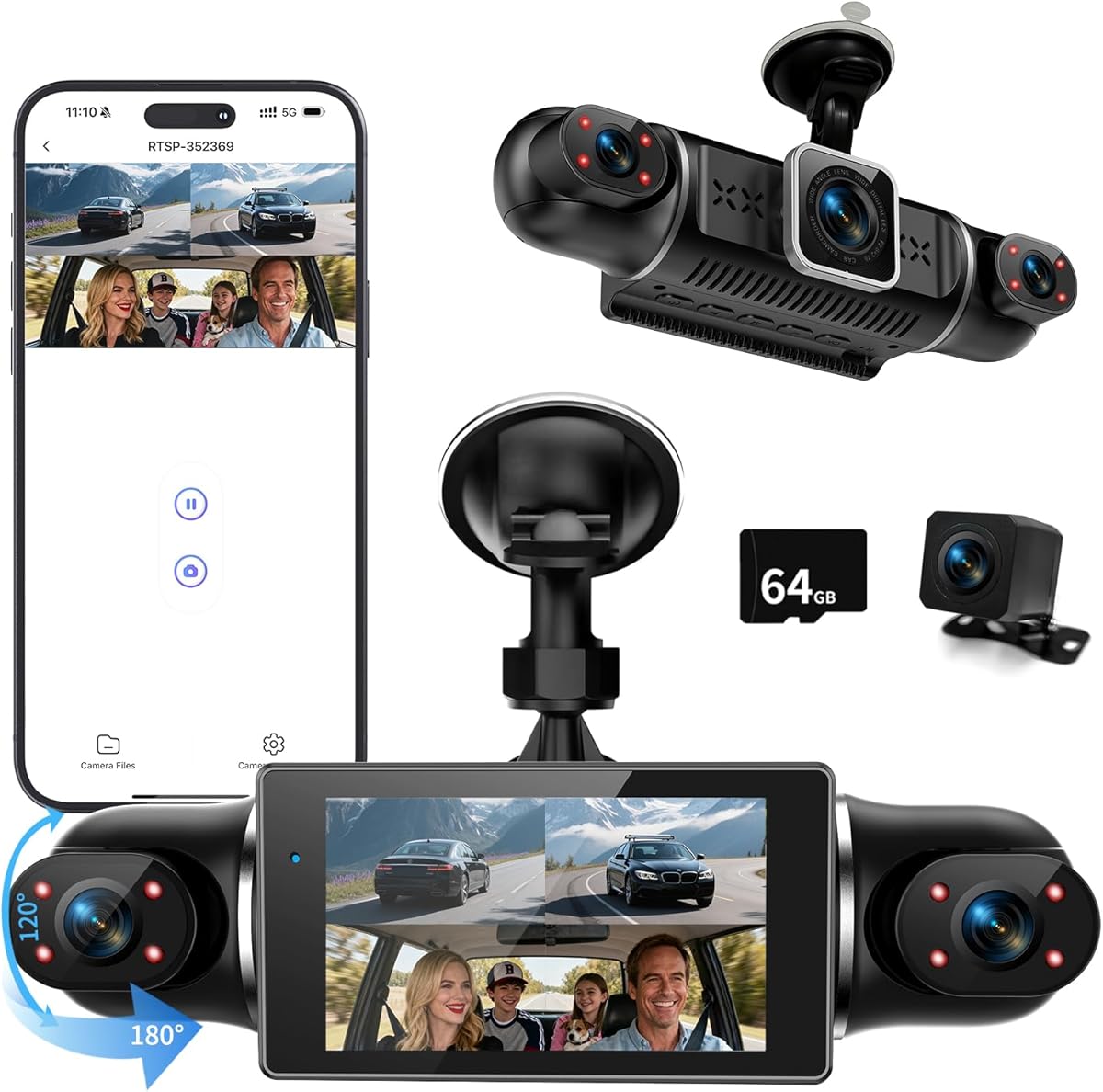
Four-Channel Dashcam Selection: Balancing 4K Front Coverage with Triple Rear Views
This 360° dashcam system offers comprehensive coverage with a 4K front camera and three 1080P rear-facing cameras, creating a unique 4-channel setup. Buyers should understand that true 360° coverage requires multiple camera units, not a single rotating lens, and this system's 4×140° wide-angle lenses create overlapping fields of view rather than a seamless spherical image.
Key Considerations Before Buying
- The 4K+1080Px3 resolution configuration means only the front camera records in ultra-high definition, while the three rear cameras operate at standard Full HD—important for managing storage on the included 64GB card.
- The 24/7 parking mode with 8 IR-LEDs requires proper hardwiring installation to avoid draining your vehicle's battery, as continuous monitoring draws power even when parked.
- Four-channel systems create significant data; the loop recording feature automatically overwrites old footage, but critical events protected by the G-sensor will be saved separately, requiring regular management of the SD card.
What Our Analysts Recommend
Quality four-channel systems maintain consistent frame rates across all cameras during simultaneous recording—check reviews for dropped frames in multi-camera mode. The WDR (Wide Dynamic Range) and night vision performance should be evaluated specifically for the rear cameras, as their 1080P sensors may struggle in low-light conditions compared to the 4K front unit.
On-Dash Cameras Market Context
Market Overview
The German dashcam market has evolved from single-front units to multi-camera systems, with four-channel setups like this one representing the premium segment for complete vehicle coverage. Current trends emphasize parking surveillance capabilities and smartphone integration, with 4K front recording becoming standard on higher-end models while rear cameras often remain at 1080P.
Common Issues
Multi-camera systems frequently experience synchronization problems between channels, resulting in timestamp discrepancies that complicate accident reconstruction. The 3" IPS display, while useful for initial setup, often proves inadequate for reviewing four simultaneous video feeds clearly, pushing users toward the companion app for proper review.
Quality Indicators
Look for consistent performance across all channels in varying light conditions—quality systems maintain WDR effectiveness on all cameras, not just the primary unit. Reliable parking mode should include voltage monitoring to prevent battery drain, a feature not always mentioned in product descriptions but critical for 24/7 operation.
Review Authenticity Insights
Grade B Interpretation
A Grade B authenticity rating with 20% estimated fake reviews indicates generally trustworthy feedback but suggests some manipulation. For this specific dashcam, the discrepancy between the perfect 5.0/5 rating and adjusted 4.5/5 suggests inflated initial reviews that may overemphasize unboxing impressions rather than long-term reliability.
Trust Recommendation
Focus on reviews discussing multi-camera synchronization and parking mode performance over several weeks, as these represent genuine usage patterns. Verified purchase status (all reviews here) increases credibility, but prioritize reviews that mention specific installation challenges with four cameras or SD card management with simultaneous 4K+1080Px3 recording.
Tips for Reading Reviews
For four-channel systems, seek reviews detailing how the app handles four video streams simultaneously—genuine users will mention lag or organizational issues. Pay particular attention to comments about the IR-LED effectiveness for the interior/rear cameras during night parking surveillance, as this is often overstated in promotional materials.
Expert Perspective
This dashcam system represents a serious investment in comprehensive vehicle documentation, with its four-camera approach addressing front, rear, and interior monitoring needs in one package. The 4K front camera provides crucial detail for license plate recognition, while the triple 1080P rear cameras offer redundancy rather than true 360° seamless coverage. The inclusion of a 64GB SD card is essential given the data demands of four simultaneous streams, though serious users may need to upgrade to higher endurance cards designed for continuous dashcam writing cycles. The B authenticity grade suggests generally reliable reviews, but the adjusted 4.5/5 rating indicates some performance limitations not reflected in the perfect surface rating.
Purchase Considerations
Consider your primary use case: if front-impact documentation is paramount, the 4K front camera excels, but if interior monitoring for ride-sharing or parking surveillance is the priority, evaluate whether three 1080P cameras provide sufficient detail compared to dedicated interior units with higher resolution. The parking mode functionality requires professional hardwiring installation for proper use, adding to the total system cost beyond the initial purchase.
Comparing Alternatives
Compare this four-channel approach against dual-channel systems with higher resolution rear cameras, or consider separate front and interior units that may offer better individual camera performance.


