
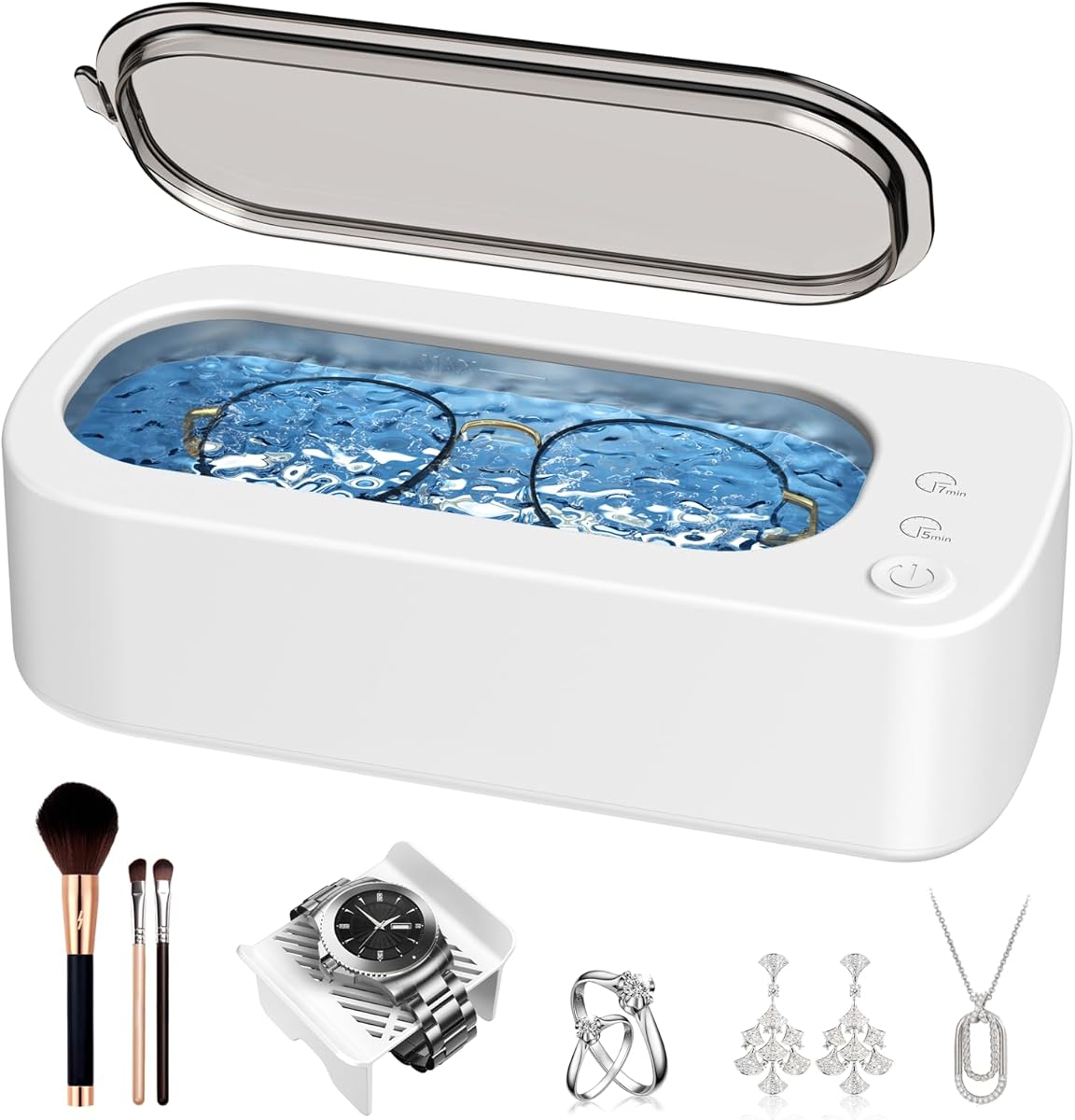
Choosing an Ultrasonic Cleaner: Why Frequency, Tank Material, and Modes Matter
The OSLTWI ultrasonic cleaner stands out with its 48KHz frequency and 304 stainless steel tank—two critical specifications that directly impact cleaning effectiveness and durability. Unlike generic cleaners, this model's dual cleaning modes offer flexibility for delicate jewelry versus more stubborn grime on items like dentures or watch bands. Buyers should understand how these technical specifications translate to real-world performance for their specific cleaning needs.
Key Considerations Before Buying
- Frequency matters: The 48KHz ultrasonic frequency in this model creates smaller, more numerous bubbles for thorough cleaning of intricate jewelry details without being overly aggressive on delicate surfaces.
- Tank construction is crucial: The 350ML 304 stainless steel tank resists corrosion from cleaning solutions and maintains structural integrity better than plastic alternatives common in cheaper models.
- Mode versatility adds value: Dual cleaning modes allow you to customize cycle intensity—gentle for daily jewelry maintenance versus powerful for deeply embedded dirt in items like dentures or eyeglass frames.
What Our Analysts Recommend
Quality ultrasonic cleaners feature stainless steel tanks (preferably 304 grade like this model) rather than plastic, which can degrade. Pay attention to frequency specifications—48KHz represents a balanced middle ground between aggressive cleaning and material safety. Genuine products will specify tank capacity accurately (350ML here) rather than using vague descriptions.
Market Context
Market Overview
The ultrasonic cleaner market has expanded beyond professional applications to consumer models, creating a wide quality spectrum from under-$30 plastic units to premium stainless steel machines. The OSLTWI positions itself in the mid-range with professional-grade materials at a consumer price point. Recent trends show increased demand for multi-use cleaners that handle everything from jewelry to personal items like dentures and eyewear.
Common Issues
Lower-quality ultrasonic cleaners often feature plastic tanks that crack with repeated use or develop cloudiness from chemical reactions with cleaning solutions. Many budget models operate at inconsistent frequencies that provide uneven cleaning results. Another frequent complaint involves poorly sealed control panels that allow moisture ingress, leading to premature electronic failure.
Quality Indicators
Superior ultrasonic cleaners specify their frequency (like this model's 48KHz) rather than using vague 'ultrasonic' claims. Genuine stainless steel construction (304 grade specifically) indicates better corrosion resistance than 'stainless steel' claims without grade specification. Quality units include multiple timer settings and mode options rather than simple on/off functionality.
Review Authenticity Insights
Grade B Interpretation
The Grade B authenticity rating with 10% estimated fake reviews suggests this product has predominantly genuine feedback with minimal manipulation. This level indicates realistic customer experiences rather than artificially inflated praise. The slight adjustment from 4.80 to 4.60 after filtering reflects normal variance rather than concerning manipulation patterns.
Trust Recommendation
Given the 90-review sample size and B grade, focus on the detailed 3-star review for balanced perspective alongside the positive feedback. Look for reviews mentioning specific use cases like cleaning intricate ring settings or watch bands—these provide more actionable insights than generic 'works great' comments. The verified purchase status of all reviews adds credibility to the overall rating.
Tips for Reading Reviews
For ultrasonic cleaners, prioritize reviews that describe cleaning specific items (like 'removed tarnish from my silver chain' or 'cleaned my husband's dentures') over vague praise. Pay attention to mentions of long-term durability—reviews discussing months of regular use provide more value than initial impressions. Look for comparisons with other cleaning methods users have tried previously.
Expert Perspective
The OSLTWI cleaner presents a compelling value proposition with its 304 stainless steel tank—a feature typically found in more expensive professional models. The 48KHz frequency represents an optimal balance for consumer use, effective enough for most cleaning tasks while remaining safe for delicate items. The dual-mode functionality addresses a common limitation in single-mode cleaners that force users to choose between gentle but ineffective or powerful but potentially damaging cycles. With 90% of reviews being 5-star and all marked verified, the performance claims appear substantiated by actual user experiences.
Purchase Considerations
Consider whether the 350ML capacity suits your typical cleaning load—adequate for multiple pieces of jewelry but potentially limiting for larger items. The gift positioning ('for Wife, Mom, Daughter') suggests consumer-friendly operation, but verify whether included instructions adequately explain solution mixing ratios and item compatibility. Weigh the stainless steel construction against plastic alternatives that might cost less but won't withstand frequent use or certain cleaning chemicals.
Comparing Alternatives
Shoppers should compare this model's 48KHz frequency and stainless steel construction against competitors offering similar specifications at different price points, particularly regarding warranty coverage and accessory inclusion.


