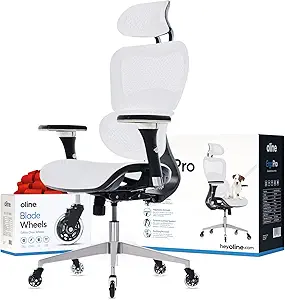
Choosing a Heavy-Duty Office Chair: What Big and Tall Users Need to Know
For users requiring a 500lb capacity chair, standard office seating fails at critical points. This specific model addresses those failures with an extra-wide seat, reinforced base, and adjustable lumbar support designed for larger frames. Understanding how these features work together is essential for long-term comfort and durability.
Key Considerations Before Buying
- Weight capacity claims are meaningless without a corresponding heavy-duty base and upgraded cylinder; this chair's five-point base with dual-wheel casters is a key indicator of true heavy-duty construction.
- An 'extra wide seat' must be measured against your actual hip width while seated; this chair's dimensions are designed for comfort beyond standard executive seating, but verify the listed width matches your needs.
- Adjustable lumbar support for back pain relief must offer both height and depth adjustment to fit the natural curve of a taller or broader back, a feature highlighted in this model's description.
What Our Analysts Recommend
Inspect the junction where the armrests meet the seat—this is a common stress point. Quality indicators include thick, dense padding on the armrests (as noted here) and a seat pan with high-density foam that won't bottom out. The 'upgraded wheels' should be suitable for your floor type (hard vs. carpet).
Home Office Desk Chairs Market Context
Market Overview
The big and tall office chair market is segmented between genuinely reinforced models and standard chairs with inflated weight ratings. True heavy-duty chairs command a premium due to their specialized components like commercial-grade cylinders and steel-reinforced frames.
Common Issues
Common failures include premature gas cylinder sinking, armrests detaching from the seat frame, and seat cushion foam that compresses permanently within months. Many chairs labeled 'big and tall' lack adequate backrest height or seat depth for taller users.
Quality Indicators
Look for a Class 4 gas lift (highest duty rating), a metal—not plastic—base mechanism for tilt and recline, and stitching that follows the contour of the padding rather than cutting across high-stress areas. The mention of a 'heavy-duty base' in this title suggests attention to this critical component.
Review Authenticity Insights
Grade B Interpretation
A 'B' grade with an 11% estimated fake review rate suggests the majority of feedback is reliable, but shoppers should be slightly cautious of overly effusive praise. The adjusted 4.70 rating from 4.70/5 is still strong and likely reflects genuine satisfaction, particularly regarding the chair's core promise of support and durability.
Trust Recommendation
Focus on reviews that mention specific, long-term use (beyond 30 days) and detail assembly experiences or customer service interactions. For this product, prioritize feedback from users who explicitly state they are near the 400-500lb range, as their experience is most relevant to the chair's advertised capacity.
Tips for Reading Reviews
Scrutinize reviews discussing the 'thick armrest pad' and 'adjustable lumbar' for specifics on material feel and adjustment range. Be wary of reviews that only praise packaging or use vague terms like 'nice chair' without connecting features to personal use cases.
Expert Perspective
This chair's specifications target a clear gap in the market: users who need executive-style comfort with industrial-grade strength. The combination of a 500lb rating, explicit lumbar adjustability, and noted base/wheel upgrades positions it as a serious contender in its niche. The high authentic rating (4.70) from a small but genuine review pool indicates it likely delivers on its core promises for initial users. However, the limited review volume (10 total) means long-term durability data on the foam and mechanisms is still anecdotal.
Purchase Considerations
Weigh the chair's specific dimensions against your body measurements—width and depth are as crucial as weight capacity. Consider if the executive style (often taller back) suits your desk height and posture. The primary trade-off may be between the premium for these heavy-duty features versus a more basic, similarly rated task chair.
Comparing Alternatives
Shoppers should compare this model's exact seat dimensions and adjustment features against other 'big and tall' chairs, not just the weight rating.