
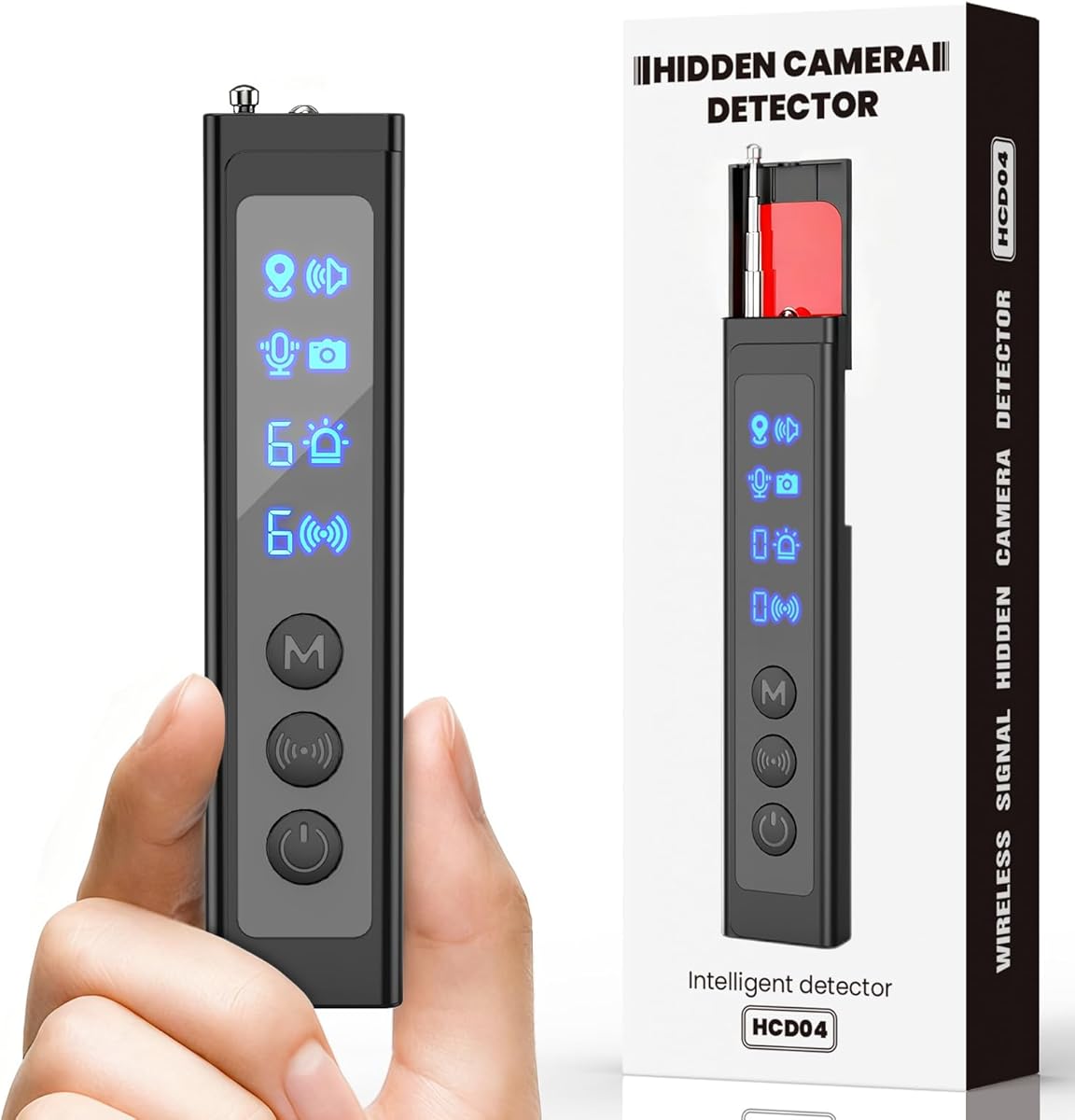
Evaluating AI-Powered Privacy Scanners: What This 6-Level Detector Actually Does
This specific AI Hidden Camera Detector combines RF signal scanning with lens detection, offering four distinct modes for different scenarios. Unlike basic magnetic detectors, it claims to identify both wireless transmission frequencies and physical camera lenses, which is crucial for comprehensive privacy checks in hotels or rentals. The advertised 6 sensitivity levels suggest granular control, a feature that separates serious tools from gimmicky devices.
Key Considerations Before Buying
- The 'AI' label typically refers to algorithms that help distinguish camera lenses from other reflective surfaces; verify if reviews mention this reducing false positives from doorknobs or screws.
- A true all-in-one detector must scan for RF signals (WiFi/Bluetooth bugs) AND have a physical lens finder; check that both functions are confirmed as effective in detailed reviews.
- Consider your primary use case: the 4 modes (like 'Hotel' or 'Car') should optimize scanning for different environments, but their practical utility depends on accurate sensor calibration.
What Our Analysts Recommend
Quality in this niche is indicated by specific mentions of finding actual hidden devices in reviews, not just detecting known electronics. Look for feedback on battery life during active scanning and the build quality of the lens finder's LED array and filter. The 6 sensitivity levels should be described as meaningfully adjusting scan range, not just changing a beep volume.
Hidden Cameras Market Context
Market Overview
The hidden camera detector market is flooded with low-cost, ineffective magnetic field detectors that miss modern, non-magnetic cameras. Higher-end models now integrate multiple detection methods, with 'AI-enhanced' lens detection becoming a key marketing differentiator for reducing false alarms. Products like this one aim to bridge the gap between professional RF spectrum analyzers and consumer-grade tools.
Common Issues
Many detectors fail against cameras that are off or recording to internal storage without transmitting a signal. Another frequent flaw is poor lens detection in varied lighting, where the red LED scan cannot differentiate a camera lens from other small, reflective objects. Overstated range claims for RF detection are also prevalent, with devices often picking up common WiFi routers instead of covert transmitters.
Quality Indicators
Genuine quality is shown in reviews that document finding a specific, hidden device type (e.g., a smoke detector camera). Effective products will have detailed manuals explaining each detection mode's purpose. Look for mentions of adjustable scan frequency ranges for RF, not just a single band, to better isolate suspicious signals from background noise.
Review Authenticity Insights
Grade B Interpretation
A 'Grade B' with a 15% estimated fake review rate suggests a generally trustworthy review profile, but with a notable minority of potentially incentivized or inauthentic feedback. For a privacy-focused product, this warrants extra scrutiny of 5-star reviews that lack detail or seem templated. The adjusted 4.60 rating from verified purchases is a strong, credible signal of performance.
Trust Recommendation
Prioritize reading the verified purchase reviews, especially those with medium-length details about using the different sensitivity levels or modes. Be skeptical of reviews that only praise 'peace of mind' without describing a test or scan process. The high number of verified reviews (112) allows you to identify consistent patterns in performance feedback.
Tips for Reading Reviews
Focus on reviews that mention testing the device against a known camera or bug to validate claims. Look for critical notes about the learning curve for the 4 modes or the effectiveness of the 'AI' lens scan in dim light. Reviews discussing use in real travel scenarios (hotels, Airbnbs) provide the most actionable insights for this product's intended purpose.
Expert Perspective
The data indicates this is a legitimate tool within its category, with a credible 4.60 adjusted rating from verified owners. The combination of RF scanning and physical lens detection addresses the two main vectors of covert surveillance. The specific mention of 6 sensitivity levels and 4 modes suggests a product designed for adaptable use, rather than a single-function novelty. However, the 'AI' terminology requires tempered expectations—it aids lens identification but does not guarantee detection of every expertly hidden camera.
Purchase Considerations
Weigh the need for a portable, multi-function scanner against the understanding that no consumer device is infallible. This product's value is highest for frequent travelers or renters wanting to perform routine sweeps. Consider if you need both RF and lens detection, or if a simpler, single-function device would suffice for your specific concerns.
Comparing Alternatives
Shoppers should compare this model's specific frequency detection range and lens scan method against other multi-mode detectors to assess value.


