
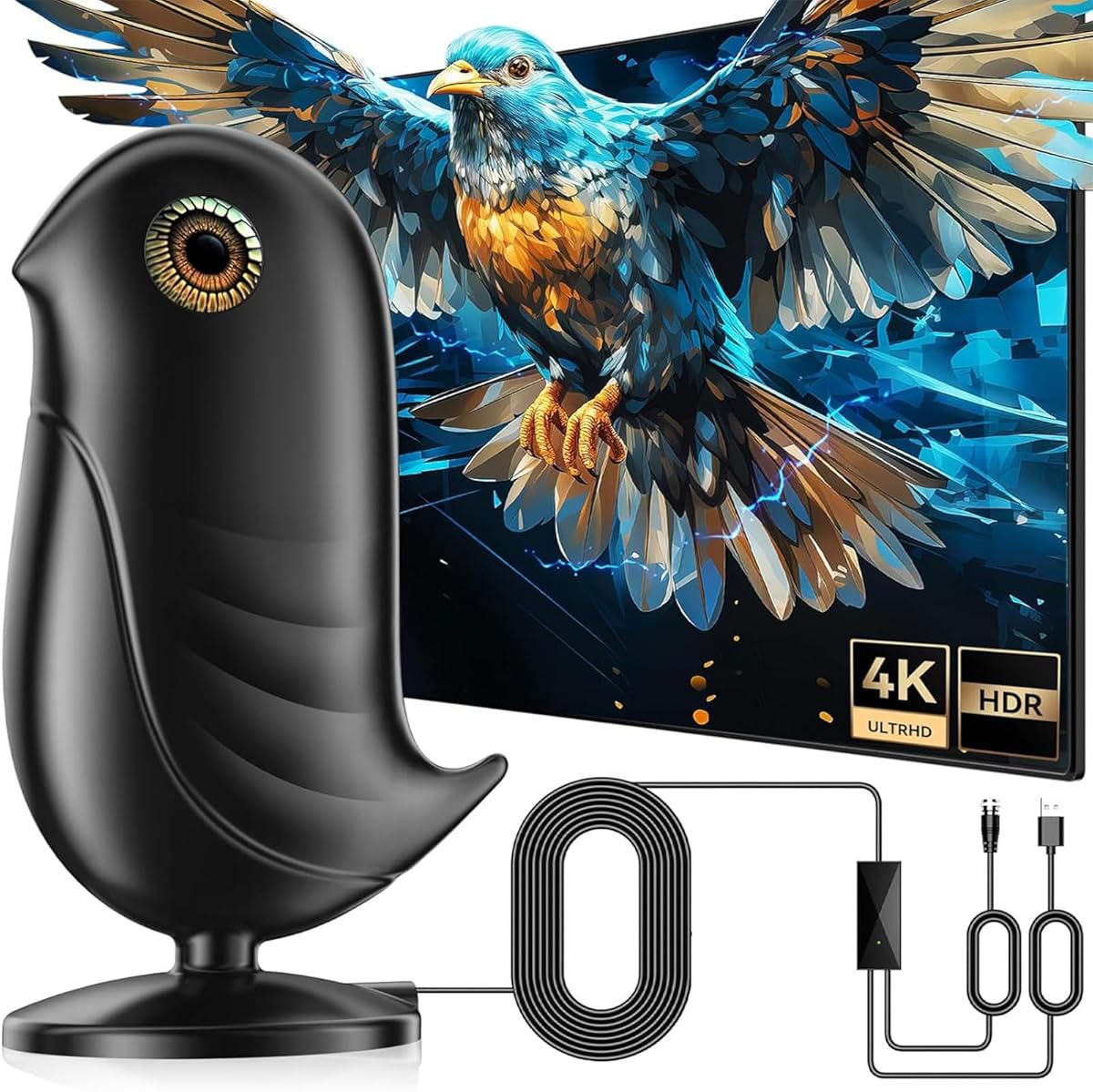
Choosing an Indoor HD Antenna: What 1200+ Mile Claims Really Mean for Your Reception
When evaluating this specific 1200+ mile long range antenna with smart chip and amplifier, understand that distance claims are theoretical maximums under ideal conditions. Your actual reception depends heavily on local terrain, broadcast tower locations, and building materials. The included amplifier can help in weak signal areas but may overload reception if you're close to broadcast towers.
Key Considerations Before Buying
- The 'smart chip' technology mentioned in this product's description typically refers to signal filtering that reduces interference from cellular and FM radio signals, which is particularly valuable in urban environments.
- An 18-foot coaxial cable provides placement flexibility, but longer cable runs can cause signal degradation, making the amplifier especially important for this setup.
- This antenna's compatibility with both smart and older TVs depends on whether your television has a digital tuner (ATSC 1.0) - all TVs sold since 2007 have this, but check older models.
What Our Analysts Recommend
Quality indoor antennas should include both VHF and UHF elements despite flat designs; check specifications for dual-band support. The amplifier should have an on/off switch or adjustable gain since amplification isn't always beneficial. Look for specific mention of 4K/ATSC 3.0 readiness if future-proofing matters.
TV Antennas Market Context
Market Overview
The indoor TV antenna market is saturated with exaggerated range claims, with most effective antennas working within 30-50 miles of broadcast towers. Products with amplifiers have become standard, but quality varies significantly in noise reduction circuitry and build durability.
Common Issues
Consumers frequently overestimate range capabilities and encounter difficulty with VHF channels (channels 2-13), which many flat antennas struggle to receive. Amplifier noise and overload from strong nearby signals are recurring complaints in product reviews.
Quality Indicators
Superior antennas specify actual frequency ranges (VHF 174-216 MHz, UHF 470-698 MHz) rather than just 'HD/4K compatible.' Quality amplifiers feature low-noise figures (under 3dB) and include power adapters rather than USB-only options for consistent voltage.
Review Authenticity Insights
Grade B Interpretation
A Grade B authenticity rating with 15% estimated fake reviews suggests generally reliable feedback with some promotional padding. The 4.60 adjusted rating (from 5.00) indicates genuine satisfaction is strong but slightly inflated by incentivized reviews.
Trust Recommendation
Focus on reviews mentioning specific channel counts, installation details, or comparisons with previous antennas—these typically indicate authentic experiences. Be skeptical of reviews claiming perfect reception everywhere without location context.
Tips for Reading Reviews
Prioritize reviews that mention distance from broadcast towers and building type (apartment, house, basement). Look for discussions about amplifier effectiveness—whether users needed to turn it off for better reception—as this reveals technical understanding.
Expert Perspective
This antenna's combination of amplifier, extended cable, and smart chip filtering addresses common indoor reception challenges systematically. The high adjusted rating (4.60) from verified purchases suggests it performs reliably for most users within reasonable broadcast distances. However, the 1200+ mile claim is marketing hyperbole—no indoor antenna achieves this in practice. The inclusion of both amplifier and lengthy cable indicates the manufacturer understands real-world placement constraints.
Purchase Considerations
Consider this antenna if you need placement flexibility (18ft cable) and live in an area with moderate signal strength where amplification might help. Check AntennaWeb or FCC DTV maps first to determine your actual distance from towers—if you're within 35 miles, this antenna's features are appropriate.
Comparing Alternatives
Compare amplifier specifications and return policies with similar-priced antennas, as performance varies significantly by location despite similar features.


