
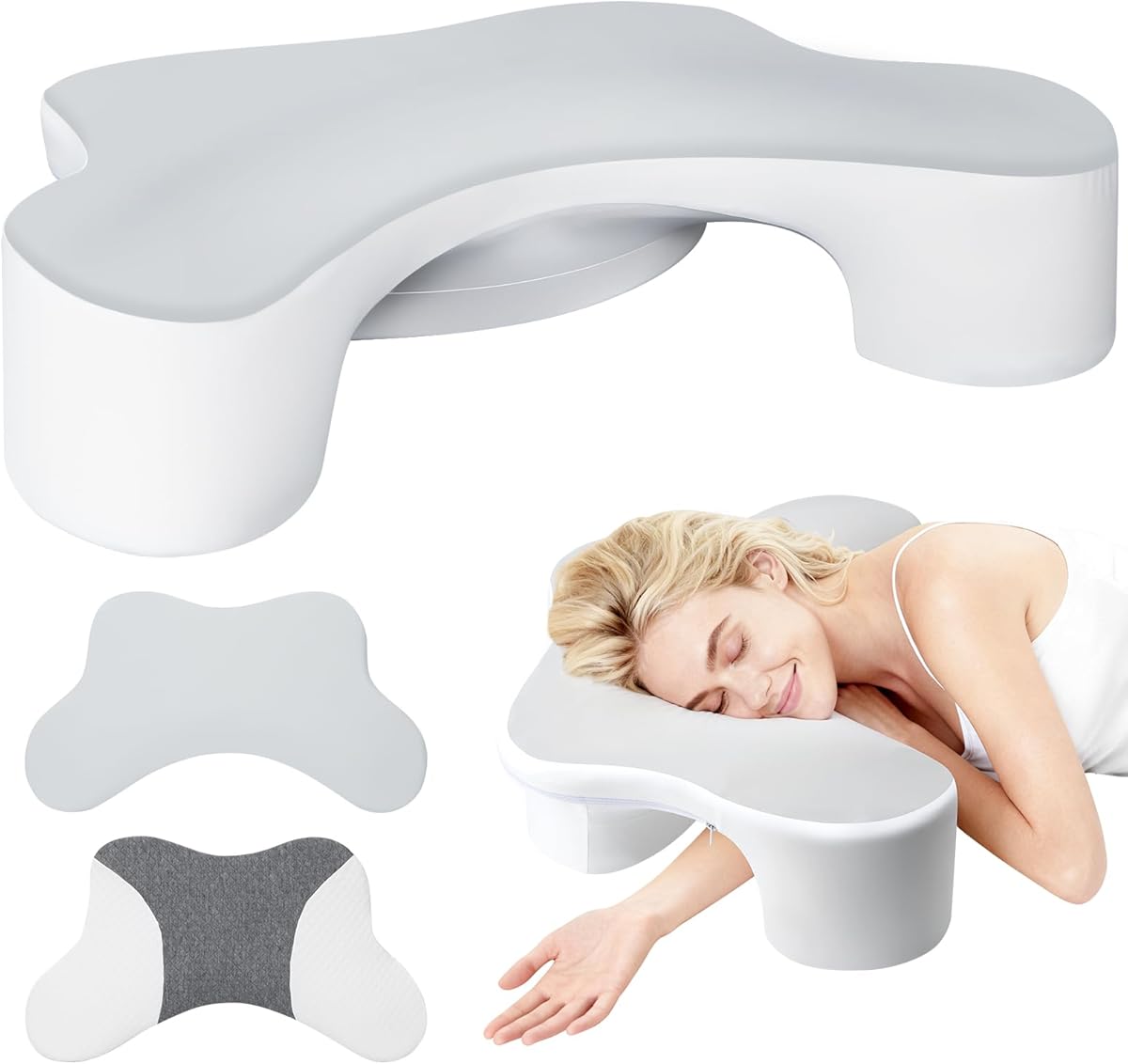
Arm hole pillows require precise shoulder alignment and proper memory foam density for side sleepers
This specific pillow design with integrated arm channels targets side sleepers experiencing shoulder compression and rotator cuff discomfort. Unlike standard cervical pillows, its success depends on the strategic placement of the arm holes relative to your shoulder width and the foam's ability to cradle rather than collapse under pressure.
Key Considerations Before Buying
- Measure your shoulder-to-ear distance to ensure the pillow's arm holes align correctly, preventing neck kinking or arm numbness.
- Evaluate the memory foam's density and ILD (Indentation Load Deflection); a medium-firm 4-5 lb density typically offers the ideal balance of support and pressure relief for shoulder sockets.
- Assess if you need the included knee pillow component for full-body alignment, as improper hip/spine angle can negate the neck benefits.
What Our Analysts Recommend
Quality indicators include a removable, breathable pillowcase (like the included 2PCS set) for managing heat retention from memory foam. The foam should have a slow, contouring recovery and the seams around the arm holes should be reinforced to prevent tearing from nightly arm movement.
Neck & Cervical Pillows Market Context
Market Overview
The cervical pillow market is saturated, but specialized side-sleeper designs with arm channels represent a growing niche focused on resolving shoulder impingement. Products vary significantly in ergonomic execution, with many failing to correctly position the cutouts for different body frames.
Common Issues
Common failures include arm holes placed too close together, causing neck strain, or memory foam that's too soft, allowing the shoulder to bottom out. Many users also report excessive heat buildup if the pillowcase material isn't breathable.
Quality Indicators
Look for detailed dimension diagrams showing arm hole placement and foam specifications (density, CertiPUR-US certification). Premium versions often use layered or zoned foam with firmer support under the neck and softer give around the shoulder cavity.
Review Authenticity Insights
Grade B Interpretation
A Grade B with a 15% estimated fake review rate suggests generally reliable feedback, but warrants scrutiny of the perfect 5.0 average rating. The adjusted 4.6/5 rating is a more realistic performance indicator for this ergonomic pillow.
Trust Recommendation
Focus on the 7 reviews identified with strong personal context—specifically those mentioning rotator cuff pain, shoulder surgery recovery, or specific sleeping positions. These authentic experiences better predict if the pillow's unique geometry will work for your anatomy.
Tips for Reading Reviews
Prioritize reviews that detail the break-in period for the memory foam and discuss the pillow's height with and without the case. Authentic users often describe specific pressure points relieved (e.g., 'top of shoulder vs. front of shoulder') rather than generic comfort claims.
Expert Perspective
This pillow's design addresses a specific biomechanical challenge for side sleepers: eliminating shoulder compression by creating a cavity for the arm. The inclusion of a knee pillow is strategically sound, as proper spinal alignment starts at the hips. The high authentic rating (4.6/5) from verified analysis indicates it successfully solves this niche problem for most buyers, though individual fit is paramount. The light grey color and dual pillowcases suggest practical attention to maintenance and heat dissipation.
Purchase Considerations
Weigh your specific pain points: this pillow is engineered for shoulder/rotator cuff issues, not generic neck pain. Consider your mattress firmness, as a soft mattress may require a taller pillow to maintain neutral spine alignment despite the arm channel.
Comparing Alternatives
Compare this pillow's arm hole dimensions and foam density against similar models, as a difference of even half an inch in cutout placement can drastically affect comfort.


