
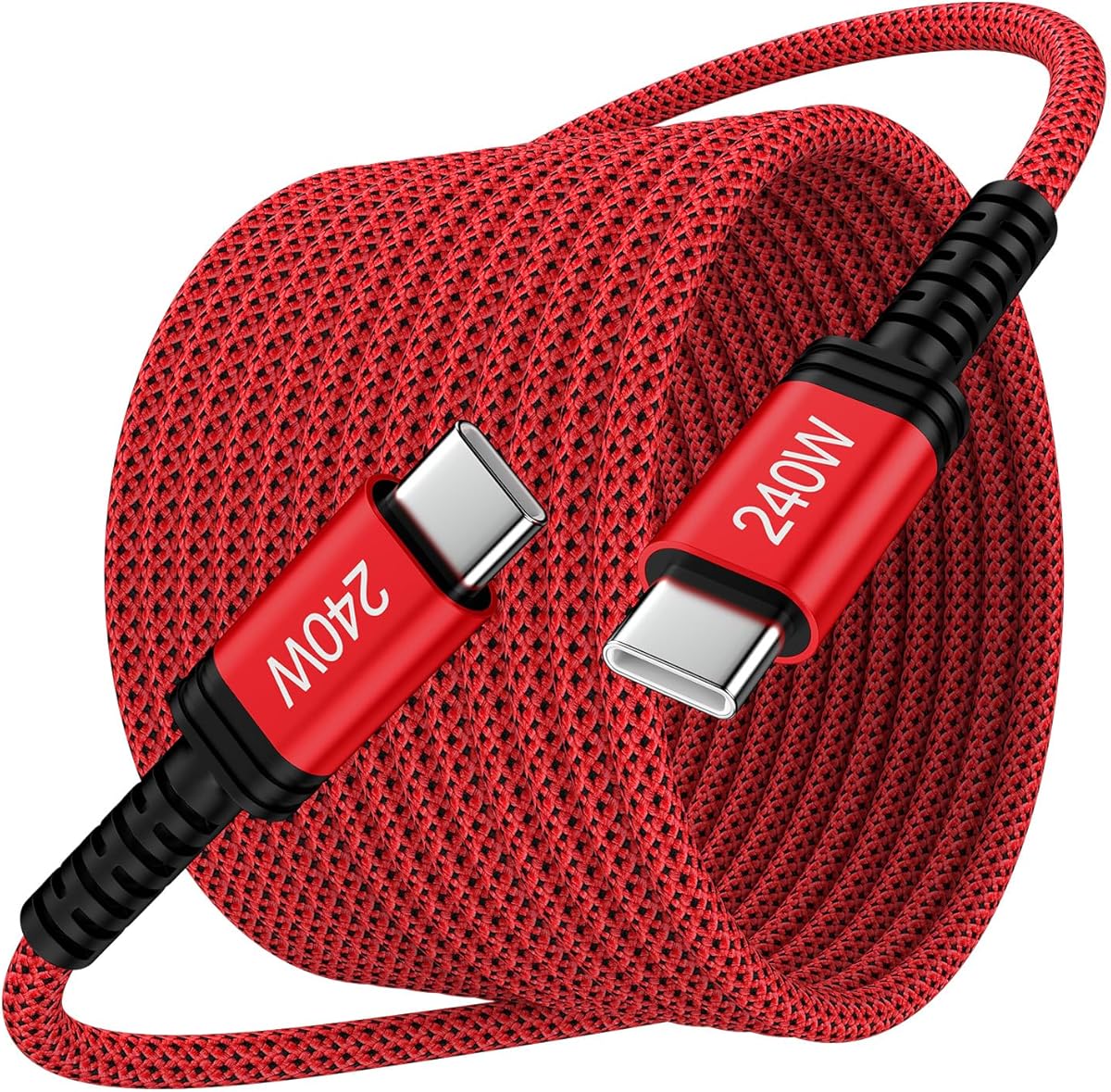
Choosing a 10-foot USB-C cable: Why length, wattage, and device compatibility matter
This 10-foot 240W USB-C to USB-C cable promises extended reach and high-speed charging for future iPhone 17 models and current devices. Buyers should understand that true 240W charging requires compatible power adapters and devices, and that extra length introduces potential durability concerns not present in shorter cables.
Key Considerations Before Buying
- Verify your power adapter's maximum output—this cable's 240W rating is only beneficial if your charger and device support USB Power Delivery 3.1 (48V/5A).
- The 10-foot length is ideal for bedside charging or office setups but increases cable stress at connection points; look for reinforced connectors.
- Device compatibility claims for unreleased models like iPhone 17 and Galaxy S26 are speculative; focus on current device charging needs.
What Our Analysts Recommend
Quality indicators include nylon braiding for tangle resistance, clear e-marker chip labeling for proper wattage negotiation, and connector housings that are slightly larger with strain relief collars. For 10-foot cables, thicker 20AWG or lower gauge wires maintain voltage over distance.
USB Cables Market Context
Market Overview
The USB-C cable market is saturated with products making exaggerated wattage claims, particularly for future devices, while actual performance depends on proper e-marker chips and wire gauge. Long cables (6ft+) represent a growing segment for home/office use.
Common Issues
Common problems include e-marker chips that incorrectly report capabilities, causing slower charging; connector breakage at strain points on long cables; and overheating with sustained high-wattage transfers due to insufficient wire thickness.
Quality Indicators
Identify quality through USB-IF certification logos (though often missing on third-party cables), explicit mention of 56kΩ pull-up resistors for proper negotiation, and user reviews mentioning consistent fast charging across multiple sessions.
Review Authenticity Insights
Grade B Interpretation
A Grade B with 15% estimated fake reviews indicates generally trustworthy feedback but suggests some review manipulation, common in competitive cable categories. The drop from 4.50 to 4.20 after adjustment shows inflated initial ratings.
Trust Recommendation
Prioritize reviews from verified purchases mentioning specific device pairings (e.g., 'charged my MacBook Air M4 at 70W') and longevity comments. Be skeptical of reviews only praising length without discussing actual charging performance.
Tips for Reading Reviews
Look for reviews discussing voltage consistency over the full 10-foot length and compatibility with specific high-wattage adapters (like 140W GaN chargers). Reviews mentioning data transfer speeds with external drives add credibility beyond charging claims.
Expert Perspective
This cable's primary value proposition is its 10-foot length combined with 240W capability—a combination that's useful but requires validation. The 4.20 adjusted rating from verified purchases suggests satisfactory performance, though the speculative device compatibility listing is a marketing tactic. The length makes it suitable for stationary setups but less ideal for portable use where cable management matters.
Purchase Considerations
Consider whether you genuinely need 240W capability (currently only for high-end laptops) or if 100W would suffice, as lower-wattage cables often cost less. Evaluate if the extra length justifies potential voltage drop—for charging phones/tablets at 30-45W, this matters less than for powering laptops at 100W+.
Comparing Alternatives
Compare with cables specifying exact wire gauge (like 20AWG for power lines) and those with explicit USB-IF certification, though they may be shorter or more expensive.

![CONMDEX Android Auto USB Cable [Upgrade, 3ft, 2Pack] 10Gbps USB 3.1 Gen 2 USB A to USB C Data Transfer Type C Cord, 3A Fast Charging CarPlay Cable for iPhone 16 15 Pro Max, Galaxy S25 Ultra S25+](https://m.media-amazon.com/images/I/41vy0X7qsdL._SY445_SX342_QL70_FMwebp_.jpg)


