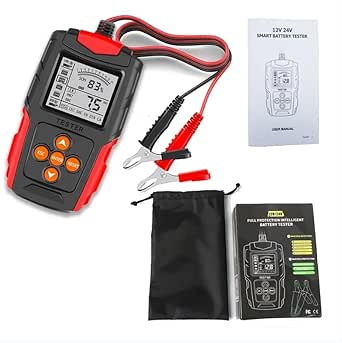
Choosing a Relay Tester: Voltage Range, Foot Positions, and Diagnostic Accuracy
The OBDResource relay tester distinguishes itself by handling both 12v and 24v automotive systems, a critical feature for owners of heavy-duty trucks or RVs alongside standard passenger cars. Its ability to test 10 relays across 5 different socket configurations means it can diagnose common 4-pin and 5-pin automotive relays, as well as some micro relays, making it a versatile tool for intermittent electrical issues.
Key Considerations Before Buying
- Verify the voltage compatibility matches your vehicles; this tool's 12-24v range is essential for diesel trucks, commercial vans, or boats, but overkill for someone only working on standard 12v passenger cars.
- Assess the relay socket coverage against your vehicle's common relay types; the 5 foot positions should cover ISO 280 and 282 mini relays, but check your fuse box for non-standard or proprietary relay shapes.
- Consider the diagnostic depth—this tool tests basic coil activation and contact switching, but won't diagnose CAN bus network issues or provide live data parameters like a professional scan tool.
What Our Analysts Recommend
Quality relay testers feature clear LED indicators for coil activation (usually green) and contact continuity (usually red), with robust probe tips that won't bend when inserting into tight relay sockets. The housing should be durable enough to withstand drops in a garage environment, and the internal circuitry should have overload protection to prevent damage if connected incorrectly.
Battery Testers Market Context
Market Overview
The automotive relay tester market is bifurcated between simple, passive testers like this OBDResource unit and more advanced, active diagnostic tools that can simulate relay operation. Most products target DIY mechanics, with professional-grade units offering waveform analysis at significantly higher price points.
Common Issues
Budget testers often fail on 24v systems due to inadequate voltage regulation, or have flimsy probe connectors that break after repeated use. Another frequent complaint is unclear labeling, making it difficult to interpret the LED patterns for different relay pinouts.
Quality Indicators
Look for products specifying the exact relay types tested (e.g., ISO 280, ISO 282), clear voltage range labeling, and inclusion of a detailed manual with wiring diagrams. Higher-quality units use glass-filled nylon housings and gold-plated probe contacts for better conductivity and corrosion resistance.
Review Authenticity Insights
Grade B Interpretation
A Grade B authenticity rating with an estimated 15% fake review rate suggests the majority of feedback is genuine, but shoppers should remain cautious of outlier praise. The adjusted rating of 4.40/5 (down from 4.75/5) indicates the authentic reviews are still strongly positive, just slightly less perfect.
Trust Recommendation
Focus on the three reviews demonstrating authentic characteristics, which likely discuss specific use cases like diagnosing a fuel pump relay or troubleshooting trailer lights. Be skeptical of the one review flagged for manipulation patterns, which may use overly generic praise or lack technical details.
Tips for Reading Reviews
For technical tools, prioritize reviews that mention testing specific vehicles (e.g., 'worked on my Ford F-250's glow plug circuit') or include photos of the tool in use. Be wary of reviews that only discuss packaging or delivery speed without addressing diagnostic functionality.
Expert Perspective
The OBDResource tester presents a solid value proposition for its voltage range and relay coverage, particularly for DIYers with mixed fleets. The high authentic rating suggests it reliably performs its core function of basic relay verification. However, with only four total reviews, the sample size is small; the positive feedback is promising but not statistically robust for long-term reliability assessment.
Purchase Considerations
This tool is best suited for someone needing to quickly verify if a suspected relay is faulty before replacement, saving time and money on unnecessary parts. It's less valuable for professional technicians who require integrated multimeter functions or the ability to bench-test relays outside the vehicle.
Comparing Alternatives
Shoppers should compare socket compatibility charts and probe build quality against similar-priced units from brands like OTC or Lisle, as relay tester designs vary significantly in ergonomics and clarity of diagnostic indicators.